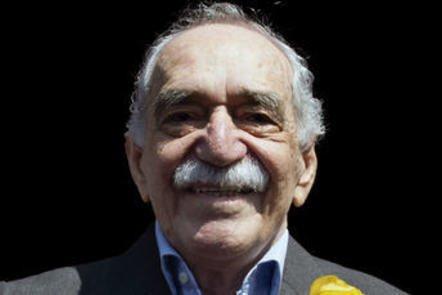
Leer a Macondo: La obra de Gabriel García Márquez (FutureLearn)

Leer a Macondo: La obra de Gabriel García Márquez (FutureLearn)

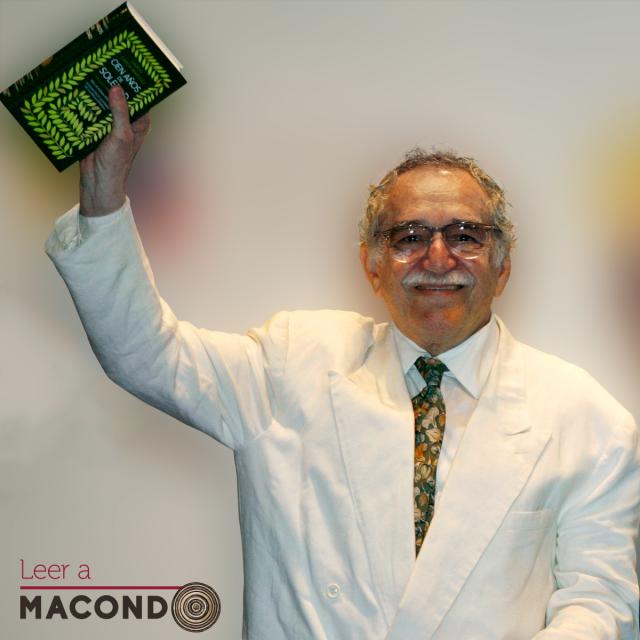
Explorar por qué el autor de Cien años de Soledad es uno de los escritores más importantes del siglo XX. Gabriel García Márquez es un escritor colombiano que ganó el premio Nobel de Literatura en 1982 y ha sido reconocido como uno de los escritores más importantes del siglo XX. Sus obras han sido traducidas a más de 35 idiomas, han sido adaptadas para televisión y cine y han inspirado múltiples obras de arte.

Class Deals by MOOC List - Click here and see FutureLearn's Active Discounts, Deals, and Promo Codes.

Explore 5 de las primeras obras del autor, que están relacionadas con Macondo.
El principal objetivo de este curso es explorar las contribuciones literarias de Gabriel García Márquez a la literatura universal a través de cinco de sus primeras obras, todas con una fuerte relación con Macondo, un pueblo inspirado en Aracataca, el lugar de nacimiento del autor en Colombia. Ante todo, usted tendrá la oportunidad de gozar de la lectura y el análisis de las siguientes obras:

  • La hojarasca (1955),
  • El coronel no tiene quien le escriba (1961),
  • La mala hora (1962),
  • Los funerales de la Mamá Grande (1962) y
  • Cien años de soledad (1967).

Al entrar en el universo narrativo de García Márquez, usted se dejará seducir por la riqueza de su lenguaje y logrará identificar las obsesiones del autor. A través del estudio de estas obras usted:

  • Valorará la obra de Gabriel García Márquez
  • Apreciará la forma en que evoluciona
  • Desarrollará la capacidad de relacionar sus diferentes obras
  • Identificará algunos de los elementos centrales de su obra

Este curso está dirigido a personas que disfrutan de la literatura y no requiere ningún tipo de conocimiento previo.

Aprenda acerca de Gabriel García Márquez acompañado de profesores experto de Bogotá, Colombia.
Sus guías para este curso son profesores de literatura de la Facultad de Artes y Humanidades de la Universidad de los Andes, Colombia, expertos en el análisis de la obra de Gabriel García Márquez, quienes le brindarán una perspectiva única acerca de la narrativa de este autor.
¡Esperamos que sea una experiencia enriquecedora y que disfrutemos juntos de las obras de Gabriel García Márquez!.


Go to Class
MOOC List is learner-supported. When you buy through links on our site, we may earn an affiliate commission.

Related Courses

Masterpieces of World Literature (edX) EdX
HarvardX,Harvard University

Masterpieces of World Literature (edX)

Embark on a global journey to explore the past, present, and future of World Literature. This literature course explores how great writers refract their world and how their works are transformed when they intervene in our global cultural landscape today. No national literature has ever grown up in isolation from the cultures around it; from the earliest periods, great works of literature have probed the tensions, conflicts, and connections among neighboring cultures and often more distant regions as well.

Self Paced
Self-Paced
Samuel Johnson’s Rasselas: An Introduction (FutureLearn) FutureLearn
Ralston College

Samuel Johnson’s Rasselas: An Introduction (FutureLearn)

Explore the humane realism of Samuel Johnson in a deep dive into his only novel with Theodore Dalrymple as your guide. Explore the humane realism of Samuel Johnson in a deep dive into his only novel. Learn from Theodore Dalrymple. Theodore Dalrymple, the pseudonym of Anthony Daniels, is an English cultural critic of great distinction. He has written extensively on culture, its contemporary neglect, and its enduring potential.

Jan 24th 2022
5-12 Weeks
Creative Writing: The Craft of Setting and Description (Coursera) Coursera
Wesleyan University

Creative Writing: The Craft of Setting and Description (Coursera)

In this course aspiring writers will be introduced to the techniques that masters of fiction use to ground a story in a concrete world. From the most realist settings to the most fantastical, writers will learn how to describe the physical world in sharp, sensory detail. We will also learn how to build credibility through research, and to use creative meditation exercises to deepen our own understanding of our story worlds, so that our readers can see all that we imagine.

Sep 14th 2026
4 Weeks
Shakespeare: Context and Stagecraft (FutureLearn) FutureLearn
King's College London

Shakespeare: Context and Stagecraft (FutureLearn)

Explore Shakespeare’s stagecraft through three of his most well-known plays: Romeo and Juliet, The Merchant of Venice and Macbeth. Study fascinating theatrical and social contexts that shaped Shakespeare’s plays. On this course, you’ll explore the language, themes, and contexts of three of Shakespeare’s most widely studied and frequently performed plays.

Self Paced
2 Weeks
Teaching Writing Process (Coursera) Coursera
Johns Hopkins University

Teaching Writing Process (Coursera)

Half a century ago, a revolution took place in the teaching of writing. Educators asked, “What if we were to study how professional writers wrote, as a way to learn how we might teach writing more effectively?” The result was the writing process movement, with its emphasis on not just writing as product but as process. Good writing doesn’t magically appear, nor does it spring from the brain fully formed and perfect the first time.

Sep 14th 2026
4 Weeks
The American Renaissance: Classic Literature of the 19th Century (edX) EdX
DartmouthX

The American Renaissance: Classic Literature of the 19th Century (edX)

Explore the writings of famous American authors from Ralph Waldo Emerson and Harriet Beecher Stowe to Mark Twain, and examine the historic role Dartmouth College played in their formation. What is the American Renaissance? How did Dartmouth help foster the formation of the American Renaissance and its reevaluation and reinvention in the twentieth? Why should we, as twenty-first century readers, concern ourselves with this literature?

Self Paced
4 Weeks
Literature in the Digital Age: from Close Reading to Distant Reading (FutureLearn) FutureLearn
University of Basel

Literature in the Digital Age: from Close Reading to Distant Reading (FutureLearn)

Learn new ways of interpreting literary texts, from time-tested methods to computer-assisted practices such as distant reading. As we make sense of what we read, we construe meaning using the ancient cultural technique of interpretation. Only rarely do we actually reflect this process: what are the means that help us to understand literary texts? How does interpretation work? And how has our increasing use of e-books and tablets changed the way we read and interpret literature?

Available now
5-12 Weeks
Reading Macondo: the Works of Gabriel García Márquez (FutureLearn) FutureLearn
Universidad de los Andes

Reading Macondo: the Works of Gabriel García Márquez (FutureLearn)

Explore why the author of One Hundred Years of Solitude is one of the 20th century’s leading writers in this free online course. Gabriel García Márquez is a Colombian writer, who won the Literature Nobel Prize in 1982. He has been recognised as one of the world’s leading writers in the second half of the 20th century. His works have been translated into many languages, been adapted for TV and film, and inspired many subsequent works of art.

No sessions available
5-12 Weeks
What Is Poetry? An Introduction to Literary Analysis (FutureLearn) FutureLearn
The University of Newcastle, Australia

What Is Poetry? An Introduction to Literary Analysis (FutureLearn)

Understand the basics of poetry analysis and learn key skills for studying English literature by exploring a variety of texts. Explore, understand and critique poetry. What are the different ways you can understand a poem? How do different elements of a poem work together? What difference does context make to literature?

Jul 19th 2021
3 Weeks
The Talmud: A Methodological Introduction (Coursera) Coursera
Northwestern University

The Talmud: A Methodological Introduction (Coursera)

The Talmud is one of the richest and most complicated works of literature the world has ever known. Since being composed around 1500 years ago it has inspired not only religious reverence but significant intellectual engagement. In this course learners will be introduced to the unique characteristics of this text and the challenges that inhere in studying it while studying a chapter of the Talmud.

Sep 21st 2026
5-12 Weeks