EdX

Organic Electronic Devices (edX)

Offered by Purdue University, PurdueX,
Organic Electronic Devices (edX)

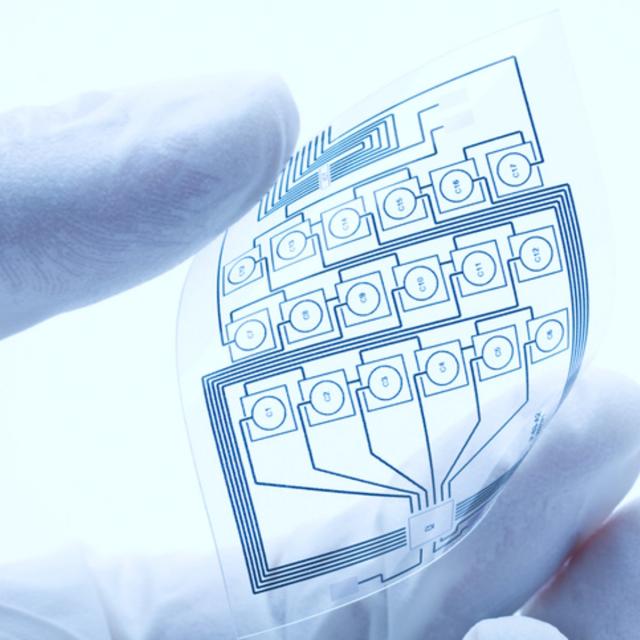
Using molecules and polymers to create the next generation of electronic devices. Organic electronic devices are quickly making their way into the commercial world, with innovative thin mobile devices, high-resolution displays, and photovoltaic cells.

Class Deals by MOOC List - Click here and see EdX's Active Discounts, Deals, and Promo Codes.

The future holds even greater potential for this technology, with an entirely new generation of ultralow-cost, lightweight and even flexible electronic devices, which will perform functions traditionally accomplished with much more expensive components based on conventional semiconductor materials, such as silicon.

Learn more about this highly promising technology, which is based on small molecules and polymers, and how these materials can be implemented successfully in established (e.g., organic light-emitting devices (OLEDs), organic photovoltaic (OPV) devices) and emerging (e.g., thermoelectric (TE) generators) organic electronic modules.
In this course you will gain the ability to tie molecular transport phenomena with macroscopic device response such that you will be well-prepared to analyze, troubleshoot, and design the next generation of organic electronic materials and devices.
This course has short lectures with quizzes, homework, and exams.

What you'll learn

  • Synthesis of Organic Semiconductors.

. Identify common mechanisms for the synthesis of small molecule and polymer semiconductors
. Describe the mechanism of controlled polymerization techniques for macromolecular semiconductors
. Interpret spectroscopic, chromatographic, and molecular characterization data in order to predict the structure of the organic semiconductor.

  • Charge Generation and Transport and Optoelectronic Characterization of Organic Semiconductors.

. Explain how molecular orbital levels are related to the optoelectronic properties of organic semiconductors
. Distinguish between different models for charge transport in organic semiconductors; describe clearly the difference between charge generation and transport in organic and inorganic semiconductors.

  • Device Application of Organic Semiconductors.

. Explain how organic electronic devices operate and how to apply known equations to evaluate device performance
. Critique the potential for organic electronic materials to supplement or replace inorganic semiconducting devices.
Go to Class
MOOC List is learner-supported. When you buy through links on our site, we may earn an affiliate commission.

Related Courses

Caer o No caer. El secreto de las estructuras (edX) EdX
Universidad Carlos III de Madrid - UC3M,UC3Mx

Caer o No caer. El secreto de las estructuras (edX)

Las estructuras están presentes en todos los sistemas que nos rodean. Descubrirlas y comprender cómo funcionan es sencillo y fascinante. Las estructuras están implicadas en nuestras vidas: las plantas, los animales, casi todo lo que fabrica el ser humano, incluso nuestro propio cuerpo, deben soportar una serie de fuerzas sin romperse, y por lo tanto prácticamente cualquier elemento de nuestro entorno es una estructura de una clase u otra.

Self Paced
Self-Paced
Recent Advances in Freeform Electronics (Coursera) Coursera
Yonsei University

Recent Advances in Freeform Electronics (Coursera)

In this course, the learners will understand fundamental basic backgrounds of p-n junctions, diodes and MOSFETs (Metal Oxide Semiconductor Field Effect Transistors). Also, recent approaches on flexible / stretchable electronics, transparent optoelectronics, and printed electronics using one dimensional or two dimensional nanomaterials will be introduced.

Oct 5th 2026
5-12 Weeks
Cellular Mechanisms of Brain Function (edX) EdX
École Polytechnique Fédérale de Lausanne,EPFLx

Cellular Mechanisms of Brain Function (edX)

This course aims for a mechanistic description of mammalian brain function at the level of individual nerve cells and their synaptic interactions. Brain and behavior are inextricably linked in neuroscience. The function of the brain is to govern behavior, and the aim of this course is to causally link biophysical mechanisms with simple behaviors studied in mice.

Self Paced
Self-Paced
Product Design: The Delft Design Approach (edX) EdX
Delft University of Technology,DelftX

Product Design: The Delft Design Approach (edX)

Learn to design meaningful products and services in this challenging design course. Do you want to learn how to design? Using the Delft Design Approach, you will learn how to use a number of key design methods to create meaningful products and services. This course is an introduction to the Delft Design Approach offering a set of signature methods from Delft to teach you how to get from understanding the user in context to defining a meaningful design challenge and – in the end – deliver a great design!

Self Paced
Self-Paced
Fundamentals of Neuroscience, Part 2: Neurons and Networks (edX) EdX
HarvardX,Harvard University

Fundamentals of Neuroscience, Part 2: Neurons and Networks (edX)

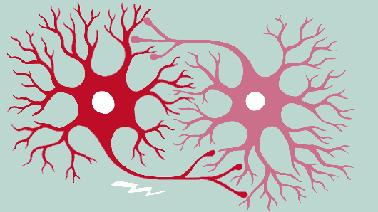
Discover what makes your brain tick in this second part of a four-part introductory series in Neuroscience. Neurons in isolation are fascinating and complicated, but the real magic of neuroscience happens in the interaction between neurons. In this course, we examine how neurons pass signals to one another and how complex dynamics can result from just a few neurons arranged in relatively simple circuits.

Self Paced
Self-Paced
Super-Earths And Life (edX) EdX
HarvardX,Harvard University

Super-Earths And Life (edX)

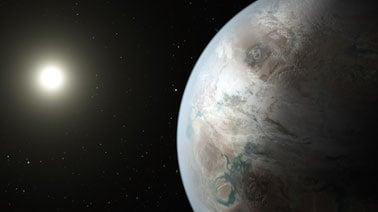
Learn about the Earth, life, and how we can search for life elsewhere in the universe. Are we alone in this universe? What new information and observations on exoplanets have we discovered? In the past decade, astronomers have made incredible advances in the discovery of planets outside our solar system. Thirty years ago, we knew only of the planets in our own solar system. Now we know of thousands circling nearby stars.

Self Paced
Self-Paced
Tropical Coastal Ecosystems (edX) EdX
University of Queensland,UQx

Tropical Coastal Ecosystems (edX)

Take the challenge and understand problems and solutions to managing tropical coastal ecosystems. Do you want to develop the skills and knowledge needed to help preserve tropical coastal ecosystems? These habitats provide goods and services for hundreds of millions of people but human activities have led to their global decline.

Self Paced
Self-Paced
Vocal Recording Technology (edX) EdX
Berklee College of Music,BerkleeX

Vocal Recording Technology (edX)

Explore emerging innovations in vocal production, audio engineering, recording, and mixing. We are in the midst of an explosion of musical creativity as a result of technologies that allow you to record music using your laptop or tablet. Whether you are a singer, music producer, audio engineer, or just someone that likes to make good music with vocals, it is essential to have an understanding of vocal technologies for music production.

Self Paced
Self-Paced
Fundamentals of Neuroscience, Part 1: The Electrical Properties of the Neuron (edX) EdX
HarvardX,Harvard University

Fundamentals of Neuroscience, Part 1: The Electrical Properties of the Neuron (edX)

Learn how electricity makes the neurons in your brain tick. Fundamentals of Neuroscience is a three-courseseries that explores the structure and function of the nervous system—from the inner workings of a single nerve cell to the staggering complexity of the brain and the social interactions they enable.

Self Paced
Self-Paced
Dynamics and Control (edX) EdX
Universitat Politècnica de València,UPValenciaX

Dynamics and Control (edX)

This is an interactive course about the basic concepts of Systems, Control and their impact in all the human activities. First, the basic concepts of systems, dynamics, structure and control are introduced. Then, looking at many examples in Nature and human made devices, we will realize that the dynamic behavior of most systems can be modified by adding a control system. Later we will see how knowing how to evaluate the dynamic behavior of a system and measure its performance will provide the tools to design new controlled systems fulfilling some requirements.

Self Paced
Self-Paced