Organic Chemistry II (saylor.org)

Offered by Saylor.org,
Organic Chemistry II (saylor.org)

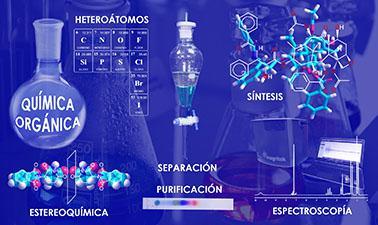
This course is a continuation of Organic Chemistry I. As you progress through the units, you will continue to learn the different chemical reactions characteristic of each family of organic compounds.

This course is a continuation of Organic Chemistry I. As you progress through the units, you will continue to learn the different chemical reactions characteristic of each family of organic compounds. We will focus on four most important classes of reactions: electrophilic substitution at aromatic rings, nucleophilic addition at carbonyl compounds, hydrolysis of carboxylic acids, and carbon-carbon bond formation using enolates. The enolate portion of this course will cover the reactivity of functional groups.
We will also look at synthetic strategies for making simple, small organic molecules, using the knowledge of organic chemistry accumulated thus far. At the end of this course, you will possess the tools you need to plan the synthesis of fairly complicated molecules, like those used in pharmaceutics.
This course also introduces biological molecules, including carbohydrates, peptides and proteins, lipids, and nucleic acids, from a molecular perspective. You will learn how chemical reactions, especially oxidation and reduction reactions, form the basis of all life.

Upon successful completion of this course, the student will be able to:

Identify the chemistry and basic mechanisms of the following functional groups: ethers, epoxides, thiols, sulfides, benzene, amines, aldehydes, ketones, and carboxylic acids and their derivatives.
Plan the synthesis of ethers, amines, and carboxylic acid derivatives (esters, amides, etc.).
Predict the product(s) of an electrophilic addition reaction involving conjugated dienes.
Use the Diels-Alder reaction on conjugated dienes to form new carbon-carbon bonds and chiral centers of a desired configuration (R or S).
Determine whether a molecule is aromatic, non-aromatic, or anti-aromatic.
Indicate the position in which an electrophile will be added on an aromatic ring, given the other substituents present.
Identify the products and mechanisms of electrophilic and nucleophilic aromatic substitution reactions.
Demonstrate mastery of enolate chemistry and techniques for C-C bond formation.
Plan the synthesis of simple molecules using the reactions learned throughout both the Organic Chemistry I and Organic Chemistry II courses.
Describe the chemistry associated with biological molecules such as amino acids, nucleic acids, lipids, and carbohydrates.
Identify different monosaccharides, disaccharides, aldoses, and ketoses, as well as reducing and non-reducing carbohydrates.
Identify the twenty naturally occurring amino acids and describe the mechanisms associated with peptide cleavage and synthesis.
Use spectroscopy (mass spectrometry, UV-Vis spectrometry, infrared spectrometry, and nuclear magnetic resonance) to characterize an organic molecule.

Go to Class
MOOC List is learner-supported. When you buy through links on our site, we may earn an affiliate commission.

Related Courses

Verification and Synthesis of Autonomous Systems (Coursera) Coursera
University of Colorado Boulder

Verification and Synthesis of Autonomous Systems (Coursera)

This course will provide different techniques on the verification of autonomous systems against stability, regular, or omega-regular properties. Such techniques include Lyapunov theories, reachability analysis, barrier certificates, and model checking. Finally, it will introduce several techniques on designing controllers enforcing properties of interest over the original autonomous systems.

Sep 14th 2026
4 Weeks
Nanotechnology and Nanosensors, Part 1 (Coursera) Coursera
Technion - Israel Institute of Technology

Nanotechnology and Nanosensors, Part 1 (Coursera)

Nanotechnology and nanosensors are broad, interdisciplinary areas that encompass (bio)chemistry, physics, biology, materials science, electrical engineering and more. The present course will provide a survey on some of the fundamental principles behind nanotechnology and nanomaterials and their vital role in novel sensing properties and applications. The course will discuss interesting interdisciplinary scientific and engineering knowledge at the nanoscale to understand fundamental physical differences at the nanosensors.

Oct 5th 2026
5-12 Weeks
Enhancing Catholic School Identity (edX) EdX
KU Leuven University,KULeuvenX

Enhancing Catholic School Identity (edX)

How to build a Catholic Dialogue School in a pluralising and secularising world. The Catholic identity of schools today is being challenged by processes of pluralisation and secularisation. While school communities used to be considered more or less homogeneous, nowadays schools are characterised by increasing diversity and a diminishing interest in the Catholic faith tradition, among students as well as teachers.

Self Paced
Self-Paced
Nuclear Magnetic Resonance a Compass to Nanoworld (FUN) FUN
Université Lille

Nuclear Magnetic Resonance a Compass to Nanoworld (FUN)

Nuclear Magnetic Resonance (NMR) phenomenon is currently exploited for many purposes, including medical imaging using the MRI technique but also the characterization of the structure and the dynamics of matter at atomic scale by NMR spectroscopy, which is a key tool in chemistry, structural biology, pharmacology and material sciences. NMR is also employed for oil exploration or the inspection of artworks.

No sessions available
5-12 Weeks
Organic Solar Cells - Theory and Practice (Coursera) Coursera
Technical University of Denmark - DTU

Organic Solar Cells - Theory and Practice (Coursera)

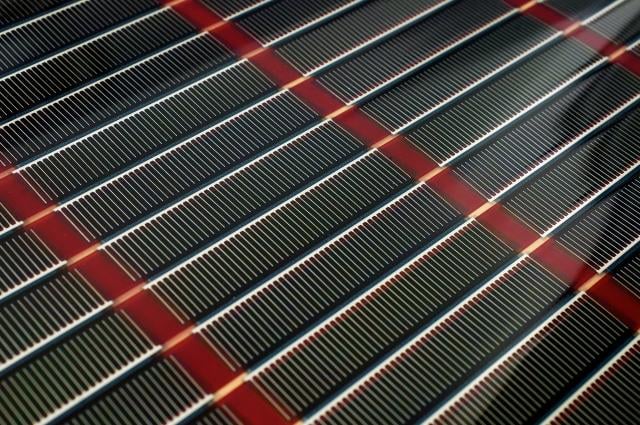
The goal of the course is to give students awareness of the largest alternative form of energy and how organic / polymer solar cells can harvest this energy. The course provides an insight into the theory behind organic solar cells and describes the three main research areas within the field i.e. materials, stability and processing.

Sep 21st 2026
5-12 Weeks
The Diversity of Exoplanets (Coursera) Coursera
University of Geneva

The Diversity of Exoplanets (Coursera)

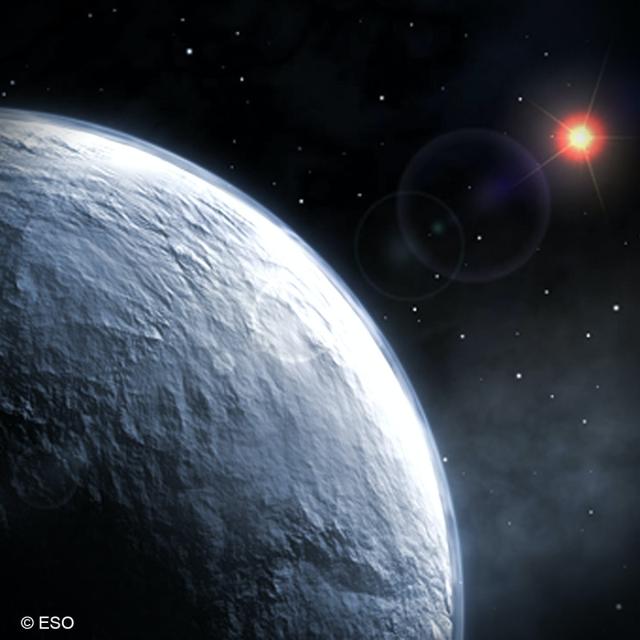
In this MOOC, you will have the opportunity to practice several methods of detection and characterisation of exoplanets. You will discover their statistical properties and the current state of knowledge we have in this very recent field of research. You will also understand the limitations and biases of the different detection techniques.

Sep 21st 2026
5-12 Weeks
Advanced Organic Chemistry (saylor.org) Saylor Academy
Saylor.org

Advanced Organic Chemistry (saylor.org)

Remember that organic chemistry is the discipline that studies the properties and reactions of organic, carbon-based compounds. This course is intended to be taken after the first two semesters of organic chemistry. Many of the topics within this outline have been covered in the first two semesters of organic chemistry; however, this course will explore these topics in much greater depth.

Legacy Course
Self-Paced