Non-Alcoholic Fatty Liver Disease – The Essentials (Coursera)

Non-Alcoholic Fatty Liver Disease – The Essentials (Coursera)

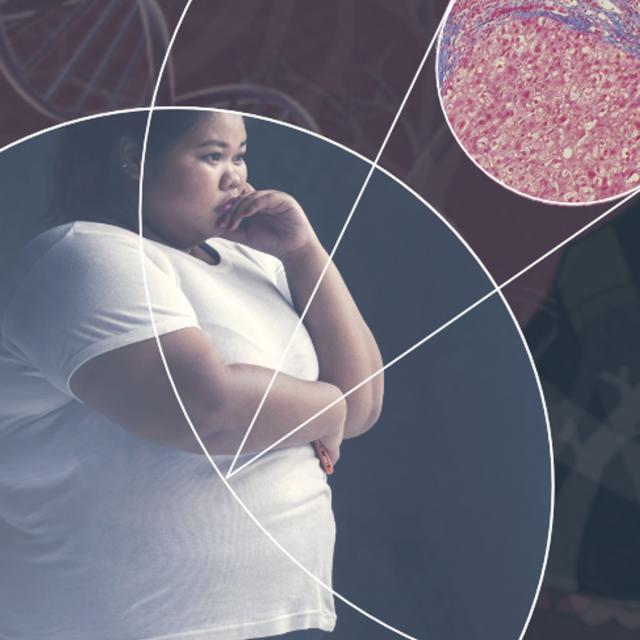
Non-Alcoholic Fatty Liver Disease (NAFLD) is a global problem, affecting up to 25% of all individuals. The disease not only increases the risk of liver disease, but also of cardiovascular disease and liver cancer. During this course, you will learn the essentials of NAFLD. We will begin with an introduction to the physiology of the human liver followed by epidemiology, pathophysiology, clinical medicine, and genetics. Diagnosing NAFLD based on blood tests, diagnostic imaging and histology will be discussed. Complications and treatment options will also be covered in this course including the link between NAFLD and the development of diabetes. Finally, experts will discuss data driven identification of new biomarkers by omics technologies.

Class Deals by MOOC List - Click here and see Coursera's Active Discounts, Deals, and Promo Codes.

After completing this course, you will have a broad knowledge about NAFLD ranging from the aetiology and pathophysiology to bedside examinations and treatments.
What You Will Learn

  • Physiology of the liver and pathophysiological aspects of NAFLD
  • Diagnostics aspects of NAFLD
  • Treatment of NAFLD
  • Complications of NAFLD

Syllabus

WEEK 1
The Liver - Physiology and Disease
The liver contributes to overall body homeostasis through several biochemical processes and without these functions we cannot maintain life. In the first lectures, Professor Jens Juul Holst will discuss the physiology of the human liver focusing on biochemical concepts as gluconeogenesis, glycogenolysis, lipid and amino acid metabolism. The videos will also cover how external hormonal system such as pancreatic islet regulates liver metabolism. After completing module 1 you will have a broad and basic understanding of the physiology and pathophysiology of the liver. In the subsequent modules, we will build on top of module 1 by exploring fatty liver disease.

WEEK 2
Causes
What causes non-alcoholic fatty liver disease? This is the core question of module 2.
We will kickstart this module by reviewing epidemiological data on non-alcoholic fatty liver disease by professor Peter Jepsen. In the second half, professor Bente Kiens will dig into which nutrients that may drive fat infiltration of the liver. The diversity in the risk of developing non-alcoholic fatty liver disease and NASH will be discussed from a genetic approach by doctor Stefan Stender.

WEEK 3
Pathophysiological aspects
Professor Henning Grønbæk will commence module 3 with an overview of the multiple hit hypothesis followed by Hendrik Vilstrup who will describe how the liver function is affected in patients with NAFLD.

WEEK 4
Diagnostics
Professors Flemming Bendtsen and Lise Lotte Gluud will discuss how to diagnose non-alcoholic fatty liver disease with or without fibrosis by non-invasive tests and describe when additional tests including histological assessment is required. Professor Mogens Vyberg will take us into the world of liver diagnostic by zooming in on the histological traits of liver tissue from patients with non-alcoholic fatty liver disease. The module will be concluded by perspectives on how ‘omics’ technologies such as protemics may contribute to identification of novel biomarkers in a lecture by Associate Professor Nicolai J. Wewer Albrechtsen and an interview with Professor Matthias Mann.

WEEK 5
Treatment
Exercise is an important tool to improve the health of your liver. How exercise affect your liver will be introduced by Professor Bente Klarlund Pedersen and Associate Professor Nicolai J. Wewer Albrechtsen. Personal Trainer Samantha Mølgaard will give a practical guide on how to ‘exercise to improve your liver’. The evidence concerning the pharmacological treatment of non-alcoholic fatty liver disease is growing rapidly. Professor Guruprasad Aithal will introduce us to the current evidence and provide an insight into future drugs developed specifically for the treatment of non-alcoholic fatty liver disease.

WEEK 6
Complications and Perspective
In the final module, Professor Henning Grønbæk will discuss the close relation between non-alcoholic fatty liver disease and type 2 diabetes. Furthermore, why it is important to screen individuals with type 2 diabetes for non-alcoholic fatty liver disease. Professor Jonel Trebicka will discuss the management of patients who have developed cirrhosis due to non-alcoholic fatty liver disease. Finally, Professor Lise lotte Gluud and Associate Professor Nicolai J. Wewer Albrechtsen will revisit some general aspects of non-alcoholic fatty liver disease and discuss its future aspects.
Go to Class
MOOC List is learner-supported. When you buy through links on our site, we may earn an affiliate commission.

Related Courses

Disease Screening in Public Health (Coursera) Coursera
University of Geneva

Disease Screening in Public Health (Coursera)

Current and future public health is characterized by the increase of chronic and degenerative diseases, corresponding to the worldwide ageing of the population. The increasing prevalence of these conditions together with the long incubation period of the chronic diseases and the restless technological innovations, offer new opportunities to develop strategies for early diagnosis.

Aug 17th 2026
5-12 Weeks
Career 911: Your Future Job in Medicine and Healthcare (Coursera) Coursera
Northwestern University

Career 911: Your Future Job in Medicine and Healthcare (Coursera)

This course aims to help high school students, recent graduates, and those considering career transitions explore health care career options and learn strategies for entry into the health care workforce and health related fields. There are lots of amazing job opportunities in medicine and healthcare! Join us, as we share the strategies and secrets for getting those jobs.

Aug 17th 2026
5-12 Weeks
A Life of Happiness and Fulfillment (Coursera) Coursera
Indian School of Business - ISB

A Life of Happiness and Fulfillment (Coursera)

What are the determinants of a happy and fulfilling life? This is surely one of life’s biggest questions, and a question that has interested many of our ancestors. Buddha famously gave up his kingdom in search of happiness. Several Greek philosophers (from Aristotle to Epicurus and Plato to Socrates) had their own views on what it takes to be happy. And of course, we all have our own theories about happiness too.

Aug 17th 2026
5-12 Weeks
The Brain and Space (Coursera) Coursera
Duke University

The Brain and Space (Coursera)

This course is about how the brain creates our sense of spatial location from a variety of sensory and motor sources, and how this spatial sense in turn shapes our cognitive abilities. Knowing where things are is effortless. But “under the hood,” your brain must figure out even the simplest of details about the world around you and your position in it.

Aug 17th 2026
5-12 Weeks
Clinical Kidney, Pancreas and Islet Transplantation (Coursera) Coursera
Leiden University,Leiden University Medical Center

Clinical Kidney, Pancreas and Islet Transplantation (Coursera)

Kidney transplantation is a major advance of modern medicine which provides high-quality of life for patients with end-stage renal disease. What used to be an experimental, risky, and very limited treatment option more than 50 years ago is now routinely performed in many countries worldwide. The number of renal transplants is expected to rise sharply in the next decade since the proportion of patients with end stage renal disease is increasing.

Aug 17th 2026
4 Weeks
Diabetes - a Global Challenge (Coursera) Coursera
University of Copenhagen

Diabetes - a Global Challenge (Coursera)

Diabetes and obesity are growing health problems in rich and poor countries alike. With this course you will get updated on cutting-edge diabetes and obesity research including biological, genetic and clinical aspects as well as prevention and epidemiology of diabetes and obesity. All lectures are provided by high-profile scientists from one the world's leading universities in diabetes research.

Aug 17th 2026
5-12 Weeks
Epidemiology: The Basic Science of Public Health (Coursera) Coursera
University of North Carolina

Epidemiology: The Basic Science of Public Health (Coursera)

Often called “the cornerstone” of public health, epidemiology is the study of the distribution and determinants of diseases, health conditions, or events among populations and the application of that study to control health problems. By applying the concepts learned in this course to current public health problems and issues, students will understand the practice of epidemiology as it relates to real life and makes for a better appreciation of public health programs and policies. This course explores public health issues like cardiovascular and infectious diseases – both locally and globally – through the lens of epidemiology.

Aug 17th 2026
5-12 Weeks
Psychology of Popularity (Coursera) Coursera
University of North Carolina

Psychology of Popularity (Coursera)

The level of popularity you experienced in childhood and adolescence is still affecting you today in ways that you may not even realize. Learn about how psychologists study popularity and how these same concepts can be used in adulthood to be more successful at work, become better parents, and have a happier life.

Aug 17th 2026
5-12 Weeks
The Social Context of Mental Health and Illness (Coursera) Coursera
University of Toronto

The Social Context of Mental Health and Illness (Coursera)

Learn how social factors promote mental health, influence the onset and course of mental illness, and affect how mental illnesses are diagnosed and treated. This course explores how our understanding of mental health and illness has been influenced by social attitudes and social developments in North America and around the world. The course begins by situating our contemporary mental health practices in historical context, then looks at different aspects of mental health, mental illness and mental health services and their connections to what’s going on in our social environment.

Aug 17th 2026
5-12 Weeks
Data Management for Clinical Research (Coursera) Coursera
Vanderbilt University

Data Management for Clinical Research (Coursera)

This course presents critical concepts and practical methods to support planning, collection, storage, and dissemination of data in clinical research. Understanding and implementing solid data management principles is critical for any scientific domain. Regardless of your current (or anticipated) role in the research enterprise, a strong working knowledge and skill set in data management principles and practice will increase your productivity and improve your science. Our goal is to use these modules to help you learn and practice this skill set.

Aug 17th 2026
5-12 Weeks
Childbirth: A Global Perspective (Coursera) Coursera
Emory University

Childbirth: A Global Perspective (Coursera)

This course will review challenges for maternal and newborn health in the developing world, where a great many women and babies are suffering from complications during pregnancy, childbirth, and the days following birth. Themes covered include the epidemiology of maternal and newborn mortality and morbidity, relevant issues for the global health workforce, community-based interventions to improve maternal and newborn health and survival, and sociocultural dynamics surrounding birth.

Aug 24th 2026
5-12 Weeks