Neurociencia empresarial: siete claves para la PYME (URJC)

Neurociencia empresarial: siete claves para la PYME (URJC)

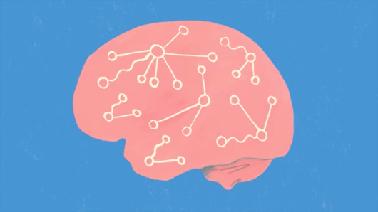
La empresa, como la sociedad, está viviendo momentos de incertidumbre, riesgo y caos. Esto provoca un ambiente laboral de miedo, desconfianza, inseguridad, que se traduce en personas que se ven obligadas a dejar su puesto de trabajo y personal desmotivado que trabaja bajo mucha presión, sin implicación personal en su labor profesional, preocupado más por adquirir información técnica, que por el valor que puede aportar como persona a la empresa. En este curso conocerás las nuevas exigencias laborales, así como los nuevos paradigmas de la empresa dinámica, proactiva y actual en la que, por un lado, se asumen riesgos y, por otro, también es vital innovar en la estrategia de crecimiento.

Dentro de una nueva cultura que motive a los miembros de la organización a colaborar espontáneamente y a generar un ambiente de trabajo en el cual los empleados piensen como empresarios y sean partícipes del diseño y futuro de la empresa. Apostando por la diferenciación, por salirse del promedio del directivo tradicional, por sembrar las semillas de un directivo diferente, que trabaja con lo mejor de sí mismo, activando la cooperación en su equipo en lugar de la competición.

Qué vas a aprender:

  • Conocimientos básicos en neurociencias cognitivas.
  • Comprender cómo procesa el cerebro la información.
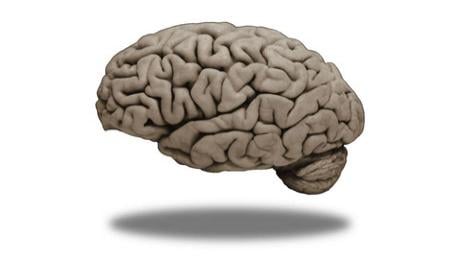
  • Conocer las principales áreas cerebrales implicadas en nuestras conductas ejecutivas y cómo potenciarlas.
  • Integrar los nuevos conocimientos sobre los mecanismos cerebrales involucrados en generar un clima de trabajo que, sin eludir la dinámica que exigen las organizaciones actuales, haga de cada miembro del equipo un “socio del proyecto”.
  • Incorporar herramientas neurocognitivas que permitan incrementar la competitividad, el rendimiento y motivación de los colaboradores, por un lado; y, por otro, crear relaciones eficaces con las personas que nos rodean, potenciar habilidades de liderazgo y gerenciales, y tomar decisiones exitosas en contextos de incertidumbre.
  • Influir positivamente tanto en sus clientes, compañeros, directivos, proveedores, socios de negocios, etc.
  • Apertura de mente hacia un concepto de empresa dinámica proactiva y un liderazgo centrado en valores y trabajo en equipo.
  • Aprehender y comunicar una nueva cultura que motive a los miembros de la organización a colaborar espontáneamente.
  • Conocer los elementos que forman parte de las decisiones inconscientes de los consumidores y agentes financieros.
  • Conocer los elementos lingüísticos y paralingüísticos que determinan las decisiones de compra y en el mercado bursátil.
Go to Class
MOOC List is learner-supported. When you buy through links on our site, we may earn an affiliate commission.

Related Courses

Medical Neuroscience (Coursera) Coursera
Duke University

Medical Neuroscience (Coursera)

Medical Neuroscience explores the functional organization and neurophysiology of the human central nervous system, while providing a neurobiological framework for understanding human behavior. In this course, you will discover the organization of the neural systems in the brain and spinal cord that mediate sensation, motivate bodily action, and integrate sensorimotor signals with memory, emotion and related faculties of cognition. The overall goal of this course is to provide the foundation for understanding the impairments of sensation, action and cognition that accompany injury, disease or dysfunction in the central nervous system. The course will build upon knowledge acquired through prior studies of cell and molecular biology, general physiology and human anatomy, as we focus primarily on the central nervous system.

Jun 22nd 2026
13-24 Weeks
Philosophy, Science and Religion: Science and Philosophy (Coursera) Coursera
University of Edinburgh

Philosophy, Science and Religion: Science and Philosophy (Coursera)

Philosophy, Science and Religion mark three of the most fundamental modes of thinking about the world and our place in it. Are these modes incompatible? Put another way: is the intellectually responsible thing to do to ‘pick sides’ and identify with one of these approaches at the exclusion of others? Or, are they complementary or mutually supportive? As is typical of questions of such magnitude, the devil is in the details. For example, it is important to work out what is really distinctive about each of these ways of inquiring about the world. In order to gain some clarity here, we’ll be investigating what some of the current leading thinkers in philosophy, science and religion are actually doing.

Jun 22nd 2026
5-12 Weeks
Free Will and Neuroscience (Coursera) Coursera
Dartmouth College

Free Will and Neuroscience (Coursera)

In this course, we will discuss free will from a neuroscientific perspective. Module one of the course will explore two neuroscientific arguments against free will from Libet and Wegner and evaluate neuroscientists’ arguments against free will. You will also examine where these experiments do not succeed in debunking free will.

Jun 22nd 2026
3 Weeks
Advanced Neurobiology I (Coursera) Coursera
Peking University

Advanced Neurobiology I (Coursera)

Hello everyone! Welcome to advanced neurobiology! Neuroscience is a wonderful branch of science on how our brain perceives the external world, how our brain thinks, how our brain responds to the outside of the world, and how during disease or aging the neuronal connections deteriorate. We’re trying to understand the molecular, cellular nature and the circuitry arrangement of how nervous system works.

Jun 15th 2026
5-12 Weeks
Entrepreneurship Strategy: From Ideation to Exit (Coursera) Coursera
HEC Paris

Entrepreneurship Strategy: From Ideation to Exit (Coursera)

This course covers in the chronological order each defining step of an entrepreneurial project. It begins with very personal considerations related to getting to better know yourself better so as to decide if you are ready for the multiple challenges of entrepreneurship. It then deals with creativity in order to provide the right set of tools to find an idea with the right potential to disrupt an existing business.

Jun 1st 2026
4 Weeks
The Psychology of Thrill Seekers (Coursera) Coursera
Emory University

The Psychology of Thrill Seekers (Coursera)

Sensation seeking is a trait we all have and includes the search for complex and new experiences. Thrill Seekers, people with high-sensation seeking personalities, crave exotic and intense experiences even when physical or social risks are involved. This course helps learners examine the remarkable world of the high-sensation seeking personality and explores the lifestyle, psychology, and neuroscience behind thrill seekers.

Jun 22nd 2026
5-12 Weeks
Preparing to Manage Human Resources (Coursera) Coursera
University of Minnesota

Preparing to Manage Human Resources (Coursera)

One way or another, all employees are managed. But approaches to managing employees varying from employee-to-employee, job-to-job, manager-to-manager, organization-to-organization, and country-to-country. This course provides a foundation for developing your own approach to skillfully managing employees by illustrating alternative human resource management (HRM) strategies, introducing the importance of the legal context, and thinking about what motivates employees.

Jun 15th 2026
4 Weeks
Human Resources Analytics (Coursera) Coursera
University of California, Irvine

Human Resources Analytics (Coursera)

With advances in technology and cloud computing, there are now numerous data sources available to guide decision-making and drive organizational success. Harvesting the right kind of data requires that HR teams possess strong analytical skills; high-performing HR teams know that their function is to leverage data as a “decision science” by identifying metrics and data sources that deliver organizational insights. In order to do so, HR must ensure that metrics and measures are used effectively to achieve strategic goals.

Jun 15th 2026
4 Weeks
Understanding and Strengthening Health Systems (Coursera) Coursera
Johns Hopkins University

Understanding and Strengthening Health Systems (Coursera)

Welcome to our course on Understanding and Strengthening Health Systems for Global Health. During the course we will provide you with an overview of the main elements or building blocks of a health system based on the World Health Organization’s guidance. You will have the opportunity to explore four main areas of health systems in global health with particular reference to low and middle income countries. The first area focuses on understanding health service organizations, the challenges.

Jun 15th 2026
4 Weeks
Managing Employee Compensation (Coursera) Coursera
University of Minnesota

Managing Employee Compensation (Coursera)

Whether you're writing paychecks or wondering where yours comes from, this course is for you! We begin by asking: "To succeed, what kind of a person does your organization need to attract, retain, and motivate?" From there, we'll explain how to align your organization's objectives, its pay philosophy, and ultimately the way it designs and implements its salary structure, short-term incentives, long-term incentives, and benefits. Interested in learning more about the technical aspects of compensation, but don't know where to begin?

Jun 15th 2026
4 Weeks
Claves para Gestionar Personas (Coursera) Coursera
IESE Business School

Claves para Gestionar Personas (Coursera)

¿Te has preguntado alguna vez qué criterios utilizan las empresas para contratar o retribuir a las personas? ¿Por qué no siempre entendemos los planes de promoción?. El objetivo de este curso es conocer algunas herramientas prácticas en materia de Recursos Humanos y aprender a gestionar personas y liderar el talento con la mayor eficacia posible.

Jun 15th 2026
5-12 Weeks