EdX

Natural Disasters (edX)

Offered by McGill, McGillX,
Natural Disasters (edX)

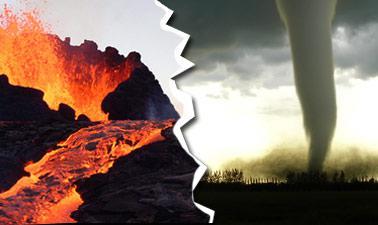
Learn the science behind different types of natural disasters and our ability, or inability, to control and predict these events. No region on Earth is immune from natural disasters. As we gain scientific understanding into the causes and nature of such phenomena, we become better able to mitigate the effects of disasters. Yet as the world's population continues to grow, an increasingly large number of people are at risk.

Class Deals by MOOC List - Click here and see EdX's Active Discounts, Deals, and Promo Codes.

This science course examines different types of natural disasters and our ability, or inability, to control and predict such events. You will gain an appreciation of natural disasters beyond the newspaper headlines, and will better understand how the effects of disasters can be reduced.

There is an urgent need for people from all walks of life to better understand the scientific principles behind the occurrence of natural disasters:

  • City planners need to know where, and where not, to site buildings.
  • Politicians need to make scientifically informed decisions.
  • Emergency management officials need to understand the nature of a potential disaster and ways to mitigate such an event.
  • Journalists need to report scientifically accurate information.

Learner Testimonial:
“Professors Stix and Gyakum have created and presented an engaging course, and have helped in my quest for a better understanding of the world around me.” – Previous Student

What you'll learn:

  • Explore the ongoing conflict between humans and nature
  • Discuss the global impact of natural disasters and how they are linked
  • Explore the scientific principles behind the occurrence of natural disasters

Go to Class
MOOC List is learner-supported. When you buy through links on our site, we may earn an affiliate commission.

Related Courses

Stand up for Science: Practical Approaches to Discussing Science that Matters (edX) EdX
University of Michigan,MichiganX

Stand up for Science: Practical Approaches to Discussing Science that Matters (edX)

In this Teach-Out, scientists and non-scientists reach out and RELATE to build communication skills to more effectively discuss knowledge. Everyone - non-scientists and scientists alike - has some form of expertise, but communicating across a gap in knowledge or experience is challenging. In this Teach-Out, we address this challenge by helping participants to develop core communication skills and more effectively communicate with one another.

No sessions available
1 Week
Analyzing the Universe (Coursera) Coursera
Rutgers University

Analyzing the Universe (Coursera)

Using publicly available data from NASA of actual satellite observations of astronomical x-ray sources, we explore some of the mysteries of the cosmos, including neutron stars, black holes, quasars and supernovae. We will analyze energy spectra and time series data to understand how these incredible objects work. We utilize an imaging tool called DS9 to explore the amazing diversity of astronomical observations that have made x-ray astronomy one of the most active and exciting fields of scientific investigation in the past 50 years.

Jun 8th 2026
5-12 Weeks
Introduction to Genetics and Evolution (Coursera) Coursera
Duke University

Introduction to Genetics and Evolution (Coursera)

Introduction to Genetics and Evolution is a college-level class being offered simultaneously to new students at Duke University. The course gives interested people a very basic overview of some principles behind these very fundamental areas of biology. We often hear about new "genome sequences," commercial kits that can tell you about your ancestry (including pre-human) from your DNA or disease predispositions, debates about the truth of evolution, why animals behave the way they do, and how people found "genetic evidence for natural selection." This course provides the basic biology you need to understand all of these issues better, tries to clarify some misconceptions, and tries to prepare students for future, more advanced coursework in Biology (and especially evolutionary genetics). No prior coursework is assumed.

Jun 8th 2026
5-12 Weeks
Engineering for Your Classroom K – 3 (edX) EdX
The University of British Columbia,UBCx

Engineering for Your Classroom K – 3 (edX)

Self-paced, asynchronous course aimed to help educators introduce Science, Math, Engineering and Technology (STEM) concepts to K-3 students. This course is designed for educators to learn about ways to teach Engineering and STEM concepts to their students through fun, hands-on activities.

Self Paced
Self-Paced
Quantum Mechanics for Scientists and Engineers 2 (edX) EdX
StanfordOnline

Quantum Mechanics for Scientists and Engineers 2 (edX)

This course covers key topics in the use of quantum mechanics in many modern applications in science and technology, introduces core advanced concepts such as spin, identical particles, the quantum mechanics of light, the basics of quantum information, and the interpretation of quantum mechanics, and covers the major ways in which quantum mechanics is written and used in modern practice.

Self Paced
Self-Paced
Open Science: Sharing Your Research with the World (edX) EdX
Delft University of Technology,DelftX

Open Science: Sharing Your Research with the World (edX)

Explore ways to apply Open Science principles to academic work - including your own. Learn how to share your research effectively and responsibly, building greater visibility and impact. You can become a more visible, effective and impactful researcher by sharing your research data and publications openly. In this course, you will learn the objectives, main concepts, and benefits of Open Science principles along with practices for open data management and open data sharing.

Oct 25th 2023
5-12 Weeks
Science & Cooking: From Haute Cuisine to Soft Matter Science (physics) (edX) EdX
HarvardX,Harvard University

Science & Cooking: From Haute Cuisine to Soft Matter Science (physics) (edX)

Top chefs and Harvard researchers explore how traditional and modernist cooking techniques can illuminate basic principles in chemistry, physics, and engineering. Learn about elasticity, viscosity, mayonnaise, baking, and more! In this course, which investigates physical transformations in food, we will be visited by world-famous chefs who use a number of different styles and techniques in their cooking. Each chef will demonstrate how he or she prepares delicious and interesting creations, and we will explore how fundamental scientific principles make them possible.

Self Paced
Self-Paced
Science & Cooking: From Haute Cuisine to Soft Matter Science (chemistry) (edX) EdX
HarvardX,Harvard University

Science & Cooking: From Haute Cuisine to Soft Matter Science (chemistry) (edX)

Top chefs and Harvard researchers explore how everyday cooking and haute cuisine can illuminate basic principles in chemistry, physics, and engineering. Learn about food molecules and how chemical reactions can affect food texture and flavor. During each module of this course, chefs reveal the secrets behind some of their most famous culinary creations — often right in their own restaurants. Inspired by such cooking mastery, the Harvard team will then explain the science behind the recipe.

Self Paced
Self-Paced
An Introduction to Evidence-Based Undergraduate STEM Teaching (edX) EdX
CornellX,Cornell University

An Introduction to Evidence-Based Undergraduate STEM Teaching (edX)

Learn how to implement evidence-based teaching strategies in your university classroom as well as effective methods for assessing teaching and learning. This course is designed to provide future STEM faculty, graduate students and post-doctoral fellows with an introduction to effective teaching strategies and the research that supports them.

Jun 17th 2024
5-12 Weeks
Fundamentos de la Investigación Científica (edX) EdX
Universidad Anáhuac,AnahuacX

Fundamentos de la Investigación Científica (edX)

Evalúa las principales posturas respecto al problema de la verdad, cómo saber si un conocimiento es verdadero, qué criterios se emplean para tal efecto, qué diferencia hay entre la certeza y la verdad, ¿todo conocimiento científico es verdadero? Una de las preguntas más importantes e ineludibles de la existencia humana es la referente a la verdad de nuestros conocimientos. Las personas, las organizaciones y las disciplinas científicas coinciden en indagar la validez de sus convicciones, premisas y supuestos.

Self Paced
Self-Paced