EdX

Multi-Object Tracking for Automotive Systems (edX)

Multi-Object Tracking for Automotive Systems (edX)

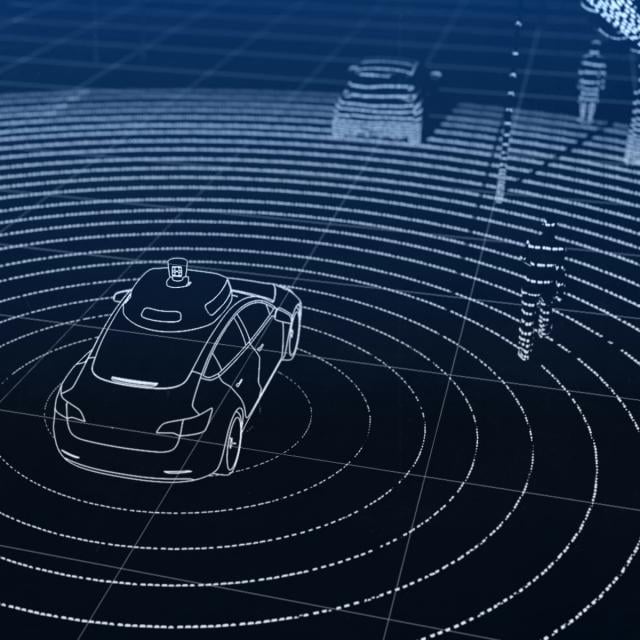
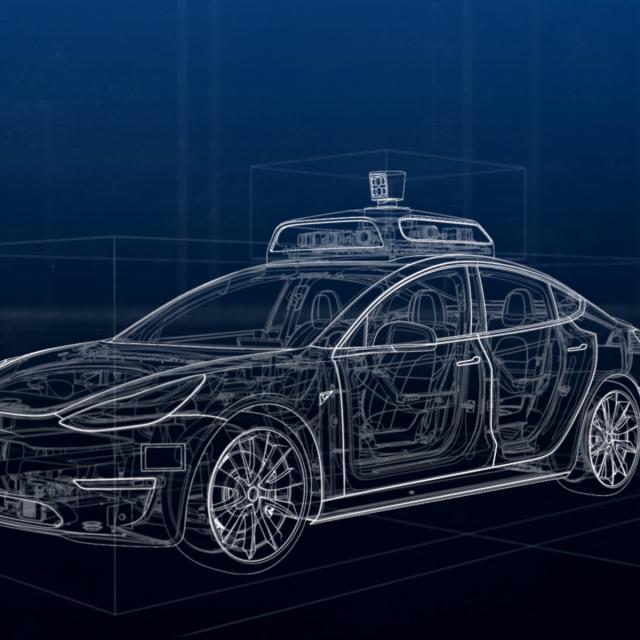
Learn how to localize and track dynamic objects with a range of applications including autonomous vehicles. Autonomous vehicles, such as self-driving cars, rely critically on an accurate perception of their environment. In this course, we will teach you the fundamentals of multi-object tracking for automotive systems.

Class Deals by MOOC List - Click here and see EdX's Active Discounts, Deals, and Promo Codes.

Key components include the description and understanding of common sensors and motion models, principles underlying filters that can handle varying number of objects, and a selection of the main multi-object tracking (MOT) filters.

The course builds and expands on concepts and ideas introduced in CHM013x: “Sensor fusion and nonlinear filtering for automotive systems”. In particular, we study how to localize an unknown number of objects, which implies various interesting challenges. We focus on cameras, laser scanners and radar sensors, which are all commonly used in vehicles, and emphasize on situations where we seek to track nearby pedestrians and vehicles. Still, most of the involved methods are more general and can be used for surveillance or to track, e.g., biological cells, sports athletes or space debris.
The course contains a series of videos, quizzes and hands-on assignments where you get to implement several of the most important algorithms.
Learn from award-winning and passionate teachers to enhance your knowledge at the forefront of research on self-driving vehicles. Chalmers is among the top engineering schools that distinguish itself through its close collaboration with industry.
This course is part of the Emerging Automotive Technologies MicroMasters Program and part of the Sensor Fusion and Multi-Object Tracking Professional Certificate.

What you'll learn

  • A thorough understanding of multi-object tracking (MOT) and its challenge
  • Expert-level understanding of principles, theory and algorithms in modern MOT.
  • Extensive know-how for solving various MOT problems in practice.
  • Valuable experience from implementing different MOT algorithms.

Go to Class
MOOC List is learner-supported. When you buy through links on our site, we may earn an affiliate commission.

Related Courses

Applied Quantum Computing III: Algorithm and Software (edX) EdX
Purdue University,PurdueX

Applied Quantum Computing III: Algorithm and Software (edX)

Learn domain-specific quantum algorithms and how to run them on present-day quantum hardware. This course is part III of the series of Quantum computing courses, which covers aspects from fundamentals to present-day hardware platforms to quantum software and programming. The goal of part III is to discuss some of the key domain-specific algorithms that are developed by exploiting the fundamental quantum phenomena (e.g. entanglement)and computing models discussed in part I.

Mar 25th 2024
5-12 Weeks
An Introduction to Evidence-Based Undergraduate STEM Teaching (edX) EdX
CornellX,Cornell University

An Introduction to Evidence-Based Undergraduate STEM Teaching (edX)

Learn how to implement evidence-based teaching strategies in your university classroom as well as effective methods for assessing teaching and learning. This course is designed to provide future STEM faculty, graduate students and post-doctoral fellows with an introduction to effective teaching strategies and the research that supports them.

Jun 17th 2024
5-12 Weeks
Introduction to Self-Driving Cars (Coursera) Coursera
University of Toronto

Introduction to Self-Driving Cars (Coursera)

Welcome to Introduction to Self-Driving Cars, the first course in University of Toronto’s Self-Driving Cars Specialization. This course will introduce you to the terminology, design considerations and safety assessment of self-driving cars. By the end of this course, you will be able to: Understand commonly used hardware used for self-driving cars; Identify the main components of the self-driving software stack; Program vehicle modelling and control; Analyze the safety frameworks and current industry practices for vehicle development

Jun 29th 2026
5-12 Weeks
Verification and Synthesis of Autonomous Systems (Coursera) Coursera
University of Colorado Boulder

Verification and Synthesis of Autonomous Systems (Coursera)

This course will provide different techniques on the verification of autonomous systems against stability, regular, or omega-regular properties. Such techniques include Lyapunov theories, reachability analysis, barrier certificates, and model checking. Finally, it will introduce several techniques on designing controllers enforcing properties of interest over the original autonomous systems.

Jun 29th 2026
4 Weeks
Building a Future with Robots (FutureLearn) FutureLearn
The University of Sheffield

Building a Future with Robots (FutureLearn)

Explore the role of robots and autonomous systems in the factories, homes, hospitals, schools and cars of our near future. In the near future, many of us will work alongside robots. Knowledge of robotics and autonomous systems will be a helpful skill for a surprising number of today’s careers. On this course, we’ll look at current and future developments in the field of robotics that could shape many different aspects of our daily lives.

Available now
3 Weeks
Intelligent Systems: An Introduction to Deep Learning and Autonomous Systems (FutureLearn) FutureLearn
University of York

Intelligent Systems: An Introduction to Deep Learning and Autonomous Systems (FutureLearn)

Discover the benefits and risks of deep learning and its uses in systems such as assistive technology and facial recognition. Delve into the inner workings of deep learning. From Ada Lovelace until the first decade of this century, we have relied on expert computer programmers to design and write software.

Sep 20th 2021
3 Weeks
State Estimation and Localization for Self-Driving Cars (Coursera) Coursera
University of Toronto

State Estimation and Localization for Self-Driving Cars (Coursera)

Welcome to State Estimation and Localization for Self-Driving Cars, the second course in University of Toronto’s Self-Driving Cars Specialization. We recommend you take the first course in the Specialization prior to taking this course. This course will introduce you to the different sensors and how we can use them for state estimation and localization in a self-driving car.

Jun 29th 2026
5-12 Weeks
Introduction to Analytics Modeling (edX) EdX
Georgia Institute of Technology,GTx

Introduction to Analytics Modeling (edX)

Learn essential analytics models and methods and how to appropriately apply them, using tools such as R, to retrieve desired insights. Analytical models are key to understanding data, generating predictions, and making business decisions. Without models it’s nearly impossible to gain insights from data.

May 13th 2024
13-24 Weeks
Capstone: Autonomous Runway Detection for IoT (Coursera) Coursera
EIT Digital

Capstone: Autonomous Runway Detection for IoT (Coursera)

The students will develop a larger system using the learning outcomes from these courses, and the students will evaluate the developed system in a real-world programming environment. This course is a true engineering task in which the student must, not only implement the algorithm code, but also handle the interfaces between many different actors and hardware platforms.

Jun 15th 2026
3 Weeks
Data Visualization & Cloud Technologies (edX) EdX
University of Wisconsin–Madison,WisconsinX

Data Visualization & Cloud Technologies (edX)

Learn to use data visualization and cloud technologies for business analytics. In this course, gain experience in data visualization and cloud technologies to support business analytics. In the first half of the course, create and share compelling data visualizations to enhance decision-making. In the second half of the course, use cloud technologies to build scalable data warehouses, analyze big data, and develop and deploy machine learning models.

Mar 18th 2024
5-12 Weeks
Sensor Fusion and Non-linear Filtering for Automotive Systems (edX) EdX
Chalmers University of Technology,ChalmersX

Sensor Fusion and Non-linear Filtering for Automotive Systems (edX)

Learn fundamental algorithms for sensor fusion and non-linear filtering with application to automotive perception systems. In this course, we will introduce you to the fundamentals of sensor fusion for automotive systems. Key concepts involve Bayesian statistics and how to recursively estimate parameters of interest using a range of different sensors.

Self Paced
Self-Paced