Introduction to Self-Driving Cars (Coursera)

Offered by University of Toronto,
Introduction to Self-Driving Cars (Coursera)

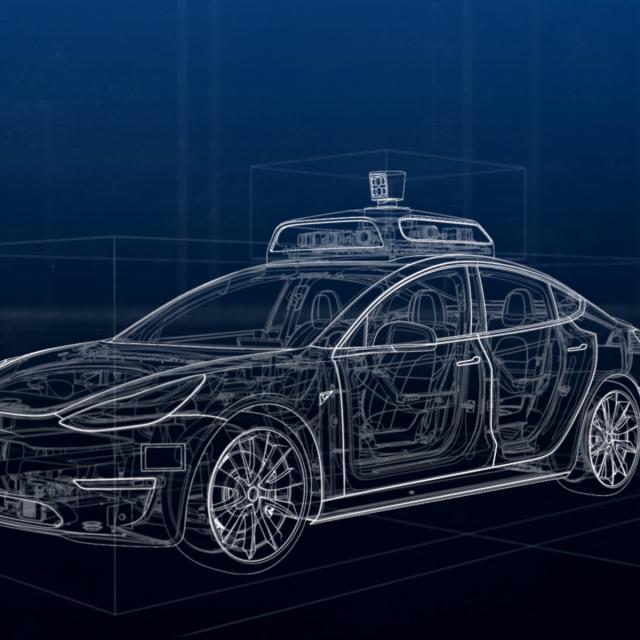
Welcome to Introduction to Self-Driving Cars, the first course in University of Toronto’s Self-Driving Cars Specialization. This course will introduce you to the terminology, design considerations and safety assessment of self-driving cars. By the end of this course, you will be able to: Understand commonly used hardware used for self-driving cars; Identify the main components of the self-driving software stack; Program vehicle modelling and control; Analyze the safety frameworks and current industry practices for vehicle development

Class Deals by MOOC List - Click here and see Coursera's Active Discounts, Deals, and Promo Codes.

For the final project in this course, you will develop control code to navigate a self-driving car around a racetrack in the CARLA simulation environment. You will construct longitudinal and lateral dynamic models for a vehicle and create controllers that regulate speed and path tracking performance using Python. You’ll test the limits of your control design and learn the challenges inherent in driving at the limit of vehicle performance.
This is an advanced course, intended for learners with a background in mechanical engineering, computer and electrical engineering, or robotics. To succeed in this course, you should have programming experience in Python 3.0, familiarity with Linear Algebra (matrices, vectors, matrix multiplication, rank, Eigenvalues and vectors and inverses), Statistics (Gaussian probability distributions), Calculus and Physics (forces, moments, inertia, Newton's Laws).
You will also need certain hardware and software specifications in order to effectively run the CARLA simulator: Windows 7 64-bit (or later) or Ubuntu 16.04 (or later), Quad-core Intel or AMD processor (2.5 GHz or faster), NVIDIA GeForce 470 GTX or AMD Radeon 6870 HD series card or higher, 8 GB RAM, and OpenGL 3 or greater (for Linux computers).

What You Will Learn
-Understand commonly used hardware used for self-driving cars
-Identify the main components of the self-driving software stack
-Program vehicle modelling and control

  • Analyze the safety frameworks and current industry practices for vehicle development

Course 1 of 4 in the Self-Driving Cars Specialization

Syllabus

WEEK 1
Welcome to the Self-Driving Cars Specialization!
This module will introduce you to the main concepts and layout of the specialization and discusses the major advances made in the field over the last two decades, highlighting the most recent progress made by major players in terms of safety and performance metrics, where available.
The Requirements for Autonomy
Self-driving cars present an extremely rich and inter-disciplinary problem. This module introduces the language and structure of the problem definition, defining the most salient elements of the driving task and the driving environment.

WEEK 2
Self-Driving Hardware and Software Architectures
System architectures for self-driving vehicles are extremely diverse, as no standardized solution has yet emerged. This module describes both the hardware and software architectures commonly used and some of the tradeoffs in terms of cost, reliability, performance and complexity that constrain autonomous vehicle design.

WEEK 3
Safety Assurance for Autonomous Vehicles
As the self-driving domain matures, the requirement for safety assurance on public roads become more critical to self-driving developers. You will evaluate the challenges and approaches employed to date to tackle the immense challenge of assuring the safe operation of autonomous vehicles in an uncontrolled public road driving environment.

WEEK 4
Vehicle Dynamic Modeling
The first task for automating an driverless vehicle is to define a model for how the vehicle moves given steering, throttle and brake commands. This module progresses through a sequence of increasing fidelity physics-based models that are used to design vehicle controllers and motion planners that adhere to the limits of vehicle capabilities.

WEEK 5
Vehicle Longitudinal Control
Longitudinal control of an autonomous vehicle involves tracking a speed profile along a fixed path, and can be achieved with reasonable accuracy using classic control techniques. This week, you will learn how to develop a baseline controller that is applicable for a significant subset of driving conditions, which include most non-evasive or highly-dynamic motions.

WEEK 6
Vehicle Lateral Control
This week, you will learn about how lateral vehicle control ensures that a fixed path through the environment is tracked accurately. You will see how to define geometry of the path following control problem and develop both a simple geometric control and a dynamic model predictive control approach.

WEEK 7
Putting it all together
For the last week of the course, now you will get hands on with a simulation of an autonomous vehicle that requires longitudinal and lateral vehicle control design to track a predefined path along a racetrack with a given speed profile. You are encouraged to modify the speed profile and/or path to improve their lap time, without any requirement to do so. Work and play!
Go to Class
MOOC List is learner-supported. When you buy through links on our site, we may earn an affiliate commission.

Related Courses

Introdução ao Teste de Software (Coursera) Coursera
Universidade de São Paulo, Brasil

Introdução ao Teste de Software (Coursera)

A necessidade das empresas em produzir software com qualidade tem aumentado a demanda por profissionais com conhecimentos e habilidades em Teste de Software. Entretanto, existe uma escassez de mão-de-obra especializada nesta área. Considerando essa lacuna, o curso de Introdução ao Teste de Software foi planejado para servir como um guia para pessoas que necessitam de uma fonte de consulta e/ou aprendizado na área.

Oct 5th 2026
5-12 Weeks
操作系统原理 (Operating Systems) (Coursera) Coursera
Peking University

操作系统原理 (Operating Systems) (Coursera)

操作系统原理》是针对计算机科学技术专业三年级本科生开设的一门专业基础课程。本课程着重学生系统观的培养,通过重点讲述操作系统的内部结构、工作原理及典型技术的实现,使学生建立起对操作系统的整体及各个功能模块的认识,从而系统掌握计算机的专业知识,进一步提升学生的软件开发能力乃至系统软件开发能力。

Sep 28th 2026
13-24 Weeks
Agile with Atlassian Jira (Coursera) Coursera
Atlassian

Agile with Atlassian Jira (Coursera)

Agile teams use “just enough” planning and an incremental approach to accomplishing the work of the team. Every project and every team uses a custom agile methodology. This course discusses common foundational principles and practices used by agile methodologies, providing the student a flexible set of tools to use in any role (e.g. product owner, scrum master, project manager, team member) on any agile team.

Sep 28th 2026
4 Weeks
Introdução à Ciência da Computação com Python Parte 2 (Coursera) Coursera
Universidade de São Paulo, Brasil

Introdução à Ciência da Computação com Python Parte 2 (Coursera)

Bem vindo ao curso de Introdução à Ciência da Computação destinado aos alunos regulares da Universidade de São Paulo! Esta é a segunda parte do Curso, onde você vai continuar a aprender os principais conceitos introdutórios de Ciência da Computação e também aprenderá a desenvolver pequenos programas na linguagem Python.

Oct 5th 2026
5-12 Weeks
Agile Planning for Software Products (Coursera) Coursera
University of Alberta

Agile Planning for Software Products (Coursera)

This course covers the techniques required to break down and map requirements into plans that will ultimately drive software production. Upon successful completion of this course, you will be able to: create effective plans for software development; map user requirements to developer tasks; assess and plan for project risks; apply velocity-driven planning techniques; generate work estimates for software products.

Sep 28th 2026
4 Weeks
Computer Science: Algorithms, Theory, and Machines (Coursera) Coursera
Princeton University

Computer Science: Algorithms, Theory, and Machines (Coursera)

This course introduces the broader discipline of computer science to people having basic familiarity with Java programming. It covers the second half of our book Computer Science: An Interdisciplinary Approach (the first half is covered in our Coursera course Computer Science: Programming with a Purpose, to be released in the fall of 2018). Our intent is to demystify computation and to build awareness about the substantial intellectual underpinnings and rich history of the field of computer science.

Oct 5th 2026
5-12 Weeks
Principles of Computing (Part 2) (Coursera) Coursera
Rice University

Principles of Computing (Part 2) (Coursera)

This two-part course introduces the basic mathematical and programming principles that underlie much of Computer Science. Understanding these principles is crucial to the process of creating efficient and well-structured solutions for computational problems. To get hands-on experience working with these concepts, we will use the Python programming language. The main focus of the class will be weekly mini-projects that build upon the mathematical and programming principles that are taught in the class.

Oct 5th 2026
4 Weeks
Continuous Delivery & DevOps (Coursera) Coursera
University of Virginia

Continuous Delivery & DevOps (Coursera)

Amazon famously delivers new code every 11.6 seconds. Just a few years ago, this was unthinkable: many ‘cutting edge’ firms would release software quarterly. When it comes to digital innovation, velocity is critical and many would say it’s the most reliable determinant of success. Bringing an organization to the state of the art (or even functional capability) in this area requires strong work in a combination of disciplines and a combination of both technical and managerial skills. There is no single cookie-cutter approach for achieving this capability.

Oct 5th 2026
4 Weeks
Quantitative Model Checking (Coursera) Coursera
EIT Digital

Quantitative Model Checking (Coursera)

The integration of ICT (information and communications technology) in different applications is rapidly increasing in e.g. Embedded and Cyber physical systems, Communication protocols and Transportation systems. Hence, their reliability and dependability increasingly depends on software. Defects can be fatal and extremely costly (with regards to mass-production of products and safety-critical systems).

Oct 5th 2026
5-12 Weeks
Algorithmic Thinking (Part 2) (Coursera) Coursera
Rice University

Algorithmic Thinking (Part 2) (Coursera)

Experienced Computer Scientists analyze and solve computational problems at a level of abstraction that is beyond that of any particular programming language. This two-part class is designed to train students in the mathematical concepts and process of "Algorithmic Thinking", allowing them to build simpler, more efficient solutions to computational problems.

Oct 5th 2026
4 Weeks