FUN

Mettre en scène est un métier (FUN)

Offered by École Charles Dullin,
Mettre en scène est un métier (FUN)

L'école Charles-Dullin vous propose le premier Mooc sur "mettre en scène est un métier". Ce cours porté par Robin Renucci et écrit par Anne Buxerolle et Quentin Rioual analyse pendant six semaines la question de l'émergence de la mise en scène en tant que métier, au tournant du XIXe et du XXe siècle. Il interroge l’Histoire afin d’éclairer les pratiques actuelles.

Vous pourrez affirmer vos propres choix de mise en scène grâce à une meilleure connaissance des pratiques et à nos questions. Un exercice chaque semaine et une évaluation par les pairs en fin de cours vous permettront d’expérimenter par vous-mêmes les grands courants de l’histoire de la mise en scène.

Format
Le cours se déroule sur 9 semaines : pendant les 6 premières, une partie du cours, composée de 4 vidéos d’une dizaine de minutes, vous est proposée. Pour ceux qui ont pris la formule avec la pratique, une interview exclusive d’un metteur en scène et un exercice vous sont proposés chaque semaine, ainsi qu’un exercice final sous forme d’évaluation par les pairs. Cet exercice final dure trois semaines (deux pour produire l’exercice, une pour évaluer vos pairs).

Plan du cours

Semaine 0 : Découverte de la plateforme
Semaine 1 : L'apparition du metteur en scène, artiste d'un genre nouveau
Semaine 2 : Les réformateurs
Semaine 3 : Mettre en scène avec tous, pour tous et contre tous
Semaine 4 : Mettre en scène : rassembler, agiter, agir
Semaine 5 : Mettre en scène avec et contre les institutions
Semaine 6 : L'émancipation définitive du metteur en scène

Prérequis
Ce Mooc ne nécessite aucun pré-requis particulier si ce n'est un intérêt pour la mise en scène. Il s’adresse aux comédiens voulant faire de la mise en scène, aux metteurs en scène et comédiens des troupes amateurs et professionnelles, aux enseignants et aux artistes intervenants dans les ateliers d’éducation artistique à l’école ou dans les conservatoires, aux animateurs au sein d’associations et de fédérations d’éducation populaire, dans les structures de théâtre forum ou d’expression citoyenne, à tous les intervenants artistiques qui pratiquent le théâtre dans des lieux multiples, enfin à tous ceux que la mise en scène attire.
Go to Class
MOOC List is learner-supported. When you buy through links on our site, we may earn an affiliate commission.

Related Courses

Music and Social Action (Coursera) Coursera
Yale University

Music and Social Action (Coursera)

What is a musician’s response to the condition of the world? Do musicians have an obligation and an opportunity to serve the needs of the world with their musicianship? At a time of crisis for the classical music profession, with a changing commercial landscape, a shrinking audience base, and a contraction in the number of professional orchestras, how does a young musician construct a career today? Are we looking at a dying art form or a moment of reinvigoration?

Oct 5th 2026
5-12 Weeks
Teaching the Violin and Viola: Creating a Healthy Foundation (Coursera) Coursera
Northwestern University

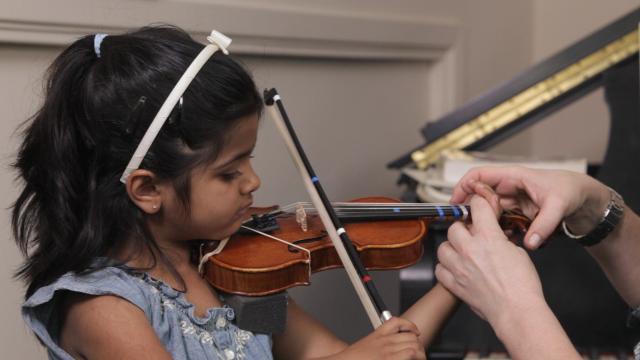
Teaching the Violin and Viola: Creating a Healthy Foundation (Coursera)

Join us as we explore the fundamental principles and early stages of teaching violin and viola through a series of engaging video lectures and lesson demonstrations, including: 1) Master classes with some of the world’s top string pedagogues, 2) Individual lesson demos of teaching violin/viola set up, left and right hand technique and pieces from the early violin/viola repertoire, 3) Group lesson demos of teaching music theory, ear training and fun activities that encourage good playing habits, and 4) A “field trip” to the violin shop, where we will outfit a new beginning student with a proper instrument and bow.

Sep 28th 2026
5-12 Weeks
China’s First Empires and the Rise of Buddhism (edX) EdX
HarvardX,Harvard University

China’s First Empires and the Rise of Buddhism (edX)

Learn about the Qin and Han dynasties, and how Buddhism and ideas of self-realization influenced the medieval period. This course, the second in a collection on Chinese history and culture, addresses how the Qin dynasty conquered China and established a new system of government and how the Han dynasty built a stable, centralized empire that lasted for hundreds of years. We cover the early history of Buddhism in China and how the rising feudal aristocracy responded to the loss of empire by looking inward.

Self Paced
Self-Paced
Cosmopolitan Tang: Aristocratic Culture in China (edX) EdX
HarvardX,Harvard University

Cosmopolitan Tang: Aristocratic Culture in China (edX)

Explore the reunification of China under the Tang with a focus on aristocratic culture — from poetry to calligraphy to literature. By the Tang period, China was divided into northern and southern dynasties with different rulers and political systems. The north was conquered by relatively unsophisticated barbarians, but in the south, the aristocratic families established a refined appreciation of writing and literature.

Self Paced
Self-Paced
MOOC Elles font l’art (FUN) FUN
Centre Pompidou

MOOC Elles font l’art (FUN)

Après le succès de sa première diffusion avec plus de 41 000 inscriptions, le MOOC "Elles font l'art" réouvre ! Ce cours en ligne gratuit et ouvert à toutes et tous, constitué de vidéos, de quiz et d’activités, se consacre aux femmes artistes de 1900 à nos jours. Plasticiennes, peintres, photographes, vidéastes ou performeuses de toutes nationalités, elles ont fait ou font encore l’art des 20e et 21e siècles.

Nov 2nd 2021
5-12 Weeks
Understanding the Music Business: What is Music Worth? (Coursera) Coursera
Vanderbilt University

Understanding the Music Business: What is Music Worth? (Coursera)

This course will examine the music industry in the United States, with the unique perspective gained by Vanderbilt University’s location in Nashville, TN. Nashville is a major center of music in the United States, and the music created here has a global reach, particularly in the country, rock, pop, singer-songwriter, and Americana genres. However, students will learn that the basic principles of recording, marketing, copyright, licensing, and live performance are the same, regardless of musical style or genre.

Oct 12th 2026
5-12 Weeks
The Blues: Understanding and Performing an American Art Form (Coursera) Coursera
University of Rochester

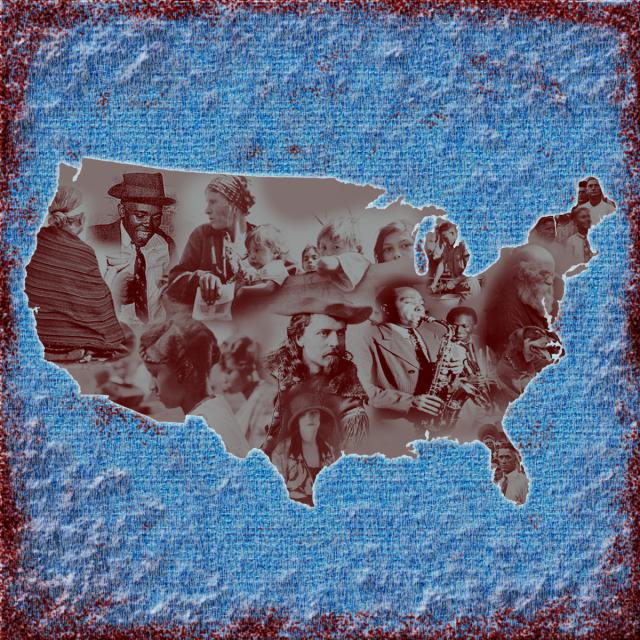
The Blues: Understanding and Performing an American Art Form (Coursera)

The blues is an American art form and the most important musical form in jazz. Although there are other formal paradigms of the blues, such as 8-bar or 16-bar, this course focuses on different incarnations of the 12-bar blues. There are considerable differences between Early Jazz blues, Swing blues, Bebop blues, Modal blues, and Post Bop blues.

Oct 5th 2026
5-12 Weeks
Singing Popular Music (Coursera) Coursera
Berklee College of Music

Singing Popular Music (Coursera)

You've been studying the greats, working on improving your vocal skills, and building vocal technique. Now it's time to take the next step in your singing career to shine as a vocalist. Singing Popular Music provides you with the essential skills to define your own unique vocal style and sing healthfully. The course begins with devices to support and alter your sound including vowel quality, tone production, and breathing techniques.

Sep 28th 2026
4 Weeks
Modern American Poetry (Coursera) Coursera
University of Illinois at Urbana-Champaign

Modern American Poetry (Coursera)

Twelve experienced faculty members from across the United States present their analyses of ground-breaking modern American poets in richly illustrated video lectures. The course highlights both major poets—from Walt Whitman and Emily Dickinson through T.S. Eliot, H.D., Amy Lowell, Hart Crane, Langston Hughes, Muriel Rukeyser, and many others—and influential movements. The course mixes historical overview with close readings of individual poets and poems.

Oct 12th 2026
4 Weeks
In the Studio: Postwar Abstract Painting (Coursera) Coursera
The Museum of Modern Art

In the Studio: Postwar Abstract Painting (Coursera)

Want to know how some of the 20th century’s most celebrated artists made abstract paintings? This course offers an in-depth, hands-on look at the materials, techniques, and thinking of seven New York School artists, including Willem de Kooning, Yayoi Kusama, Agnes Martin, Barnett Newman, Jackson Pollock, Ad Reinhardt, and Mark Rothko. Through studio demonstrations and gallery walkthroughs, you’ll form a deeper understanding of what a studio practice means and how ideas develop from close looking, and you’ll gain a sensitivity to the physical qualities of paint.

Sep 28th 2026
5-12 Weeks