EdX

Mercados de energía: oportunidades de negocio (edX)

Mercados de energía: oportunidades de negocio (edX)

Aprende sobre mercados y regulaciones energéticas en América Latina y en especial en México, que permiten definir oportunidades para diseñar negocios de energía. ¿Conoces las oportunidades de negocio que te ofrecen los mercados de energía eléctrica y otros mercados energéticos?, ¿sabes cómo surgieron dichos mercados? En este curso podrás encontrar las respuestas detalladas estas preguntas.

Class Deals by MOOC List - Click here and see EdX's Active Discounts, Deals, and Promo Codes.

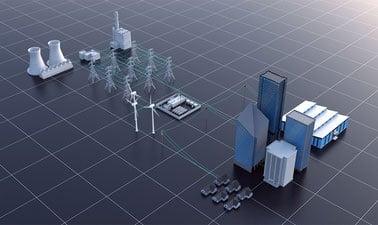
Actualmente podríamos dividir los mercados energéticos de la siguiente forma:

  • El petróleo y el gas asociado
  • Los líquidos de petróleo como la gasolina y el diésel
  • La industria petroquímica
  • El mercado de transporte de gas y petrolíferos
  • La generación de energía eléctrica
  • La comercialización de electricidad
  • La generación de fuentes renovables y limpias como energía eólica, energía solar, la energía de biomasa o bioenergía y energía hidráulica

Estos mercados y la reforma energética en sí, requieren personas preparadas para los múltiples espacios que presentan los mercados de energía renovable y no renovable. A través de los temas de este curso en línea conocerás las regulaciones de energía en el caso de México, lo que te ayudará a comprender el panorama actual y futuro de estos mercados de la energía, así como sus aplicaciones en la labor empresarial en todas las fases del sector energético.
En este curso podrás analizar las regulaciones secundarias para las industrias de petróleo, gas, energía eléctrica y todas sus cadenas de valor, con la finalidad de comparar los mercados energéticos en transición y contrastarlos con experiencias de mercados maduros en el mundo.
Tomar este curso te brindará una oportunidad única para definir oportunidades de emprendimiento y diseñar negocios de energía en mercados en transición.

What you'll learn

  • Definir nuevas oportunidades de negocio en los mercados energéticos
  • Examinar regulaciones frente a segmentos en competencia y contrastes internacionales
  • Diseñar negocios en los mercados energéticos

Course Syllabus

Tema 1. Las regulaciones que enmarcan los negocios de energía

  1. Teoría del monopolio, la regulación y la desregulación
  2. Regulación a sectores específicos de energía
  3. Oferta-demanda de energía en sus partes de petróleo, gas, electricidad de fuentes fósiles y renovables
  4. Teoría y práctica de la seguridad energética

Tema 2. Atributos comparados de los mercados competitivos y mercados regulados de energía

  1. Reguladores, sus atribuciones, activos administrativos y jurisdiccionales
  2. Los atributos de los mercados de energía en competencia
  3. Agendas energéticas comparadas internacionalmente y la integración de mercados
  4. Mercados a través de fronteras: pool de energía

Tema 3. Nuevos mercados de hidrocarburos

  1. Negocios regulados y en competencia de petróleo
  2. Aprendizajes de empresas mundiales y especializadas de petróleo
  3. Rondas de licitaciones en México y en el mundo
  4. El negocio de petroquímicos y downstream de petróleo

Tema 4. Nuevos mercados de gas y gasolinas

  1. Ecosistema de gas natural y su infraestructura de transporte
  2. Plan quinquenal de prospectiva de gas e infraestructura en México para los negocios
  3. Prácticas mundiales en mercados de gas y gasolinas
  4. Oportunidades de negocios en el ámbito de petróleo, gas y gasolinas

Tema 5. Industria eléctrica: primera parte

  1. Oportunidades de negocio en la industria eléctrica reestructurada
  2. Subsidiarias y filiales, partes reguladas y de mercado
  3. Nuevo glosario de términos y contrastes con definiciones de otros mercados
  4. Aprendizajes de las regulaciones de los EE. UU. en mercados eléctricos regionales

Tema 6. Industria eléctrica: segunda parte

  1. Las bases del mercado eléctrico mayorista: papel de los participantes
  2. Funcionamiento de los mercados de energía
  3. Funciones del Centro Nacional de Control de Energía y comparativos internacionales
  4. La agenda verde y su regulación
  5. Protección de diseños y patentes
Go to Class
MOOC List is learner-supported. When you buy through links on our site, we may earn an affiliate commission.

Related Courses

Cybersecurity Policy for Water and Electricity Infrastructures (Coursera) Coursera
University of Colorado System

Cybersecurity Policy for Water and Electricity Infrastructures (Coursera)

This course will examine the drinking water and electricity infrastructures, and various policies that have been developed to help guide and strengthen their cybersecurity programs. The drinking water and electricity infrastructures are two of fourteen subsectors comprising what are known as "lifeline infrastructure". The 2013 National Infrastructure Protection Plan identifies four lifeline infrastructure sectors: 1) water, 2) energy, 3) transportation, and 4) communications. These sectors are designated "lifeline" because many other infrastructures depend upon them.

Nov 2nd 2026
4 Weeks
Electric Industry Operations and Markets (Coursera) Coursera
Duke University

Electric Industry Operations and Markets (Coursera)

This is a two week course. In the first week you will learn about the core activities that the Industry executes to bring electricity to customers. We will review what electricity is, how it is generated, how it is transmitted, how it comes into buildings, and how consumption of electricity instantly feeds back on the transmission and generation of electricity.

Nov 16th 2026
2 Weeks
Business Implications of Intelligent and Integrated Energy Systems (edX) EdX
Delft University of Technology,DelftX

Business Implications of Intelligent and Integrated Energy Systems (edX)

Learn how digital technologies help with the energy transition and then how to use this to develop future potential business models in various energy and energy-dependent sectors. This course focuses on the emerging digitalization-based business models in the energy systems field. You will study how digital technologies can aid practitioners and business leaders to reach more sustainable systems and operations and create modern and more sustainable business frameworks.

Self Paced
Self-Paced
Principles of Modeling, Simulations, and Control for Electric Energy Systems (edX) EdX
MIT,MITx

Principles of Modeling, Simulations, and Control for Electric Energy Systems (edX)

Apply a dynamic systems-level approach and engage emerging research on efficient, sustainable, and physically and economically feasible electric power systems of the future. As global energy demand grows, to mitigate climate change we must drive a swift transition to clean energy resources and enhanced electric power grid infrastructure. In this course, you will explore systemic principles of future electric power system management, such as the role of smart grids, data-enabled machine learning, power electronics-control, and data-driven decision-making.

No session available
5-12 Weeks
Electrical Industry: Production and Economics (FutureLearn) FutureLearn
University of Padova

Electrical Industry: Production and Economics (FutureLearn)

Understand how the electricity system has developed over time, see what the future holds and the need to move to decarbonisation. Discover how electricity is produced and exchanged and the reasons behind it. This innovative, three-week course from the University of Padova is designed to illustrate how electricity is produced, and exchanged, and why.

Self Paced
4 Weeks
Electricity and Magnetism: Maxwell’s Equations (edX) EdX
MIT,MITx

Electricity and Magnetism: Maxwell’s Equations (edX)

In this final part of 8.02, we will cover Faraday’s Law, Circuits with Inductors, Maxwell’s equations, and electromagnetic radiation. This introductory Electromagnetism physics course will require the use of calculus. Electricity and Magnetism dominate much of the world around us – from the most fundamental processes in nature to cutting edge electronic devices.

Self Paced
Self-Paced
Pre-University Physics (edX) EdX
Delft University of Technology,DelftX

Pre-University Physics (edX)

Prepare for your technical studies by reviewing the fundamentals of physics. Become familiar with the way physics and physics-related topics are taught at university level. Physics is the foundation of many important science and engineering disciplines. Understanding its basics is fundamental for advanced studies. In this course, you will have the chance to review the fundamentals either for your own interest, or to ensure you have a smooth start in the first year of your Bachelor’s degree.

Self Paced
Self-Paced
Transmisión de energía eléctrica (edX) EdX
Tecnológico de Monterrey,TecdeMonterreyX

Transmisión de energía eléctrica (edX)

Aprende cómo se transmite y se distribuye la electricidad y cómo este conocimiento puede ser aplicado para maximizar la transmisión de energía eléctrica. Caso de estudio en el sistema eléctrico mexicano. El conocer la manera en que funciona el sistema eléctrico mexicano como caso de estudio genera competencias importantes en el mundo actual y permite tener conocimientos de distribución eléctrica que se pueden usar en otros países.

Self Paced
Self-Paced
Energy Markets of Today (edX) EdX
Delft University of Technology,DelftX

Energy Markets of Today (edX)

Understand the European energy market and the economic principles behind it. This course will help you understand the functioning of energy markets as the necessary first step to promotion of the energy transition. By using the European electricity market as an example, you will obtain a deeper understanding of its principles and effectiveness.

Self Paced
5-12 Weeks
Powering Resilient Communities: A Holistic Approach to Food, Energy, and Water Security (edX) EdX
University of Alaska Fairbanks,AlaskaX

Powering Resilient Communities: A Holistic Approach to Food, Energy, and Water Security (edX)

A research-based course on resilient renewable energy solutions, with an emphasis on microgrids, and Food, Energy, and Water (FEW) security. This course provides research-based and on-the-ground tools for community planners, grid designers, and business leaders to improve and implement stronger and more resilient renewable energy systems in Arctic communities.

Self Paced
Self-Paced