EdX

Materials Science and Engineering (edX)

Offered by NUST MISIS, MISISx,
Materials Science and Engineering (edX)

Gain a fundamental understanding of materials, its structures on different levels (from crystal cell to macrostructure), phase transformations and how it influences its mechanical, electrical, optical and magnetic properties from common science perspective. This course will introduce you to the various properties and structures of materials and lay a strong foundation for your further study of engineering and its related disciplines.

Class Deals by MOOC List - Click here and see EdX's Active Discounts, Deals, and Promo Codes.

Materials Science and Engineering is an engineering course aimed at delivering fundamental knowledge and skills in materials science.

It is a well-known fact that the key driver for technological progress was people’s aspiration for continuous improvement of the quality of life. As a result, the demand for new materials increased significantly and a lot of existing materials were upgraded.
Materials Science is the very course that enables people to design and develop competitive products which form the basis of any modern manufacturing. Materials scientists and engineers are one of the most highly paid and in-demand specialists in our high tech age.
In the Materials Science and Engineering course you will learn how to establish correlations between the composition, structure and properties of metal alloys and non-metal materials, as well as manage their mechanical, electrical, optical and magnetic properties, which is pivotal for the construction of new progressive materials.
The course content is closely related to chemical, mechanical, electrical, computing, and bio- and civil engineering.
This course considers:

  • How the physical properties of metals, ceramics polymers and composites are correlated with their internal structures (on atomic, molecular, crystalline, micro- and macro- scales) and operational conditions (mechanical, thermal, chemical, electrical and magnetic).
  • Microstructure and composition analysis methods, such as X-ray diffraction analysis and Transmission and Scanning Electron Microscopy.
  • How materials processing, e.g. mechanical working and heat treatment, affects their properties and performance.
  • The latest achievements in Materials Science and Engineering.

The course is delivered by professor Alexander Mukasyan, whose exceptionally rich expertise in materials science and engineering will enable you to successfully acquire the essential basis of engineering education.

What you'll learn

  • Basic materials science concepts, such as classes of materials and their primary properties.
  • General information about Materials Science and its role in society.
  • Elastic and thermodynamic properties of materials on the basis of the electron structure of atoms and the specific types of atomic interactions within the material.
  • The major correlation between the mechanical properties of materials and their atomic structure.
  • Polymorphic Transformations, Defects in Solids, Grains and Grain Boundaries on the Nano and Micro-Scales.
  • General information related to the classification of crystals and correlation between mechanical properties and crystal structure of materials.
  • Complex techniques which allow engineers to alter the properties of materials by modifying their microstructure.
  • Basic information about the diffraction and interference of different types of rays and how to use them to analyse the crystal structure of materials.
  • General information about Transmission Electron Microscopy – one of the most powerful tools of modern microscopy, capable of direct observation of atoms in materials.
  • Overview of the scanning electron microscopy – from the most widely used materials investigation techniques to state-of-art integrated nano-laboratories.

Syllabus

Week 1. Classification of the Materials
Week 2. Atomic Scale: Atomic Bonding, Bond Energy, Bond Stiffness. Atomic Structure and Mechanical Properties of Materials
Week 3. Crystal Lattice Scale of the Materials: Crystal Structures and Their Properties
Week 4. How to Shape the Microstructure and the Mechanical Properties of the Materials
Week 5. X-ray Diffraction Analysis of the Materials. Transmission Electron Microscopy
Week 6. Advanced Scanning Electron Microscopy
Week 7. Final Exam

Go to Class
MOOC List is learner-supported. When you buy through links on our site, we may earn an affiliate commission.

Related Courses

Design of mound breakwaters for feasibility studies. Cubipod® Manual 2016 (edX) EdX
Universitat Politècnica de València,UPValenciaX

Design of mound breakwaters for feasibility studies. Cubipod® Manual 2016 (edX)

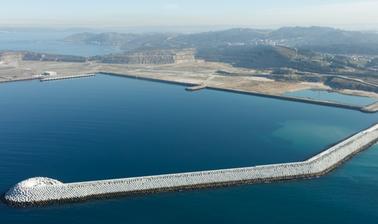
The goal of this course is to provide the tools to create feasible designs of mound breakwaters protected with Cubipod® armors fulfiling the prescribed economic, functional and safety requirements. This course is intended for professionals of coastal and port engineering who work in the preliminary design and feasibility studies of breakwaters.

Self Paced
Self-Paced
Modeling and Simulation of Multibody Systems - Part II (edX) EdX
LouvainX,Université Catholique de Louvain - UCL

Modeling and Simulation of Multibody Systems - Part II (edX)

90% of daily life multibody systems contain loops of bodies, e.g. vehicle or bike suspensions, parallel manipulators or robots, and musculoskeletal systems. They can also include joint constraints. In this second course about multibody systems, learn how to model them and how to deal with more advanced numerical analyses.

Self Paced
Self-Paced
The Basics of Transport Phenomena (edX) EdX
Delft University of Technology,DelftX

The Basics of Transport Phenomena (edX)

Learn the basic framework to work on a broad spectrum of engineering problems concerning transfer of heat, mass and momentum. Learn through examples of everyday processes at home, in the lab and in industry. Have you ever wondered why ventilation helps to cool down your hot chocolate? Do you know why a surfing suit keeps you warm? Why iron feels cold, while wood feels warm at room temperature? Or how air is transferred into aqueous liquids in a water treatment plant? How can we sterilize milk with the least amount of energy? How does medicine spread in our tissue? Or how do we design a new cooling tower of a power plant? All these are phenomena that involve heat transfer, mass transfer or fluid flow.

Self Paced
Self-Paced
Solar Energy: Photovoltaic (PV) Technologies (edX) EdX
Delft University of Technology,DelftX

Solar Energy: Photovoltaic (PV) Technologies (edX)

Explore the main PV technologies in the current market. Get in-depth knowledge on the design and processing methods of solar cells. The technologies used to produce solar cells and photovoltaic modules are advancing to deliver highly efficient and flexible solar panels. In this course you will explore the main PV technologies in the current market.

Self Paced
5-12 Weeks
Logistics Fundamentals (edX) EdX
LOGYCAX

Logistics Fundamentals (edX)

Have you ever wondered how products arrive at your hands? From the clothes we wear to the food we consume, they have been through a series of links, processes, operations and flows we know as logistics. Logistics are the first trait for a company’s success! Learn all about logistics and how you can use it to achieve every goal in your organization. In this online course you will gain a holistic view of logistics and transportation within your company, which is useful to understand how a company can thing strategically thanks to basic but essential content.

Self Paced
Self-Paced
Fundamentos de Mecánica para Ingeniería (edX) EdX
Universitat Politècnica de València,UPValenciaX

Fundamentos de Mecánica para Ingeniería (edX)

Estudiaremos la cinemática y la dinámica del punto, los conceptos de trabajo y potencia y la energía mecánica. Se aborda el estudio del universo físico analizando objetos en movimiento. Se definen y analizan todas las magnitudes y leyes físicas que permiten describir geométrica y causalmente el movimiento de cuerpos representados por un punto.

Self Paced
Self-Paced
Diseño de diques rompeolas con cubípodos (edX) EdX
Universitat Politècnica de València,UPValenciaX

Diseño de diques rompeolas con cubípodos (edX)

El objetivo del curso esaprender a diseñar diques en talud para los estudios de viabilidad de proyectos que incluyan obras marítimas de abrigo, con especial atención al diseño con mantos de cubípodos. Este es un curso de ingeniería dirigido a profesionales de ingeniería marítima, portuaria y civil. En él se puede aprender a diseñar diques en talud para los estudios de viabilidad de proyectos que incluyan obras marítimas de abrigo, con especial atención al diseño con mantos de cubípodos.

Self Paced
Self-Paced
Forensic Engineering: Learning from Failures (edX) EdX
Delft University of Technology,DelftX

Forensic Engineering: Learning from Failures (edX)

Don’t let good failures go to waste! Identify the causes of failure and use this knowledge to enhance safety and improve performance. What do collapsed buildings, infected hospital patients, and crashed airplanes have in common? If you know the causes of these events and conditions, they can all be prevented. In this course, you will learn how to use the TU Delft mind-set to investigate the causes of such events so you can prevent them in the future.

Self Paced
Self-Paced
Viscoelasticidad y comportamiento mecánico-dinámico de materiales poliméricos. Modelización (edX) EdX
Universitat Politècnica de València,UPValenciaX

Viscoelasticidad y comportamiento mecánico-dinámico de materiales poliméricos. Modelización (edX)

Aprende sobre el comportamiento viscoelástico de polímeros para el diseño de componentes con materiales poliméricos. Los materiales poliméricos se caracterizan por tener un comportamiento viscoelástico lo cual implica que sus propiedades mecánicas surgen de la combinación de unas propiedades elásticas y viscosas.

Self Paced
Self-Paced