Machine Learning, Maths & Ethics: Hands-on (POK)

Offered by Politecnico di Milano,
Machine Learning, Maths & Ethics: Hands-on (POK)

A meaningful learning opportunity to empower young people, especially young women to pursue a career in machine learning through a gender conscious narrative. Would you like to know the basics of machine learning, but don't know where to start? Would you like to learn about the societal challenges of machine learning? Then, this course is for you!

This hands-on course in Machine Learning, Maths & Ethics, teaches you about the foundations of Machine Learning in an intuitive way. It has a heavy focus on exercises and examples of its applications. The course allows you to develop practical skills to build algorithms and stimulate critical thinking on the ethics of machine learning models.

Although the fields of computer science, artificial intelligence and machine learning are changing the world, the truth is that girls and women are still underrepresented in these fields. We prepared this online course, following the guidelines of FOSTWOM Erasmus+ project to develop MOOCs according to a gender conscious perspective in narratives, in the language, and in the use of images. Thus, we expect this MOOC to be a meaningful learning opportunity to empower young people, especially young women to follow these areas of expertise.
Are you going to miss the opportunity to learn about a technology that is transforming the world?
Total workload of the course: 40 hours

Learning Schedule

Machine Learning, Maths & Ethics: Hands-on is structured in five weeks plus one week for introduction.
Week 0 – Welcome and introduction
Week 1 – Learning from experience: Machine learning and supervised learning
Week 2 – How we are going to work in supervised learning models
Week 3 – Data preparation, data exploration and statistics
Week 4 – Training models, evaluating models and matrices
Week 5 – Ethical challenges of machine learning algorithms

Throughout these topics you will learn:

  1. What machine learning is;
  2. The different types of machine learning, and supervised learning in more detail;
  3. The standard process of building predictive models;
  4. The four steps of the standard process: data preparation, data exploration, model training, model evaluation;
  5. Some fundamental Maths needed to understand machine learning: Statistics and Linear Algebra;
  6. How to program in Python with Google Colab;
  7. How to be aware of the challenges of building fair machine learning algorithms.
Go to Class
MOOC List is learner-supported. When you buy through links on our site, we may earn an affiliate commission.

Related Courses

Violence Against Healthcare (Coursera) Coursera
University of Geneva

Violence Against Healthcare (Coursera)

At the global level, there are many countries marked by violence affecting health care. The 'Health care in danger' project aims to establish practical measures and recommendations that can be implemented on the ground by policy-makers, humanitarian organizations and health professionals. In view of the multiplicity of actors and latitudes concerned, it is essential to be able to make available the tools needed to make informed decisions, guide behaviour in high-risk areas and provide everyone the means to create and optimize the dialogue between humanitarian professionals and health on the one hand and relevant authorities or other armed actors.

Oct 5th 2026
5-12 Weeks
Matematica per Scenari (POK) Polimi OPEN KNOWLEDGE
Politecnico di Milano

Matematica per Scenari (POK)

Pratiche didattiche per insegnare matematica attraverso la modellistica. Il corso, rivolto ad insegnanti della scuola secondaria di secondo grado, propone alcune esperienze didattiche incentrate sulla modellistica matematica e fornisce agli insegnanti materiali ed approfondite indicazioni metodologiche per la loro attuazione in classe.

Available
4 Weeks
AI, Business & the Future of Work (Coursera) Coursera
Lund University

AI, Business & the Future of Work (Coursera)

This course from Lunds university will help you understand and use AI so that you can transform your organisation to be more efficient, more sustainable and thus innovative. The lives of people all over the world are increasingly enhanced and shaped by artificial intelligence. To organisations there are tremendous opportunities, but also risks, so where do you start to plan for AI, business and the future of work?

Oct 5th 2026
4 Weeks
Artificial Intelligence for Breast Cancer Detection (Coursera) Coursera
Johns Hopkins University

Artificial Intelligence for Breast Cancer Detection (Coursera)

Through interactive lectures and module exercises, this course illustrates the potential of artificial intelligence in breast imaging. Topics include an introduction of breast cancer and breast imaging, introduction to artificial intelligence in image analysis and computer image processing of cancer detection. The course intends to provide students basic understanding of artificial intelligence approaches to breast cancer detection.

Oct 5th 2026
4 Weeks
Business Implications of AI: Full course (Coursera) Coursera
EIT Digital

Business Implications of AI: Full course (Coursera)

In this course you will learn what Artificial Intelligence is, from a leaders point of view. How shall we, as leaders, understand it from a corporate strategy point of view? What is it and how can it be used? What are the crucial strategic decisions we have to make, and how to make them? What consequences can we expect if we decide on doing AI-projects and what kind of competences do we need? Where shall we start, and what could be a good second as well as third step? What implications for the organization can we expect? These are the questions answered in this course.

Oct 5th 2026
4 Weeks
Programming Languages, Part A (Coursera) Coursera
University of Washington

Programming Languages, Part A (Coursera)

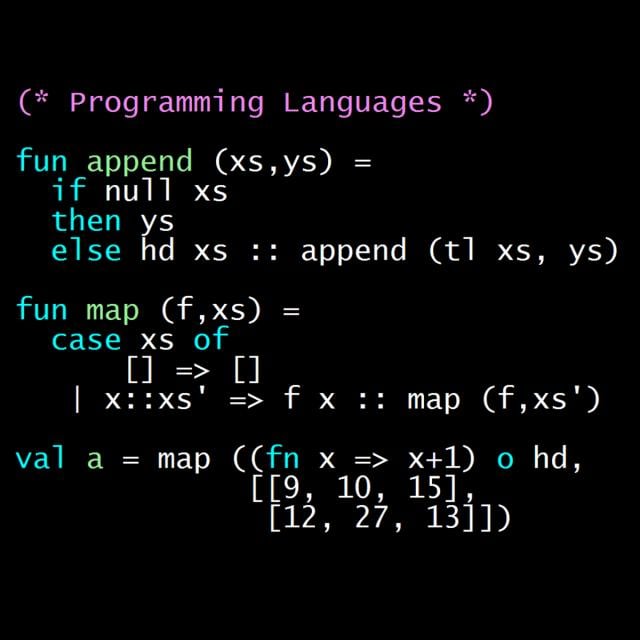
This course is an introduction to the basic concepts of programming languages, with a strong emphasis on functional programming. The course uses the languages ML, Racket, and Ruby as vehicles for teaching the concepts, but the real intent is to teach enough about how any language “fits together” to make you more effective programming in any language -- and in learning new ones.

Oct 5th 2026
5-12 Weeks
The Finite Element Method for Problems in Physics (Coursera) Coursera
University of Michigan

The Finite Element Method for Problems in Physics (Coursera)

This course is an introduction to the finite element method as applicable to a range of problems in physics and engineering sciences. The treatment is mathematical, but only for the purpose of clarifying the formulation. The emphasis is on coding up the formulations in a modern, open-source environment that can be expanded to other applications, subsequently.

Oct 5th 2026
13-24 Weeks
El Abogado del Futuro: Legaltech y la Transformación Digital del Derecho (Coursera) Coursera
Universidad Austral

El Abogado del Futuro: Legaltech y la Transformación Digital del Derecho (Coursera)

La revolución digital cambió nuestra manera de comunicarnos, de comerciar y de relacionarnos. Ahora, está llegando al mundo del derecho. Este programa te ofrecerá una visión amplia de las principales tendencias que están afectando a la industria legal: - El nacimiento del mercado de legaltech y la aplicación de tecnología en el derecho. - El rol de la inteligencia artificial en la automatización del trabajo de los abogados. - La tecnología de blockchain y su impacto en la forma en que firmamos y ejecutamos contratos. - Las iniciativas para asegurar el acceso a la justicia a través de cortes virtuales y jueces robot.

Oct 5th 2026
5-12 Weeks
Introduction to Mathematical Thinking (Coursera) Coursera
Stanford University

Introduction to Mathematical Thinking (Coursera)

Learn how to think the way mathematicians do - a powerful cognitive process developed over thousands of years. Mathematical thinking is not the same as doing mathematics – at least not as mathematics is typically presented in our school system. School math typically focuses on learning procedures to solve highly stereotyped problems. Professional mathematicians think a certain way to solve real problems, problems that can arise from the everyday world, or from science, or from within mathematics itself.

Oct 5th 2026
5-12 Weeks