Liver Transplant: the Ins and Outs (FutureLearn)

Liver Transplant: the Ins and Outs (FutureLearn)

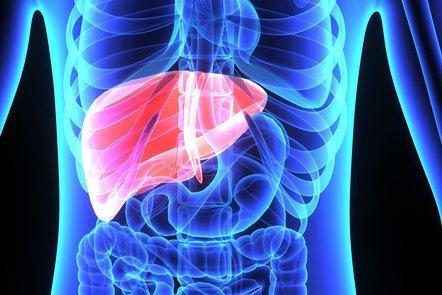
Learn about the science behind having a liver transplant with this free online course from the Centre for Liver Research. In this free, three-week course, we will teach you about the fascinating field of liver transplantation. We will cover the history of liver transplantation - from early experiments in the late 1960s to exciting new technological advances in organ preservation happening today.

Class Deals by MOOC List - Click here and see FutureLearn's Active Discounts, Deals, and Promo Codes.

You will find out why there is such an increasing global need for liver transplants, and look at the science behind the operation and the drugs used to prevent organ rejection. We will discuss the intriguing and unique biology of the liver, explaining how one donor organ can help two patients in need, and how some people can eventually manage without any anti-rejection medication.

Explore the major issues surrounding liver transplant
We will talk to the surgeons who perform the liver transplant operation; the clinical staff who care for the patients; the liver transplant coordinators who help to source and allocate donor organs; and patients themselves about their experiences of liver transplant.
During this course, we will explore the major issues that fascinate us:

  • How is it possible to take an organ like the liver from one person and have it survive inside another?
  • Have you ever wondered about the ethics of organ donation, and how organs should be allocated?
  • Why is there such an increasing demand for donor livers for transplantation?
  • And how can new advances increase the numbers of organs that are available for liver transplant?

Learn with experts from one of Europe’s largest liver transplant centres
You’ll learn with experts from the Centre for Liver Research at the University of Birmingham and the nearby Queen Elizabeth Hospital. This is one of Europe’s largest liver transplant centres, performing over 200 liver transplantations each year.

Learning on this course
You can take this self-guided course and learn at your own pace. On every step of the course you can meet other learners, share your ideas and join in with active discussions in the comments.
What will you achieve?
By the end of the course, you‘ll be able to...

  • Apply new knowledge of the structure and function of the liver to understand the signs of disease.
  • Assess the major reasons for liver transplantation.
  • Compare the stages of the operation to remove a diseased liver and insert a new one.
  • Collect information about the history of liver transplantation and key transplant pioneers.
  • Apply knowledge to understand how patients are cared for after the operation.
  • Assess future alternatives to transplantation.

Who is the course for?
The course will be of interest to anyone who is captivated by human biology, transplantation, surgery or your immune system.
Go to Class
MOOC List is learner-supported. When you buy through links on our site, we may earn an affiliate commission.

Related Courses

Immunology: Autoimmunity, Allergy, and Transplants (Coursera) Coursera
Imperial College London

Immunology: Autoimmunity, Allergy, and Transplants (Coursera)

In this course, you will explore the mechanisms and immune responses involved in autoimmune diseases and in hyper-responsive phenomena, such as asthma. You will examine in detail the potential causes and factors behind an overactive immune system and the disorders that might ensue if the response is not adequately controlled. you will also analyse the effects of overactive immune response in transplant rejection.

Sep 21st 2026
5-12 Weeks
Fundamentals of Immunology: Death by Friendly Fire (Coursera) Coursera
Rice University

Fundamentals of Immunology: Death by Friendly Fire (Coursera)

Course 3 of a three course specialization called Fundamentals of Immunology. Each course in the specialization presents material that builds on the previous course's material. This is the third leg of the journey through the defenses your body uses to keep you healthy. In the first course we learned about innate immunity and B cell function. In the second course we studied T cell function and coordination of the immune response.

Jun 29th 2026
5-12 Weeks
Essential Human Biology: Cells and Tissues (edX) EdX
University of Adelaide,AdelaideX

Essential Human Biology: Cells and Tissues (edX)

An introduction to the human body's most fundamental building blocks and their behaviours in health and disease. Are you preparing for a health-related career, or planning to study in the health sciences? Perhaps you're just keen to learn more about the wonders of the human body? Our bodies are amazing but complex biological machines. This course will provide you with an outstanding foundation of knowledge in human anatomy and physiology.

Self Paced
Self-Paced
Agriculture and Nutrition (FutureLearn) FutureLearn
Taipei Medical University

Agriculture and Nutrition (FutureLearn)

The benefits of rice bran for preventing chronic diseases; the relationships of the mammary gland, and immune in cow. In this course, you will learn about the bioactive components and the benefits of rice bran and fermented rice bran for preventing chronic diseases such as metabolic syndrome. You will learn about the basic knowledge of the immune system and the correlations among mammary gland, epithelial mucosa, and immune in the dairy cows.

Self Paced
4 Weeks
Exploring Anatomy: The Human Abdomen (FutureLearn) FutureLearn
University of Leeds

Exploring Anatomy: The Human Abdomen (FutureLearn)

Explore the anatomy of the human abdomen and appreciate its clinical importance. You will be introduced to the human abdomen and its many complex structures through stimulating discussions on common surgical scenarios and current research. Each week, we will focus on a specific area of the abdomen; starting at the anterior abdominal wall and be able to detail the anatomy of numerous organs including the stomach and liver.

Self Paced
3 Weeks
HIV Science (FUN) FUN
Institut Pasteur

HIV Science (FUN)

Since the start of the epidemic HIV has infected over 75 million people and provoked more than 35 million deaths. Today, although HIV replication can be controlled by antiretroviral treatment, HIV infection remains an outstanding global health issue, with 36.7 million infected people and 1 million HIV-related deaths in 2016, according to WHO. Half of the infected population does not have access to antiretroviral treatment and 2 million new infections are registered every year. In addition there is currently no cure for HIV and antiretroviral treatment needs to be maintained for life. In this MOOC we will review different aspects of HIV infection: from its biological origin and its identification as the causative agent of AIDS to the perspectives of eradication.

No sessions available
5-12 Weeks
Fundamentals of Immunology: Dueling with the Dark Side (Coursera) Coursera
Rice University

Fundamentals of Immunology: Dueling with the Dark Side (Coursera)

Fundamentals of Immunology, Course 4: Dueling with the Dark Side, covers the constant battle between your immune system and threats to your health. The first two lectures discuss viral and cellular pathogens, focusing on specific tactics they use to deflect immune attack. Next, a cheerier lecture describes other immune-based therapies, beginning with the use of engineered antibodies to treat specific diseases.

Jul 6th 2026
5-12 Weeks
The Heart, Blood, and Lungs (Coursera) Coursera
MedCerts

The Heart, Blood, and Lungs (Coursera)

In this course on The Heart, Blood, and Lungs, you will learn about the wonderful diversity of the cardiovascular, immune, and respiratory systems and the medical language that is used to describe these systems. Throughout each Lesson, the roots of terms are explained to help students understand how medical terminology works in healthcare and to increase their knowledge and understanding of the material discussed.

Sep 21st 2026
3 Weeks
Immunology: Immune Failures and Cancer Immunology (Coursera) Coursera
Imperial College London

Immunology: Immune Failures and Cancer Immunology (Coursera)

Our immune system is a powerful network. It protects us from external threats, such as harmful substances and pathogenic agents, as well as cellular changes which could lead to diseases. Complications emerge when our natural defences do not function properly, which can result in immune disorders. These can take the form of less severe issues such as insect allergy. Others are more harmful, such as auto aggressive immune reactions, that lead to localised or systemic tissue damage.

Sep 21st 2026
4 Weeks