Organ Donation: From Death to Life (Coursera)

Organ Donation: From Death to Life (Coursera)

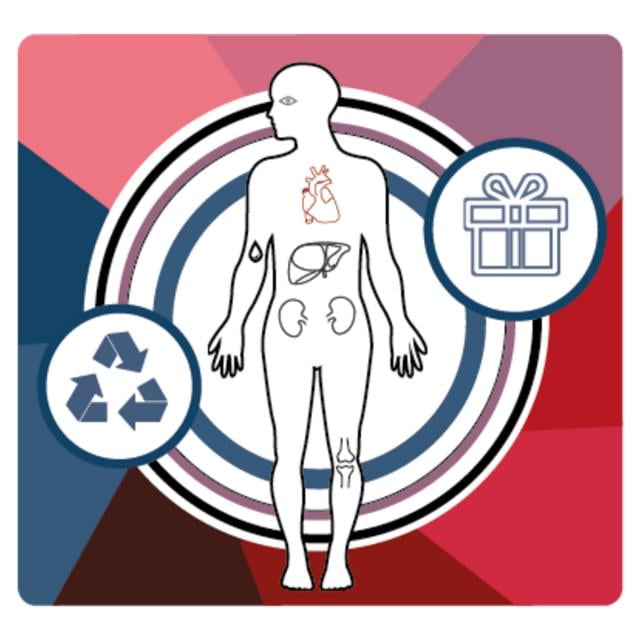
Considering someone for organ and tissue donation at the end of life is complicated. The boundary between life and death is more complex than ever before and it falls to medical professionals to help clarify a situation at an often confusing and emotionally stressful time. In this course you will learn about the science behind death determination and when is it possible for deceased organ donation take place.

Class Deals by MOOC List - Click here and see Coursera's Active Discounts, Deals, and Promo Codes.

The lectures will cover medical standards at the end of life - from brain death testing, to requesting informed consent from a grieving family. By improving knowledge of good ethical practices, cultural and religious considerations and the logistics of the organ donation process this course will empower the interactions and discussions of medical professionals and the general public at an often confusing time.
This course will help you to ensure that the option of organ donation is compassionately explored in all appropriate situations at the end of life in the best way possible.

Syllabus

WEEK 1
Brain Death and Consent
Welcome to the first week of Organ Donation - From Death to Life. In our first lesson we cover the two absolute prerequisites for deceased organ donation: That the donor must be dead and that there must be consent. Our second lesson takes a look at the history of, and the actual mechanism of brain death as well as the story behind the first heart donor. While our third lesson reviews in detail the scientific determination of brain death, from the preconditions that must be met before testing, to the actuals tests themselves, including the role of ancillary tests. Our final lesson will look at the consent process, how to communicate effectively with a grieving family and what is the best way to make the organ donor request.

WEEK 2
Donation after Circulatory Death
Not all end of life decisions in the Intensive Care Unit and the discussions that go with them can rely on the clarity of a brain death diagnosis. Just under half of all deaths in Intensive Care Units involve non-beneficial treatment being withdrawn or withheld. In less well resourced countries limited access to ICU means these decisions as to when treatment is futile frequently occur earlier, outside of the ICU setting. In week 2 we will discuss end of life care and the ethical principles which help guide us in making difficult decisions in the ICU. What do we do when interventions may prolong suffering with no reasonable chance of recovery? We will see how the dead donor rule can be applied after circulatory arrest and that in certain patients it may be possible to honour their wish to be an organ donor. We will cover the different types of donation after circulatory arrest and go over the process of donation after circulatory death in detail. We will end the week by covering tissue donation and what happens to the body of the donor after the organ donor operation is complete.

WEEK 3
The Organ Donation Process
Who can donate? What can be donated? In this week you will learn that the number of potential organ donors is far larger than you ever thought. In the first lesson we look at the organ donation process in detail. We cover the assessment of a donor in terms of infection and malignancy risk and how individual organs are assessed for potential transplant. We look at the monitoring and interventions required to achieve various physiological goals in the organ donor. Managing a potential donor well and dealing with the complications associated with brain death is essential to maximizing the number of organs that are transplantable. It is not markedly different from any critically ill patient with multi-organ failure. We then look at the organ recovery process and how the organs are preserved and transported to the various recipients. In the second lesson the waiting list and allocation practices are discussed in detail so that you can see how donated organs are allocated fairly and how the benefit is maximized. We end the week with an overview of what each recipient operation entails and show you four interviews - all recipients of an organ transplant - given a new lease on life because of one brain dead donor and a family who consented to organ donation in a time of great personal tragedy.

WEEK 4
Ethical Issues in Transplantation
Congratulations! You've reached the final week of the course Organ Donation: From Death to Life. Many factors influence organ donation rates across the world - from religion and culture to where you live and what resources are available. In our final week we will take a look at the role of money and travel in organ transplantation and show you the steps being taken to stamp out organ trafficking and transplant tourism. Dr Boitumelo Nkgudi a colleague of mine from Department of Surgery will speak to us on the influence that different religions and cultures have on organ donation. Organ donation comes with a lot of stigma and religious and cultural competence is essential to connecting with potential donor families before asking for consent for organ donation. We will end off our last week by looking at how to assess the true potential of deceased organ donation, what deceased organ donation models exist, and possible strategies to improve them including improving public awareness. Nobody can do everything when it comes to transplantation - but everybody can do something… Enjoy the last week of the course.
Go to Class
MOOC List is learner-supported. When you buy through links on our site, we may earn an affiliate commission.

Related Courses

Data Science Ethics (Coursera) Coursera
University of Michigan

Data Science Ethics (Coursera)

What are the ethical considerations regarding the privacy and control of consumer information and big data, especially in the aftermath of recent large-scale data breaches? This course provides a framework to analyze these concerns as you examine the ethical and privacy implications of collecting and managing big data. Explore the broader impact of the data science field on modern society and the principles of fairness, accountability and transparency as you gain a deeper understanding of the importance of a shared set of ethical values.

Sep 21st 2026
4 Weeks
Big Data, Artificial Intelligence, and Ethics (Coursera) Coursera
University of California, Davis

Big Data, Artificial Intelligence, and Ethics (Coursera)

This course gives you context and first-hand experience with the two major catalyzers of the computational science revolution: big data and artificial intelligence. With more than 99% of all mediated information in digital format and with 98% of the world population using digital technology, humanity produces an impressive digital footprint.

Sep 21st 2026
4 Weeks
Journalism, the future, and you! (Coursera) Coursera
Michigan State University

Journalism, the future, and you! (Coursera)

You will learn about the career paths that are available in journalism, and what opportunities the skill sets of a journalist can offer in other fields. You will explore areas such as being an international correspondent, self-publishing in journalism, as well as how to freelance in the field. You will be empowered to develop your own path in journalism, from being an active and informed consumer, to being a journalist.

Sep 28th 2026
5-12 Weeks
La Solución del Conflicto Ético (Coursera) Coursera
Universidad Nacional Autónoma de México

La Solución del Conflicto Ético (Coursera)

En este curso los participantes lograrán identificar y tomar decisiones sobre casos clínicos con conflictos éticos en el área de la salud por medio de la aplicación del razonamiento ético desde una perspectiva universal y considerando los aspectos médicos y éticos, el marco jurídico y la decisión ética.

Oct 5th 2026
5-12 Weeks
Ethical Issues in Data Science (Coursera) Coursera
University of Colorado Boulder

Ethical Issues in Data Science (Coursera)

Computing applications involving large amounts of data – the domain of data science – impact the lives of most people in the U.S. and the world. These impacts include recommendations made to us by internet-based systems, information that is available about us online, techniques that are used for security and surveillance, data that is used in health care, and many more. In many cases, they are affected by techniques in artificial intelligence and machine learning.

Sep 28th 2026
5-12 Weeks
Foundations of Teaching for Learning: Being a Professional (Coursera) Coursera
Commonwealth Education Trust

Foundations of Teaching for Learning: Being a Professional (Coursera)

The Foundations of Teaching for Learning programme is for anyone who is teaching, or who would like to teach, in any subject and any context - be it at school, at home or in the workplace. With dynamic lessons taught by established and respected professionals from across the Commonwealth, this eight course programme will see you develop and strengthen your skills in teaching, professionalism, assessment, and more. As you carry on through the programme, you will find yourself strengthening not only your skills, but your connection with colleagues across the globe. A professional development opportunity not to be missed.

Sep 21st 2026
5-12 Weeks
Turn Ethical Frameworks into Actionable Steps (Coursera) Coursera
CertNexus

Turn Ethical Frameworks into Actionable Steps (Coursera)

Students will become familiar with frameworks and the common ethical principles they are based upon and how they can be applied across a variety of ethically driven dilemmas. You will learn applicable regulations and best practices established across global organizations and governments and how to navigate the integration of these standards in the context of business needs.

Sep 21st 2026
5-12 Weeks
Ética y Gobierno Corporativo (Coursera) Coursera
Universidad de Palermo

Ética y Gobierno Corporativo (Coursera)

En este curso de Ética y Gobierno Corporativo estudiaremos y analizaremos la importancia desde lo estratégico, pero también desde lo reputacional, que tiene trabajar para ser una empresa ética y responsable con todos los ámbitos del negocio. Los objetivos de este curso se orientan a comprender las diferentes miradas que hubo y hay sobre el tema, sus consecuencias y beneficios.

Oct 5th 2026
4 Weeks
Ethical AI Use (Coursera) Coursera
University System of Georgia

Ethical AI Use (Coursera)

The "Ethical AI Use" course delves into the critical intersection of technology and ethics, focusing on the responsible development and deployment of artificial intelligence (AI). Participants will explore the evolution of AI, distinguishing between the two fundamental types, and examine the ethical considerations inherent in the realm of generative AI.

Sep 28th 2026
2 Weeks
Essentials of Global Health (Coursera) Coursera
Yale University

Essentials of Global Health (Coursera)

Essentials of Global Health is a comprehensive introduction to global health. It is meant to introduce you to this topic in well-structured, clear and easy to understand ways. Much of the course will focus on five questions: What do people get sick, disabled and die from; Why do they suffer from these conditions? Which people are most affected? Why should we care about such concerns? What can be done to address key health issues, hopefully at least cost, as fast as possible, and in sustainable ways?

Oct 5th 2026
5-12 Weeks
Artificial Intelligence Data Fairness and Bias (Coursera) Coursera
LearnQuest

Artificial Intelligence Data Fairness and Bias (Coursera)

In this course, we will explore fundamental issues of fairness and bias in machine learning. As predictive models begin making important decisions, from college admission to loan decisions, it becomes paramount to keep models from making unfair predictions. From human bias to dataset awareness, we will explore many aspects of building more ethical models.

Sep 21st 2026
3 Weeks