L'Evoluzione Psicologica (Master University)

Offered by Master University,
L'Evoluzione Psicologica (Master University)

Tutti gli animali seguono in natura un processo evolutivo che dallo stato di cucciolo (dipendenza alimentare) li porta allo stato di adulto (indipendenza alimentare) e poi allo stato di genitore (capacità nutritiva e assistenziale). Nell’essere umano questo processo è soprattutto psicologico. Il mancato sviluppo della personalità adulta dà luogo alla sindrome nevrotica infantile, oggi molto diffusa, che presenta sintomi quali ansia, depressione, panico, dipendenza, somatizzazioni.

E’ ciò che è affermato nella psicologia evolutiva di cui Giulio Cesare Giacobbe è il fondatore. Descritta nel libro Alla ricerca delle coccole perdute, la psicologia evolutiva ha dato luogo alla psicoterapia evolutiva, che avvalendosi del training per lo sviluppo della personalità adulta, descritto nel libro La paura è una sega mentale, costruisce un’immagine adulta di sé capace di risolvere i sintomi sopra elencati.

Go to Class
MOOC List is learner-supported. When you buy through links on our site, we may earn an affiliate commission.

Related Courses

Positive Psychology: Character, Grit and Research Methods (Coursera) Coursera
University of Pennsylvania

Positive Psychology: Character, Grit and Research Methods (Coursera)

Learners discover how apply to research methods to their study of Positive Psychology. In this course, we study with Dr. Angela Duckworth and Dr. Claire Robertson-Kraft. Through an exploration their work "True Grit" and interviews with researchers and practitioners, you develop a research hypothesis and learn how to understand the difference between internal and external validity. You also begin to understand and apply the strengths and weaknesses associated with different types of measurements and evaluation designs. You then interpret the results in an empirical study.

Oct 19th 2026
4 Weeks
Creating Behavioral Change (Coursera) Coursera
Wesleyan University

Creating Behavioral Change (Coursera)

In this course you will learn about understanding and changing mental and physical health behavior. We will examine both the historical context and the current science. Major topics will include fundamental behavioral principles and basic elements of empirically supported individual treatments (e.g., motivational interviewing, cognitive behavioral therapies).

Oct 19th 2026
4 Weeks
Data Collection: Online, Telephone and Face-to-face (Coursera) Coursera
University of Michigan

Data Collection: Online, Telephone and Face-to-face (Coursera)

This course presents research conducted to increase our understanding of how data collection decisions affect survey errors. This is not a “how–to-do-it” course on data collection, but instead reviews the literature on survey design decisions and data quality in order to sensitize learners to how alternative survey designs might impact the data obtained from those surveys.

Oct 19th 2026
4 Weeks
Children's Human Rights - An Interdisciplinary Introduction (Coursera) Coursera
University of Geneva

Children's Human Rights - An Interdisciplinary Introduction (Coursera)

Drawing on the contributions of several academic disciplines including law, psychology, sociology, history, educational and health sciences, economy and anthropology, an interdisciplinary approach guides the student into a selection of critical issues concerning children’s rights. Participants will gain insight relative to the development of this specific human rights category, as well as to the evolution of the challenges faced by children over time and society’s efforts to respond.

Nov 2nd 2026
5-12 Weeks
Positive Psychology: Martin E. P. Seligman’s Visionary Science (Coursera) Coursera
University of Pennsylvania

Positive Psychology: Martin E. P. Seligman’s Visionary Science (Coursera)

Dr. Martin E.P. Seligman—renowned worldwide as the “father of Positive Psychology”—has led visionary leaps in the scientific research, empirical data and personal understandings of human flourishing. This course explores the past, present and future of positive psychology as a journey through the key scientific leaps led by Dr. Seligman and his colleagues at the University of Pennsylvania's Positive Psychology Center and Master of Applied Positive Psychology program.

Oct 19th 2026
4 Weeks
Healthy Aging and the Future of Cannabis Research (Coursera) Coursera
University of Colorado Boulder

Healthy Aging and the Future of Cannabis Research (Coursera)

This Healthy Aging and Future of Cannabis Research course is designed to have you think critically about the health effects of cannabis (i.e., marijuana) in the context of inflammation, exercise, and aging. You'll learn how inflammation and the microbiome may be related to the disorders discussed in class, and how cannabis may influence these disorder through modulating inflammation.

Oct 19th 2026
4 Weeks
The Bilingual Brain (Coursera) Coursera
University of Houston System

The Bilingual Brain (Coursera)

This course explores the brain bases of bilingualism by discussing literature relevant to differences in age of initial learning, proficiency, and control in the nonverbal, single language and dual-language literature. Participants will learn about the latest research related to how humans learn one or two languages and other cognitive skills.

Nov 2nd 2026
5-12 Weeks
Children Acquiring Literacy Naturally (Coursera) Coursera
University of California, Santa Cruz

Children Acquiring Literacy Naturally (Coursera)

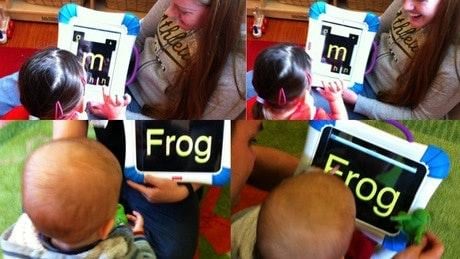
In this short course you will explore the possibility that children might acquire written language in a way that is similar to how they acquire spoken language—without instruction. You will encounter various aspects of behavioral science and technology that are relevant to this proposition. You will have the opportunity to learn the the perceptual, cognitive, and neurological capacities of children during their first years of life. You will advance your understanding of children and how they learn language. You will also be more attuned to current advances in the technology of human machine interactions, and what these phenomena imply for learning to read at an early age.

Oct 26th 2026
3 Weeks
Unethical Decision Making in Organizations (Coursera) Coursera
University of Lausanne

Unethical Decision Making in Organizations (Coursera)

This course 'Unethical decision making in organizations : A seminar on the dark side of the force' will teach you how strong organizational contexts push good people towards unethical decisions. You will also learn how to protect yourself and your organization against such forces lurking in the dark. This course teaches how narrow frames and strong contexts can push good people towards unethical decisions and how they can protect themselves and their organization against ethical blindness.

Nov 2nd 2026
5-12 Weeks
Psychological First Aid (Coursera) Coursera
Johns Hopkins University

Psychological First Aid (Coursera)

Learn to provide psychological first aid to people in an emergency by employing the RAPID model: Reflective listening, Assessment of needs, Prioritization, Intervention, and Disposition. Utilizing the RAPID model (Reflective listening, Assessment of needs, Prioritization, Intervention, and Disposition), this specialized course provides perspectives on injuries and trauma that are beyond those physical in nature. The RAPID model is readily applicable to public health settings, the workplace, the military, faith-based organizations, mass disaster venues, and even the demands of more commonplace critical events, e.g., dealing with the psychological aftermath of accidents, robberies, suicide, homicide, or community violence.

Nov 2nd 2026
5-12 Weeks
Learning, Knowledge, and Human Development (Coursera) Coursera
University of Illinois at Urbana-Champaign

Learning, Knowledge, and Human Development (Coursera)

This course sets out to provide an understanding of theories of learning and development and how these theories relate to educational technology. It has two components. The first is theoretical, in which we attempt to develop an overall frame of reference, locating approaches to the psychology of learning in terms of large paradigm shifts, from ‘behaviorism’ to ‘brain developmentalism’ to ‘social cognitivism’. The second component is practical, in which we will use these theoretical concepts to ‘parse’ a technology-mediated learning environment for its underlying presuppositions.

Oct 19th 2026
4 Weeks
Principios de Psicología (Coursera) Coursera
Tecnológico de Monterrey

Principios de Psicología (Coursera)

En este primer curso se proporcionará una visión integral del estudio científico del pensamiento y del comportamiento humano, donde se van a explorar temas como la sensopercepción, cognición, el aprendizaje y la memoria, así como la personalidad y la socialización. Además, podremos conocer con mayor detalle los fundamentos teóricos y los principales hallazgos en la Psicología.

Oct 19th 2026
4 Weeks