The Language of Design: Form and Meaning (Coursera)

The Language of Design: Form and Meaning (Coursera)

In this course, critique is defined as a detailed, objective analysis of a work of graphic design and its effectiveness. Critique is an integral part of the making process for designers: it’s not just how we determine if a work of design is or is not successful, it’s how we move our work forward. Critique is also where other voices and opinions can be brought into the design process.

Class Deals by MOOC List - Click here and see Coursera's Active Discounts, Deals, and Promo Codes.

This course will introduce a lexicon (or vocabulary) in order for you to demonstrate clearer and more considered ways of talking about graphic design in the context of critique. Through this lexicon and a provided Critique Framework, we will model and then practice objectively describing how well a work of design functions based on specific, clearly articulated criteria. By refining this skill, you will enhance your ability to communicate about design with peers, colleagues, and clients.
This course is essential to anyone looking to develop and refine a critical vocabulary around talking about art and design, such as:

  • practicing graphic designers at all levels
  • future and current students of art or design programs
  • teachers teaching visual art, design, or related subjects
  • any stakeholder in a design project that needs to communicate effectively with designers on their team.

This course is recommended to learners enrolled in either the Graphic Design Specialization or UI/UX Design Specialization on Coursera to further develop their skills in graphic design. You may take this course before, during, or after completing either Specialization.
Note this is not an art appreciation course for a general audience. While no prior experience is required to begin, the knowledge and skills taught in this course is useful only if you have some relationship to design in a professional context, i.e., practicing, studying, or teaching design, or working directly with designers.
No specific software or tools are required to complete this course.

What You Will Learn

  • Recall and explain a lexicon of key terms relating to form, meaning, and audience, and apply them successfully within an appraisal of graphic design
  • Establish and articulate criteria for successful outcomes in a design project that are not limited by personal taste.
  • Employ various ways of talking about visual form, meaning, and context for a given work of design in an objective way.
  • Develop an ability to engage with a work of design in an objective way.

Syllabus

WEEK 1
Audience/Context/Culture
This module provides an introduction to the larger ideas and cultural discussions that graphic design work inhabits, and some terms and ideas used within graphic design. We won't be covering a comprehensive dictionary of graphic design terms, but rather introducing a functional language used in the discussion of graphic design in a critique context. We will also discuss and analyze specific works of design and how they relate to the larger cultural context in which design operates, and why this is important. We will also learn about critique culture, and the importance of analyzing work based on subjective criteria rather than personal taste or subjective opinions.

WEEK 2
Basics of Form
In this module we will introduce key concepts and terms used in the critique of visual form in design work. We will cover basic terms used in the discussion of visual contrast, composition, and hierarchy. We will also discuss how to establish a vocabulary for the evaluation of visual form, and use that vocabulary in conjunction with the designer’s intention and the function of the work to build a framework to structure critique.

WEEK 3
Meaning and Concept
In this module we will focus on ways to describe and evaluate meaning in works of visual design. Using connotation and denotation as a foundation, the lessons in this module explain a range of approaches for creating meaning, from visual metaphor to cliche and parody. By building cultural literacy and developing research skills, we will practice identifying themes in design work and interpreting design concepts.

WEEK 4
Synthesis: Critique and Effective Design
In this final module, you will synthesize all of the skills you have acquired in the previous modules into a structured critique of graphic design work. As you will see, this module is weighted much more heavily toward assessment and practice than previous modules. Assessing the success of a finished piece of design is difficult because there are so many variables to consider at the same time. You have learned the basic lexicon and syntax for talking about design. Now is the time to put all of these skills together to talk about a piece of design in a holistic and effective way.

Go to Class
MOOC List is learner-supported. When you buy through links on our site, we may earn an affiliate commission.

Related Courses

Creating designs using Canva (Coursera) Coursera
Coursera Project Network

Creating designs using Canva (Coursera)

Creating designs using Canva: An easy first step to creating graphic designs in Canva. We will start by creating an account and complete it with exporting the design created in the website. In this Guided Project, you will: Learn to use Canva and explore the website; Logo and brochure designs using template and from scratch; Share , Upload and Export designs

Mar 7th 2022
Self-Paced
Graphic Design Essentials (edX) EdX
LCI Education

Graphic Design Essentials (edX)

Acquire the essential skills to become a working Graphic Designer from the basics of color theory to presenting a project to a client. This online course from LaSalle College Vancouver will introduce you to the basics of design, graphic and visual communication, image making, typography and the overall creative process, starting from the client mandate to the final presentations.

Self Paced
Self-Paced
Be Visual! Sketching Basics for IT Business (openSAP) OpenSAP
SAP

Be Visual! Sketching Basics for IT Business (openSAP)

Join this free, online openSAP course ‘Be Visual! Sketching Basic for IT Business’ and start learning the very basics of sketching. By applying the practice-oriented tips and tricks in this course, you’ll gain the confidence to present your ideas visually. Sketching helps you to communicate abstract ideas and transform them into tangible artifacts that can be further explored and validated. With their low fidelity, sketches provide room for interpretation and invite discussion. Sketches also are a starting point for iteration.

Nov 9th 2022
4 Weeks
Design and Make Infographics (Project-Centered Course) (Coursera) Coursera
Michigan State University

Design and Make Infographics (Project-Centered Course) (Coursera)

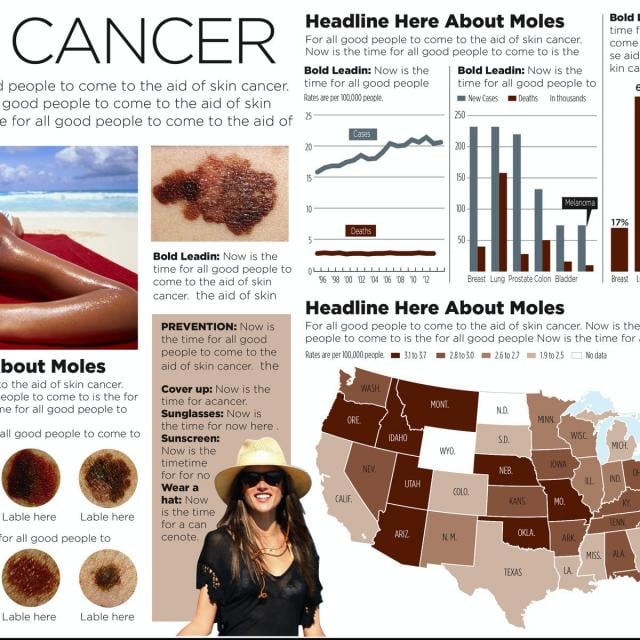
In this project-centered course*, you will create a content-rich infographic on a topic of your choice using Adobe Illustrator (which you can download for a free, 30-day trial). You might choose to create a visual representation of data from the world of sports, entertainment, politics, or science, to explain a business trend or environmental issue, or even to present a theme or development from your personal life. Your finished infographic will engage your target audience and convey information clearly through effective use of design elements such as typography, color, and structure.

Jul 20th 2026
4 Weeks
Visual Thinking: Drawing Data to Communicate Ideas (Skillshare) Skillshare
Skillshare

Visual Thinking: Drawing Data to Communicate Ideas (Skillshare)

Dive into functional drawing! Join information designer and artist Catherine Madden for a 60-minute class demystifying how drawing can help you communicate ideas clearer, faster, and stronger. As she draws everyday data into friendly stories and charts, you'll learn how a few simple moves can help you organize your ideas, extend your brainstorming, and communicate complex concepts simply (and effectively) to audiences of every size.

Self Paced
Self-Paced
Low-Budget Video Production: Visual Communication for Small Charities (FutureLearn) FutureLearn
The Open University

Low-Budget Video Production: Visual Communication for Small Charities (FutureLearn)

Understand how video can expand and enhance your organisation’s communications and develop practical skills for your productions. Learn how to produce your own low-budget video to convey your charity’s message. Small charities understand that to compete in a tough economic climate they should engage with digital media and video content. But a lack of staff, time, knowledge and resources can get in the way. This practical video production course is designed to bridge that gap and help small charities develop the skills they need for successful video production.

Self Paced
4 Weeks
Icon Design Masterclass : Learn Icon Design Principles (Eduonix) Eduonix
Eduonix Learning Solutions Pvt. Ltd.

Icon Design Masterclass : Learn Icon Design Principles (Eduonix)

Design creative and colorful icons from scratch, from sketching and execution, in our Icon Design Beginners Course. We have become more visual creatures, where having bright colors and images help us interact more with a website. This is why tiny icons can play such a huge part when it comes to website design and website application.

Self Paced
Self-Paced
Introduction to Graphic Design (OpenLearning) OpenLearning
Canva Design School

Introduction to Graphic Design (OpenLearning)

Want to design beautiful graphics? Do you have a range of social media accounts, your own blog or a workplace presentation that you need to design images for? This course will teach foundational graphic design principles (fonts, colors, images, backgrounds, and layouts) and how to apply them to your own Canva designs.

Self Paced
Self-Paced
Logo Design Course for Beginners (Eduonix) Eduonix
Eduonix Learning Solutions Pvt. Ltd.

Logo Design Course for Beginners (Eduonix)

The moment you see the big yellow M (McDonalds) or a blue bird (Twitter), you know exactly which companies these belong to. Logos play a huge role when it comes to establishing a brand identity, as it stands in the place of the company name. This is the reason why many companies pay through the nose for designers to create innovative and catchy logos that can make an impression on the public. Do you want to become a logo designer? Do you have some creativity that is ready to shine? Well look no further! This value-packed logo design course has everything you need to learn on how to start using Adobe Illustrator to create your very own logos.

Self Paced
Self-Paced