Kesepaduan & Hubungan Etnik di Malaysia (OpenLearning)

Kesepaduan & Hubungan Etnik di Malaysia (OpenLearning)

Kursus ini membincangkan hubungan etnik di Malaysia dengan memfokuskan kepada perspektif kesepaduan sosial.

Topik-topik yang diliputi di dalam kursus ini adalah :
1) Senario kepelbagaian etnik di Malaysia.
2) Lensa kesepaduan sosial di Malaysia.
3) Asas pembinaan kefahaman wacana hubungan etnik.
4) Pengalaman harian dalam membina kesepaduan sosial.
Di akhir kursus ini, para pelajar akan dapat :
1) Memahami senario kepelbagaian etnik di Malaysia dari segi sejarah dan keadaan pada masa kini.
2) Menjelaskan perspektif kesepaduan sosial dalam memahami hubungan etnik di Malaysia.
3) Membincangkan konsep-konsep dan teori-teori asas yang membina kefahaman mengenai hubungan etnik secara amnya.
4) Mengaplikasi konsep-konsep dan teori-teori asas mengenai hubungan etnik dalam konteks Malaysia secara khususnya.

Go to Class
MOOC List is learner-supported. When you buy through links on our site, we may earn an affiliate commission.

Related Courses

Wonders of Ancient Egypt (Coursera) Coursera
University of Pennsylvania

Wonders of Ancient Egypt (Coursera)

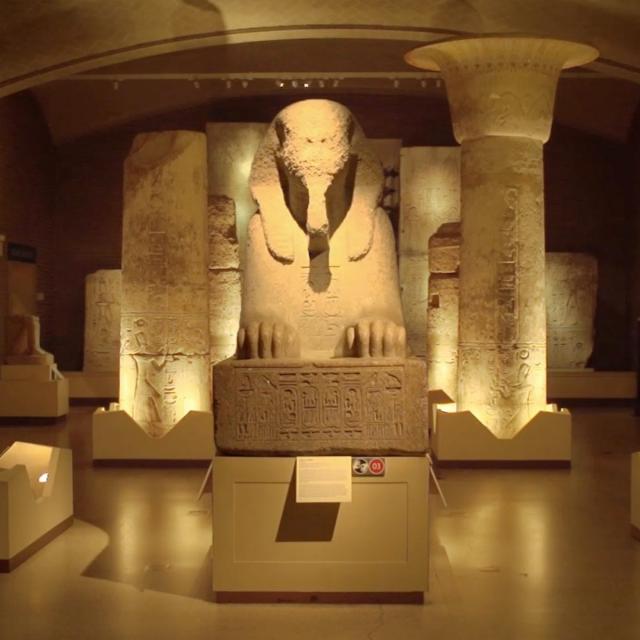
Colossal pyramids, imposing temples, golden treasures, enigmatic hieroglyphs, powerful pharaohs, strange gods, and mysterious mummies are features of Ancient Egyptian culture that have fascinated people over the millennia. The Bible refers to its gods, rulers, and pyramids. Neighboring cultures in the ancient Near East and Mediterranean wrote about its god-like kings and its seemingly endless supply of gold. The Greeks and Romans describe aspects of Egypt's culture and history.

Sep 28th 2026
5-12 Weeks
Intellectual Humility: Theory (Coursera) Coursera
University of Edinburgh

Intellectual Humility: Theory (Coursera)

Faced with difficult questions people often tend to dismiss and marginalize dissent. Political and moral disagreements can be incredibly polarizing, and sometimes even dangerous. And whether it’s Christian fundamentalism, Islamic extremism, or militant atheism, religious dialogue remains tinted by arrogance, dogma, and ignorance. The world needs more people who are sensitive to reasons both for and against their beliefs, and are willing to consider the possibility that their political, religious and moral beliefs might be mistaken. The world needs more intellectual humility.

Sep 28th 2026
3 Weeks
Introduction to Malay Language (FutureLearn) FutureLearn
University of Malaya

Introduction to Malay Language (FutureLearn)

Learn the basics of speaking and writing in the Malay language and find out about Malaysian culture. Over 60 million people speak Malay; it is an official language of several countries including Singapore and Malaysia. On this course you’ll get an introduction to the basics of Malay and discover more about Malaysia as a place and culture.

No sessions available
3 Weeks
The Politics of Skepticism (Coursera) Coursera
Erasmus University Rotterdam

The Politics of Skepticism (Coursera)

This is a course about the history of Skepticism from the ancient Greeks to today, with special attention to the political ramifications of questioning man's ability to know the world and himself with any certainty. We will discuss the debates raging between Plato and the Sophists, the rise of Christianity in the Roman world, and the so-called 'Skeptical Crisis' of the Renaissance as well as Pierre Bayle's Skepticism and David Hume's.

Sep 28th 2026
5-12 Weeks
Greek and Roman Mythology (Coursera) Coursera
University of Pennsylvania

Greek and Roman Mythology (Coursera)

Myths are traditional stories that have endured over a long time. Some of them have to do with events of great importance, such as the founding of a nation. Others tell the stories of great heroes and heroines and their exploits and courage in the face of adversity. Still others are simple tales about otherwise unremarkable people who get into trouble or do some great deed. What are we to make of all these tales, and why do people seem to like to hear them? This course will focus on the myths of ancient Greece and Rome, as a way of exploring the nature of myth and the function it plays for individuals, societies, and nations. We will also pay some attention to the way the Greeks and Romans themselves understood their own myths.

Sep 21st 2026
5-12 Weeks
The Epistemic Quest for Truth: Introduction to epistemology (Coursera) Coursera
Erasmus University Rotterdam

The Epistemic Quest for Truth: Introduction to epistemology (Coursera)

The introduction of the internet and of social media has drastically changed our information position. We live in a time of ‘truth decay’: the distinction between opinions and facts is blurred, opinions have more impact than facts, and sources of factual information are increasingly distrusted. Since philosophers love truth, they deplore these tendencies. But what can they do about them? In this course, you will be invited to reflect on whether, in what sense and to what extent, 2500 years of normative epistemology, or theory of knowledge, can be put into practice and help to reduce truth decay.

Sep 28th 2026
5-12 Weeks
Philosophy and the Sciences: Introduction to the Philosophy of Cognitive Sciences (Coursera) Coursera
University of Edinburgh

Philosophy and the Sciences: Introduction to the Philosophy of Cognitive Sciences (Coursera)

What is our role in the universe as human agents capable of knowledge? What makes us intelligent cognitive agents seemingly endowed with consciousness? This is the second part of the course 'Philosophy and the Sciences', dedicated to Philosophy of the Cognitive Sciences. Scientific research across the cognitive sciences has raised pressing questions for philosophers. The goal of this course is to introduce you to some of the main areas and topics at the key juncture between philosophy and the cognitive sciences. Each week we will introduce you to some of these important questions at the forefront of scientific research. We will explain the science behind each topic in a simple, non-technical way, while also addressing the philosophical and conceptual questions arising from it.

Sep 21st 2026
4 Weeks
Egiptología (Egyptology) (Coursera) Coursera
Universitat Autònoma de Barcelona

Egiptología (Egyptology) (Coursera)

¿Sientes curiosidad por la civilización del antiguo Egipto? ¿Eres un apasionado de su cultura e historia? En este curso nos acercaremos a los templos de los antiguos faraones, a sus complejos funerarios, a sus ciudades, a su escritura jeroglífica, a su religión y a muchos otros aspectos de esta gran civilización.

Sep 28th 2026
5-12 Weeks
The Bible's Prehistory, Purpose, and Political Future (Coursera) Coursera
Emory University

The Bible's Prehistory, Purpose, and Political Future (Coursera)

With its walls razed to ground by Babylon’s armies, Jerusalem joined a long line of ancient vanquished cities—from Ur and Nineveh and Persepolis to Babylon itself. While some recovered from the destruction, others did not. But none responded to political catastrophe by fashioning the kind of elaborate and enduring monument to their own downfall that we find in the Bible. Most conquered populations viewed their subjugation as a source of shame. They consigned it to oblivion, opting instead to extol the golden ages of the past. The biblical authors in contrast reacted to loss by composing extensive writings that acknowledge collective failure, reflect deeply upon its causes, and discover thereby a ground for collective hope.

Sep 21st 2026
5-12 Weeks
Ethnic Minorities and Race (Coursera) Coursera
University of North Texas

Ethnic Minorities and Race (Coursera)

Conditions and distribution of ethnic minorities and race; socio-psychological and cultural factors in the race and ethnic relations; the pattern of relations in the United States with emphasis on the Southwest and on social services. Upon completion of this course, learners will be able to: Identify sociological ideas, concepts, terms, and theories regarding ethnic minorities and race.

Jan 6th 2025
4 Weeks
Science & Religion 101 (Coursera) Coursera
University of Alberta

Science & Religion 101 (Coursera)

This course examines the nature of both science and religion and attempts to explore the possible relationships between them. The primary purpose is to dispel the popular myth that science and religion are entrenched in a never-ending conflict. As a result, this course argues that if the limits of both science and religion are respected, then their relationship can be complementary.

Sep 28th 2026
5-12 Weeks