EdX

Introduction to Systems Biology (edX)

Offered by IEEE,
Introduction to Systems Biology (edX)

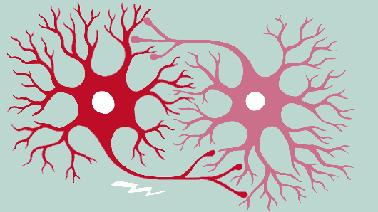
Learn how to model and simulate complex and dynamic behavior in biological systems. Biological systems are dynamic, complex, and made of many parts. In the past, scientists often tried to understand them by examining each constituent part. However, this approach was unsuccessful in many cases because the parts of any complex biological system can “interact” with each other and understanding such interaction is critical.

Class Deals by MOOC List - Click here and see EdX's Active Discounts, Deals, and Promo Codes.

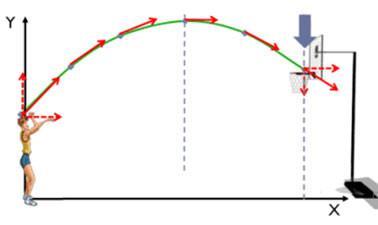
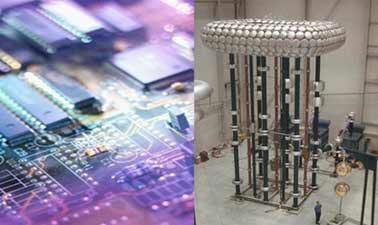
In this biology and life sciences course you will learn about systems biology, a holistic approach to understanding biological complexity, focusing on how all of the parts of a system work together. This course will teach you the basic concepts of systems biology, including engineering principles and tools developed for dynamic systems (e.g., robots) to better model and understand biological dynamics.
You will learn how simple math operations, addition and multiplication, can be used to model and simulate dynamic biological behaviors. Different types of “gene circuits” will be modeled and simulated using Octave Online, a web-based programming tool.
This course is geared towards secondary/ high school STEM (Science, Technology, Engineering and Math) educators and students. Basic programming skills will be taught in a step-wise manner so no prior programming experience or knowledge is necessary.
What you'll learn:

  • Key concepts of systems biology
  • Introduction to dynamic systems
  • Gene circuit modeling in both logical and physical domains
  • Basic programming skills through the Octave Online platform
Note: This course is currently not available.

Related Courses

Supply Chains for Manufacturing: Inventory Analytics (edX) EdX
MIT,MITx

Supply Chains for Manufacturing: Inventory Analytics (edX)

Learn about effective supply chain strategies for companies that operate globally, with emphasis on how to plan and integrate supply chain components into a coordinated system. This course was formerly known as Supply Chains for Manufacturing I. A supply chain entails two or more parties that are linked together by material, information and money flows.

Mar 6th 2024
5-12 Weeks
Supply Chain Design (edX) EdX
MIT,MITx

Supply Chain Design (edX)

Learn how to design and optimize the physical, financial, and information flows of a supply chain to enhance business performance – part of the MITx MicroMasters Credential in Supply Chain Management. CTL.SC2x Supply Chain Design covers all aspects involved in the design of supply chains for companies and organizations anywhere in the world. The course is divided into four main topic areas: Physical flow design, Supply chain finance, Information flow design, and Organization/Process design.

Jun 19th 2024
13-24 Weeks
Dynamic Systems & Controls (saylor.org) Saylor Academy
Saylor.org

Dynamic Systems & Controls (saylor.org)

The study of dynamic systems focuses on the behavior of physical systems as well as the physics of individual components and the interactions between them. Control systems are designed to enable dynamic systems to respond in a specific manner. In this course, we will learn about the mathematical modeling, analysis, and control of physical systems that are in rest, in motion, or acted upon by a force.

Legacy Course
Self-Paced
Computational Neuroscience (Coursera) Coursera
University of Washington

Computational Neuroscience (Coursera)

This course provides an introduction to basic computational methods for understanding what nervous systems do and for determining how they function. We will explore the computational principles governing various aspects of vision, sensory-motor control, learning, and memory. Specific topics that will be covered include representation of information by spiking neurons, processing of information in neural networks, and algorithms for adaptation and learning.

Jun 22nd 2026
5-12 Weeks
Applied Quantum Computing III: Algorithm and Software (edX) EdX
Purdue University,PurdueX

Applied Quantum Computing III: Algorithm and Software (edX)

Learn domain-specific quantum algorithms and how to run them on present-day quantum hardware. This course is part III of the series of Quantum computing courses, which covers aspects from fundamentals to present-day hardware platforms to quantum software and programming. The goal of part III is to discuss some of the key domain-specific algorithms that are developed by exploiting the fundamental quantum phenomena (e.g. entanglement)and computing models discussed in part I.

Mar 25th 2024
5-12 Weeks
Robotics: Locomotion Engineering (edX) EdX
University of Pennsylvania,PennX

Robotics: Locomotion Engineering (edX)

Learn how to design, build, and program dynamical, legged robots that can operate in the real world. How do robots climb stairs, traverse shifting sand and navigate through hilly and rocky terrain? This course, part of the Robotics MicroMasters program, will teach you how to think about complex mobility challenges that arise when robots are deployed in unstructured human and natural environments.

No sessions available
5-12 Weeks
Introduction to Biology - The Secret of Life (edX) EdX
MIT,MITx

Introduction to Biology - The Secret of Life (edX)

Explore the secret of life through the basics of biochemistry, genetics, molecular biology, recombinant DNA, genomics and rational medicine. 7.00x is an introductory level biology course hosted by professor Eric Lander, who was one of the leaders of the Human Genome Project. The course content reflects the topics taught in the MIT introductory biology courses and many biology courses across the world.

Mar 12th 2024
13-24 Weeks
Molecular Biology - Part 1: DNA Replication and Repair (edX) EdX
MIT,MITx

Molecular Biology - Part 1: DNA Replication and Repair (edX)

An in-depth adventure through DNA replication and repair to strengthen your scientific thinking and experimental design skills. You’re acquainted with your DNA, but did you know that your cells synthesize enough DNA during your lifetime to stretch a lightyear in length? How does the cellular machinery accomplish such a feat without making more mistakes than you can survive?

Apr 16th 2024
5-12 Weeks