
The course gives you an introduction to using R.
The course will cover the basics from getting your own development environment setup all the way to doing basic computational tasks.
Note: This course is currently not available.
The course gives you an introduction to using R.
The course will cover the basics from getting your own development environment setup all the way to doing basic computational tasks.
 Coursera
In most areas of health, data is being used to make important decisions. As a health population manager, you will have the opportunity to use data to answer interesting questions. In this course, we will discuss data analysis from a responsible perspective, which will help you to extract useful information from data and enlarge your knowledge about specific aspects of interest of the population.
 Coursera
This course aims to provide a succinct overview of the emerging discipline of Materials Informatics at the intersection of materials science, computational science, and information science. Attention is drawn to specific opportunities afforded by this new field in accelerating materials development and deployment efforts.
 Coursera
AI is not only for engineers. If you want your organization to become better at using AI, this is the course to tell everyone--especially your non-technical colleagues--to take.
 Coursera
The purpose of this course is to summarize new directions in Chinese history and social science produced by the creation and analysis of big historical datasets based on newly opened Chinese archival holdings, and to organize this knowledge in a framework that encourages learning about China in comparative perspective. Our course demonstrates how a new scholarship of discovery is redefining what is singular about modern China and modern Chinese history.
 Coursera
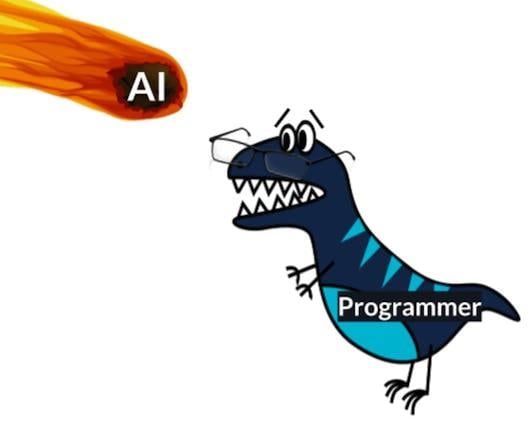
This course on Artificial Intelligence (AI) for software development explores the use of AI large language models such as ChatGPT, Bard, and others and their potential benefits and challenges. Through examples and hands-on activities, you will develop an understanding of the ways in which AI can speed up software development tasks and free up time for more creative and strategic work.
 Coursera
Confidence intervals and Hypothesis tests are very important tools in the Business Statistics toolbox. A mastery over these topics will help enhance your business decision making and allow you to understand and measure the extent of ‘risk’ or ‘uncertainty’ in various business processes. This course advances your knowledge about Business Statistics by introducing you to Confidence Intervals and Hypothesis Testing. These are done by easy to understand applications.
 Coursera
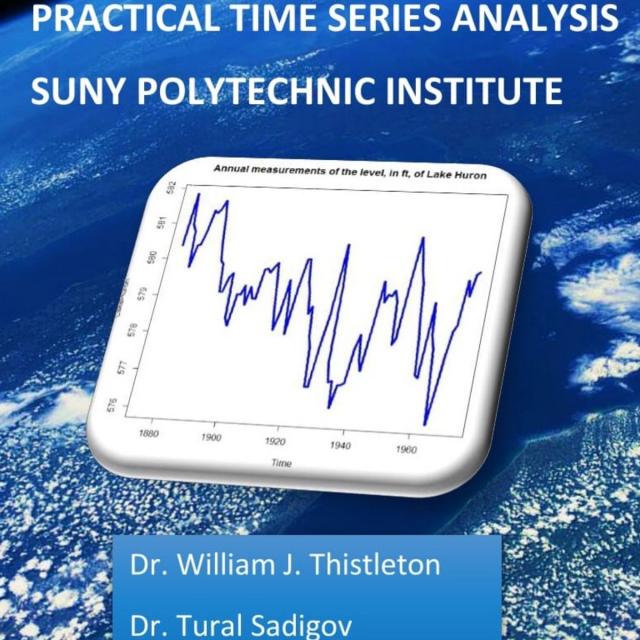
Many of us are "accidental" data analysts. We trained in the sciences, business, or engineering and then found ourselves confronted with data for which we have no formal analytic training. This course is designed for people with some technical competencies who would like more than a "cookbook" approach, but who still need to concentrate on the routine sorts of presentation and analysis that deepen the understanding of our professional topics.
 Coursera
Nossas boas-vindas ao Curso Ferramentas para Ciência de Dados: Introdução ao R. Neste curso, você aprenderá que o mundo evoluiu muito quando o assunto é tomada de decisão baseada em dados e já não é possível comparar a quantidade de informações a que temos acesso atualmente com o que tínhamos disponíveis décadas atrás.
 Coursera
In this project-based course, you will follow your own interests to create a portfolio worthy single-frame viz or multi-frame data story that will be shared on Tableau Public. You will use all the skills taught in this Specialization to complete this project step-by-step, with guidance from your instructors along the way.
 Coursera
This short course will guide you on preparing for the PL-300: Microsoft Power BI Data Analyst exam. This exam is the requirement for Microsoft Certified: Power BI Data Analyst Associate certification. The course provides you with a detailed understanding of the Power BI concepts, its features, and capabilities.
 Coursera
The COVID-19 pandemic is one of the first world-wide scenarios where data made a difference in capturing and analyzing the diffusion and impact of the disease. We offer an introductory course for decision makers, policy makers, public bodies, NGOs, and private organizations about methods, tools, and experiences on the use of data for managing current and future pandemic scenarios.
 Coursera
Welcome to the Advanced Linear Models for Data Science Class 2: Statistical Linear Models. This class is an introduction to least squares from a linear algebraic and mathematical perspective. Before beginning the class make sure that you have the following: a basic understanding of linear algebra and multivariate calculus; a basic understanding of statistics and regression models; at least a little familiarity with proof based mathematics; basic knowledge of the R programming language.