EdX

Introduction to the Modern Nanotechnology (edX)

Introduction to the Modern Nanotechnology (edX)

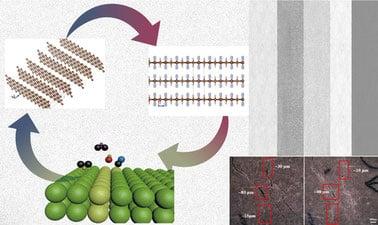
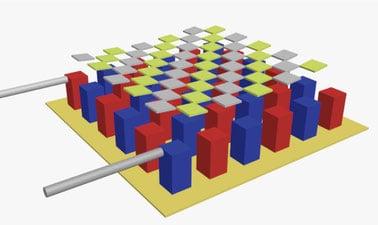
The aim of the course is a basic acquaintance with the concepts and approaches used in the field of nanomaterials design, fabrication and analysis. The course examines the physical basis of modern nanotechnology from the standpoint of semiconductor physics and quantum mechanics. The range of issues covered includes nanosystems classification by dimension, consideration of "bottom-up" and "from top down" approaches, examples of nanomaterials and nanosystems properties changes, the basis of practical device fabrication technologies for electronics, microwave photonics and photovoltaics, as well as the most important techniques for nanomaterial and device characterization.

Class Deals by MOOC List - Click here and see EdX's Active Discounts, Deals, and Promo Codes.

The basics of physics and technology of nanomaterials and nanosystems are overviewed in the course. The terminology and notions are introduced. The changes in the main properties of semiconductors and metals due to decrease of their size are discussed towards the electronic and optoelectronic applications and modern compound semiconductor materials. Starting from the objects description and mail physical properties peculiarities we move to basics of material and device nanofabrication, ending with nanosystem characterization techniques. Fabrication nanotechnology of the microwave compound semiconductor heterostructure devices for electronics and photonics are outlined.

What you'll learn

  • Concepts and approaches used in the field of nanomaterials design, fabrication and analysis
  • The physical basis of modern nanotechnology from the standpoint of semiconductor physics and quantum mechanics
  • Nanosystems classification by dimension, consideration of "bottom-up" and "from top down" approaches
  • The basis of practical device fabrication technologies for electronics, microwave photonics and photovoltaics

Syllabus

Week 1. The size and dimensionality of nanosystems
What is nano and why it is so helpful?
The size and dimensionality of nanosystems

Week 2. Nanosystems and their basic properties
2D Quantum heterostructure design and applications
Low-dimensional nanosystems and their properties

Week 3. Self-organization and self-assembly technology
Self-organization and self-assembly technology

Week 4. Directional nanostructuring techniques
Directional nanostructuring techniques

Week 5. Nanofabrication of compound semiconductor devices
Nanofabrication of compound semiconductor devices

Week 6. Nanotechnology in microwave electronics and photonics devices
Nanotechnology in microwave electronics and photonics devices

Week 7. Methods of nanostructure material characterization
Methods of nanostructure material characterization

Week 8. Electrical and optical characterization techniques for nanosystems
Electrical and optical characterization techniques for nanosystems

Go to Class
MOOC List is learner-supported. When you buy through links on our site, we may earn an affiliate commission.

Related Courses

Introduction to Quantum Science & Technology (edX) EdX
Purdue University,PurdueX

Introduction to Quantum Science & Technology (edX)

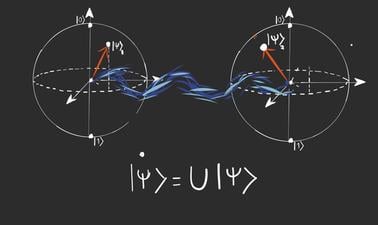
Learn about fundamental concepts and engineering challenges of quantum technologies. Emerging quantum systems are disruptive technologies redefining computing and communication. Teaching quantum physics to engineers and educating scientists on engineering solutions are critical to address fundamental and engineering challenges of the quantum technologies.

Aug 21st 2023
13-24 Weeks
Fundamentals of Macroscopic and Microscopic Thermodynamics (Coursera) Coursera
University of Colorado Boulder

Fundamentals of Macroscopic and Microscopic Thermodynamics (Coursera)

Course 1 first explores the basics of both macroscopic and microscopic thermodynamics from a postulatory point of view. In this view, the meaning of temperature, thermodynamic pressure and chemical potential are especially clear and easy to understand. In addition, the development of the Fundamental Relation and its various transformations leads to a clear path to property relations and to the concept of ensembles needed to understand the relationship between atomic and molecular structural properties and macroscopic properties.

Jun 22nd 2026
3 Weeks
Nanotechnology and Nanosensors, Part 2 (Coursera) Coursera
Technion - Israel Institute of Technology

Nanotechnology and Nanosensors, Part 2 (Coursera)

Learn about novel sensing tools that make use of nanotechnology to screen, detect and monitor various events in personal or professional life. Together, we will lay the groundwork for infinite innovative applications, starting from diagnosis and treatments of diseases, continuing with quality control of goods and environmental aspects, and ending with monitoring security issues.

Jun 15th 2026
5-12 Weeks
Semiconductor Fundamentals (edX) EdX
Purdue University,PurdueX

Semiconductor Fundamentals (edX)

From smartphones to satellites, semiconductors are everywhere. Tying together physics, chemistry, and electrical engineering, this easy-to-follow introduction provides the background needed to understand devices such as transistors and solar cells. This course provides the essential foundations required to understand the operation of semiconductor devices such as transistors, diodes, solar cells, light-emitting devices, and more.

Jan 9th 2023
5-12 Weeks
Micro and Nanofabrication (MEMS) (edX) EdX
École Polytechnique Fédérale de Lausanne,EPFLx

Micro and Nanofabrication (MEMS) (edX)

Learn the fundamentals of microfabrication and nanofabrication by using the most effective techniques in a cleanroom environment. Microfabrication and nanofabrication are the basis of manufacturing for nearly all modern miniaturized systems that are ubiquitously used in our daily life. Examples include; computer chips and integrated sensors for monitoring our environment, cars, mobile phones, medical devices and more.

Self Paced
Self-Paced
Quantum Mechanics: 1D Scattering and Central Potentials (edX) EdX
MIT,MITx

Quantum Mechanics: 1D Scattering and Central Potentials (edX)

Learn about scattering in one dimensional potentials, angular momentum, central potentials, and the hydrogen atom. In this quantum physics course you will learn the basic concepts of scattering – phase-shifts, time delays, Levinson’s theorem, and resonances – in the simple context of one-dimensional problems. We then turn to the study of angular momentum and the motion of particles in three-dimensional central potentials. We learn about the radial equation and study the case of the hydrogen atom in detail.

No sessions available
5-12 Weeks
Quantum Mechanics (edX) EdX
Georgetown University,GeorgetownX

Quantum Mechanics (edX)

Learn the quantum mechanics needed to prepare you for the second quantum revolution (focused on quantum sensing). We use a new way to teach quantum for undergraduates by focusing on conceptual ideas and operator manipulations. This allows us to discuss more applications to experiment usually done. You need a background in the full calculus sequence and in math methods. Freshman physics and modern physics is recommended. This course is appropriate for physicists, chemists and engineers.

Aug 21st 2023
13-24 Weeks
Quantum Mechanics of Molecular Structures (edX) EdX
The University of Tokyo,UTokyoX

Quantum Mechanics of Molecular Structures (edX)

Learn two methods used to determine molecular structures and their properties in this introduction to Quantum Mechanics. Knowing the geometrical structure of the molecules around us is one of the most important and fundamental issues in the field of chemistry. This course introduces the two primary methods used to determine the geometrical structure of molecules: molecular spectroscopy and gas electron diffraction.

Self Paced
Self-Paced
Quantum Mechanics for Everyone (edX) EdX
Georgetown University,GeorgetownX

Quantum Mechanics for Everyone (edX)

Learn the fundamental notions of quantum mechanics at a level that is accessible to everyone. Quantum Mechanics for Everyone is a six-week long MOOC that teaches the basic ideas of quantum mechanics with a method that requires no complicated math beyond taking square roots (and you can use a calculator for that).

Jun 8th 2023
5-12 Weeks