Introduction to Deep Learning for Computer Vision (Coursera)

Offered by MathWorks,
Introduction to Deep Learning for Computer Vision (Coursera)

Starting with zero deep learning knowledge, this foundational course will guide you to effectively train cutting-edge models for image classification purposes. From analyzing medical images to recognizing traffic signs, classification is important for many applications. Classification models also serve as the backbone for more complicated object detection models.

Class Deals by MOOC List - Click here and see Coursera's Active Discounts, Deals, and Promo Codes.

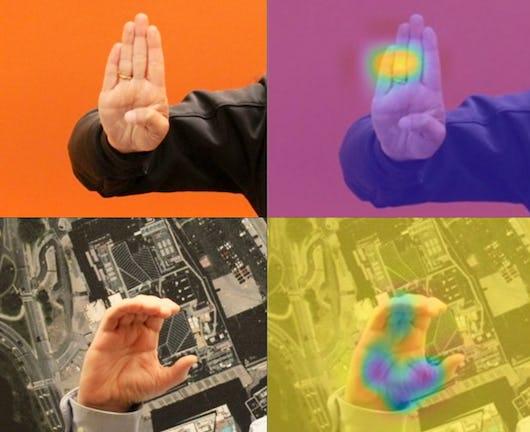
Through hands-on projects, you will train and evaluate models to classify street signs and identify the letters of American Sign Language. By completing this course, you will develop a strong foundation in deep learning for image analysis and will be equipped with the skills to tackle real-world computer vision challenges.
By the end of this course, you will be able to:
• Explain how deep learning networks find image features and make predictions
• Retrain common models like GoogLeNet and ResNet for specific applications
• Investigate model behavior to identify errors and determine potential fixes
• Improve model performance by tuning hyperparameters
• Complete the entire deep learning workflow in a final project
For the duration of the course, you will have free access to MATLAB, software used by top employers worldwide. The courses draw on the applications using MATLAB, so you spend less time coding and more time applying deep learning concepts.
This course is part of the Deep Learning for Computer Vision Specialization.

What you'll learn

  • Develop a strong foundation in deep learning for image analysis
  • Retrain common models like GoogLeNet and ResNet for specific applications
  • Investigate model behavior to identify errors, determine potential fixes, and improve model performance
  • Complete a real-world project to practice the entire deep learning workflow

Syllabus

Introduction to Deep Learning with Images
Learn the key components of convolutional neural networks and train a simple classification model

Transfer Learning
Retraining networks with new data is the most common way to apply deep learning in industry. In this module, you'll retrain common networks, set appropriate values for training options, and compare results from different models.

Investigating Network Behavior
Explaining how models make predictions is increasingly important. In this module, you'll use confidence scores and visualizations to determine what regions of an image the model is using to make predictions. You'll also identify common errors and adjust training options to improve performance.

Final Project: Classifying the ASL Alphabet
Apply your new skills to a final project.

Go to Class
MOOC List is learner-supported. When you buy through links on our site, we may earn an affiliate commission.

Related Courses

Matlab and Simulink Basics (Coursera) Coursera
Starweaver

Matlab and Simulink Basics (Coursera)

Matlab and Simulink Basics is a meticulously crafted course offering a comprehensive introduction to Matlab's programming environment and Simulink's modeling capabilities. This course is tailored for individuals keen on bolstering their skills in these indispensable tools for engineering, science, and research domains. From laying down foundational concepts to delving into practical applications, participants will embark on a journey that hones their abilities to manipulate data, design models, and interpret results with Matlab and Simulink.

Aug 17th 2026
4 Weeks
The AI Awakening: Implications for the Economy and Society (Coursera) Coursera
Stanford University

The AI Awakening: Implications for the Economy and Society (Coursera)

This course explores how the advances in artificial intelligence can and will transform our economy and society in the near future. You will hear insights from esteemed AI researchers and industry leaders in technology, economics, and business. The curriculum addresses the technological underpinnings of Generative AI, its profound implications for businesses and the broader economy, and the potential risks associated with AI-driven transformations in the workforce.

Aug 17th 2026
3 Weeks
GitHub Copilot: The AI Pair Programmer for Coding (Coursera) Coursera
Edureka

GitHub Copilot: The AI Pair Programmer for Coding (Coursera)

Welcome to the 'GitHub Copilot: The AI Pair Programmer for Coding' course, where you will embark on an insightful journey to develop a profound understanding of the AI principles that power GitHub Copilot's coding assistance. This course is designed to transform your coding practices, leveraging the advanced capabilities of GitHub Copilot.

Aug 17th 2026
1 Week
Innovative Teaching with ChatGPT (Coursera) Coursera
Vanderbilt University

Innovative Teaching with ChatGPT (Coursera)

Despite what you may have heard, ChatGPT offers exciting possibilities for supporting innovative teaching and personalized education. This course provides practical techniques that any educator, from K-12 to higher education, can use to help support their teaching. No experience with ChatGPT, prompt engineering, or Generative AI is required.

Aug 17th 2026
1 Week
Computational Neuroscience (Coursera) Coursera
University of Washington

Computational Neuroscience (Coursera)

This course provides an introduction to basic computational methods for understanding what nervous systems do and for determining how they function. We will explore the computational principles governing various aspects of vision, sensory-motor control, learning, and memory. Specific topics that will be covered include representation of information by spiking neurons, processing of information in neural networks, and algorithms for adaptation and learning.

Aug 17th 2026
5-12 Weeks
Machine Learning Introduction for Everyone (Coursera) Coursera
IBM

Machine Learning Introduction for Everyone (Coursera)

This three-module course introduces machine learning and data science for everyone with a foundational understanding of machine learning models. You’ll learn about the history of machine learning, applications of machine learning, the machine learning model lifecycle, and tools for machine learning. You’ll also learn about supervised versus unsupervised learning, classification, regression, evaluating machine learning models, and more.

Aug 17th 2026
3 Weeks
Practical Machine Learning on H2O (Coursera) Coursera
H2O.ai

Practical Machine Learning on H2O (Coursera)

In this course, we will learn all the core techniques needed to make effective use of H2O. Even if you have no prior experience of machine learning, even if your math is weak, by the end of this course you will be able to make machine learning models using a variety of algorithms. We will be using linear models, random forest, GBMs and of course deep learning, as well as some unsupervised learning algorithms.

Aug 17th 2026
5-12 Weeks
Inteligência Artificial para Logística (Coursera) Coursera
FIA Business School

Inteligência Artificial para Logística (Coursera)

Nossas boas-vindas ao Curso Inteligência Artificial para Logística. Neste curso, você aprenderá sobre os processos de planejamento logístico, seu escopo de atuação e sua integração com as demais áreas da empresa, e como as novas tecnologias de inteligência artificial e internet das coisas podem ampliar a eficiência e a geração de valor para a empresa.

Aug 17th 2026
4 Weeks