Introduction to Augmented Reality and ARCore (Coursera)

Offered by Google AR & VR,
Introduction to Augmented Reality and ARCore (Coursera)

This class will teach you the fundamentals of augmented reality (AR), and how to build an AR experience using ARCore.

Class Deals by MOOC List - Click here and see Coursera's Active Discounts, Deals, and Promo Codes.

Through the four week course, you'll learn:

  • How to identify different types of AR experiences
  • Tools and platforms used in the AR landscape
  • What makes AR feel "real"
  • Popular use cases for AR
  • How to create an AR use flow
  • How AR experiences work
  • Tools like Google Poly and Unity to build AR experiences
  • Next steps to start building an AR experience using ARCore and other tools

This course will break down complex AR concepts to make them easy to understand, while also sharing expert tips and knowledge from Daydream's ARCore team. The course is great for beginners who are just getting started with AR or ARCore.

Syllabus

WEEK 1
Introduction to augmented reality (AR)
In this module, you'll be introduced to the basics of augmented reality and some surrounding context-- how and why it was developed, and how it compares to and differs from its technological cousin, virtual reality. You will also learn more about the current industry landscape, the hardware needed to view AR content, and how people are using AR today.

WEEK 2
The basics of AR functionality
In this module we’ll dive into the hardware components inside mobile devices that power augmented reality, and you'll discover ways in which AR assets can feel real and keep users immersed. You'll learn about ARCore features that help make a digital object behave as though it exists in a real world space, as well as a few constraints facing AR today.

WEEK 3
Taking the next steps with ARCore
In this section you’ll dive into a few specific examples of how AR applications are being used in the real world. You’ll learn about the strengths and current constraints of the ARCore platform, user considerations, and basic AR interaction options. You’ll also gain more knowledge about the tools and team you’ll need to build an AR app.

WEEK 4
Bringing ARCore to life
In this last module we’ll dive deeper into some important elements of augmented reality and bring them to life with existing ARCore apps. You’ll also learn more about how to create 3D assets for AR with tools like Google Poly and Unity, as well as discover further resources to continue your augmented reality learning journey.

Go to Class
MOOC List is learner-supported. When you buy through links on our site, we may earn an affiliate commission.

Related Courses

Biomedical Visualisation (Coursera) Coursera
University of Glasgow

Biomedical Visualisation (Coursera)

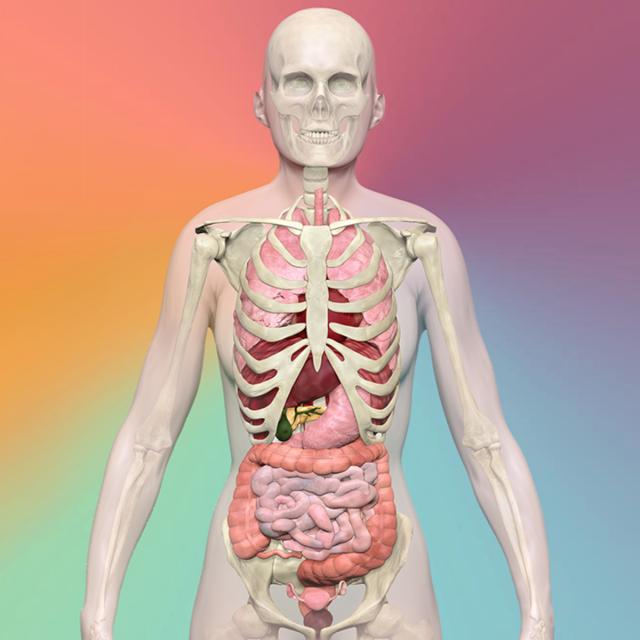
Visualisation is a rapidly progressive specialty in academia, research and industry, and becoming the future of science. With the advancement of digital technologies and their applications, biomedical visualisation is an evolving and popular field. With new techniques and technologies to image, process and analyse data related to the human body, and its biological processes, it is at the forefront of the digital revolution.

Jun 15th 2026
4 Weeks
Leading Digital and Data Decision Making (edX) EdX
Arizona State University,ASUx

Leading Digital and Data Decision Making (edX)

In this course, you will learn how leaders make managerial and relevant decisions based on data across multiple global industries. You will also explore how companies benefit from a digital ecosystem including sensors (IoT), Blockchain, artificial intelligence (AI), and augmented reality (AR) that move data-driven insights from the data scientist to the boardroom.

This course is archived
5-12 Weeks
MOOC on Visual Literacies: Exploring educational practice and technologies (ViliProject) Other Providers
Lancaster University

MOOC on Visual Literacies: Exploring educational practice and technologies (ViliProject)

Welcome to this MOOC on visual literacies where we will be exploring the educational practices and technologies associated with visual communication and visual thinking. In this course you will find out about the transformative power of photos, mind maps, comics, infographics and data visualization; how educators use video and animation and why it works; game-based learning, augmented reality, virtual and mixed reality; and synchronous video communication and holography.

No sessions available
5-12 Weeks
AR VR The Promise of Sci-Fi (OpenLearning) OpenLearning
Sunway University

AR VR The Promise of Sci-Fi (OpenLearning)

This course explores how the emerging forms of media and the development in the digital field opens possibilities for exploration of virtual reality and augmented reality that carries potential benefits applicable to various industries portrayed through user experience cases that you will discover throughout this course.

Self Paced
Self-Paced
Creative Programming for Digital Media & Mobile Apps (Coursera) Coursera
University of London,Goldsmiths, University of London

Creative Programming for Digital Media & Mobile Apps (Coursera)

This course is for anyone who would like to apply their technical skills to creative work ranging from video games to art installations to interactive music, and also for artists who would like to use programming in their artistic practice. This course will teach you how to develop and apply programming skills to creative work. This is an important skill within the development of creative mobile applications, digital music and video games. It will teach the technical skills needed to write software that make use of images, audio and graphics, and will concentrate on the application of these skills to creative projects. Additional resources will be provided for students with no programming background.

Oct 12th 2026
5-12 Weeks
What is the Metaverse? (Coursera) Coursera
Meta

What is the Metaverse? (Coursera)

The metaverse isn’t just for gamers or developers, it will be for everyone. In this free course from the experts at Meta, you’ll learn what the metaverse is, what it means for our world today and into the future, and the opportunities it presents for both professionals and businesses. Understand the metaverse fundamentals. Experts will guide you through a broad range of topics spanning the metaverse ecosystem, from communication and collaboration to NFTs and cryptocurrency, from avatars and devices to platforms and game engines. You’ll learn about augmented reality (AR), virtual reality (VR), extended reality, NFTs, blockchain, web3, cryptocurrency, and more.

Sep 28th 2026
5-12 Weeks
Comparing Genes, Proteins, and Genomes (Bioinformatics III) (Coursera) Coursera
University of California, San Diego

Comparing Genes, Proteins, and Genomes (Bioinformatics III) (Coursera)

Once we have sequenced genomes in the previous course, we would like to compare them to determine how species have evolved and what makes them different. In the first half of the course, we will compare two short biological sequences, such as genes (i.e., short sequences of DNA) or proteins. We will encounter a powerful algorithmic tool called dynamic programming that will help us determine the number of mutations that have separated the two genes/proteins.

Oct 12th 2026
5-12 Weeks
User Experience & Interaction Design for AR/VR/MR/XR (Coursera) Coursera
University of Michigan

User Experience & Interaction Design for AR/VR/MR/XR (Coursera)

This second course in the XR for Everybody specialization looks at how to design new user experiences for XR technologies. The course provides learners with a design thinking mindset and equips them with a fundamental toolbox for creating XR applications using rapid prototyping. It starts with a broad overview of the complete XR design process, discussing different paths to becoming an XR creator, what is generally involved in making XR experiences, and how to best get started.

Sep 28th 2026
4 Weeks