Introduction to Astronomy (Duke Extend)

Offered by Duke University,
Introduction to Astronomy (Duke Extend)

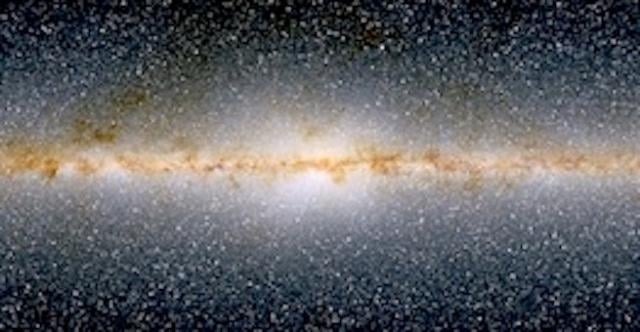
Learn about the mysteries of the universe, from the Earth and Solar system to wonderful and strange deep space objects like black holes and supernovae. In this class, we will be studying, quite literally, everything in the universe. We will start with "classical" astronomy, describing the night sky and organizing what we see as was done in ancient times.

We will then embark on a journey, starting here on Earth and progressing outward, to study the Solar system, the Milky Way galaxy, and the wonderful and strange objects we observe in deep space, such as black holes, quasars, and supernovae. We will end with some discussion of what scientists know today about the universe as a whole. Along the way we will introduce some of the methods, theoretical and experimental, that have been used to understand all of this, from Newton's laws, through our understanding of light and matter, to Einstein's theory of relativity, and from Galileo's telescope to WMAP and LIGO.

Syllabus

Week 1: Positional Astronomy (naked-eye Astronomy)
We will spend our first week familiarizing ourselves with descriptions of the positions and motions of celestial objects.

Weeks 2-3: Newton’s Universe
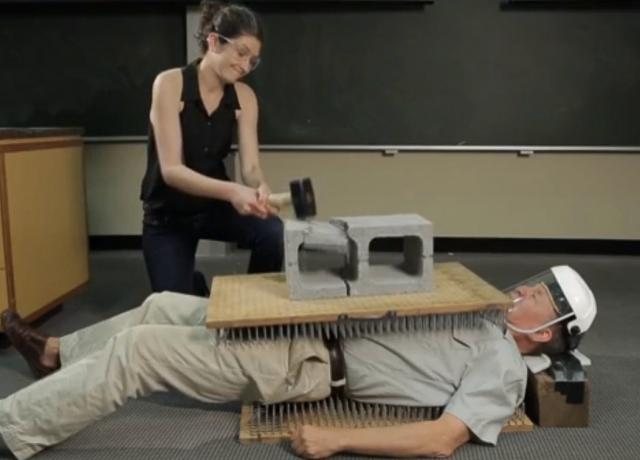
Newtonian physics revolutionized the way we understand our Universe. We will discuss Newton’s laws of mechanics, the conservation laws that follow from them, his theory of gravity and some applications to Astronomy, as well as some properties of radiation. The last clip will be a quick look at the features of quantum mechanics relevant to our course. This will be a particularly busy and challenging unit, but hard work here will pay off later.

Week 4: Planets
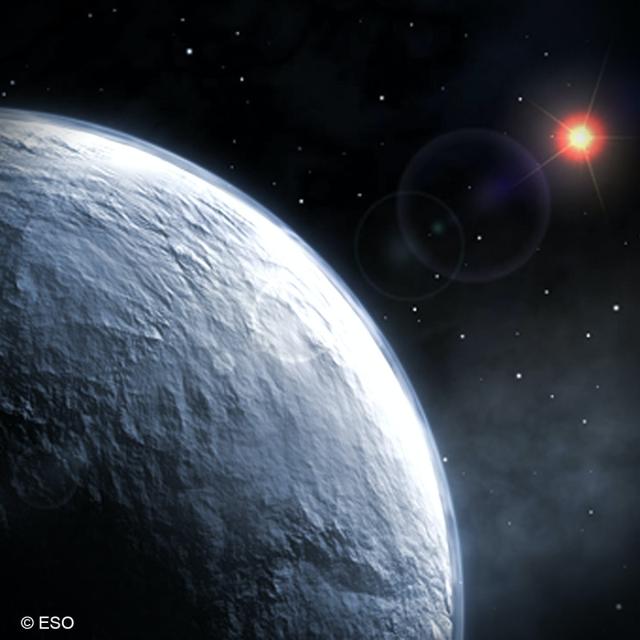
We will not have time in this course to do justice to the broad and exciting field of planetary science. We will spend the week on a general review of the properties and structure of our Solar System and our understanding of its origins and history. We will end with some discussion of the exciting discoveries over the past decade of many hundreds of extrasolar planets.

Week 5: Stars
What we know about stars and a bit about how we found out. We will begin with a quick review of the best-studied star of all, our Sun. We will then talk about classifications; H-R diagrams and main sequence stars; distance, mass, and size measurements; binaries; clusters; and stellar evolution through the main sequence.

Week 6: Post-Main-Sequence Stars
Final stages of stellar evolution and stellar remnants. Giants, white dwarfs, novae, variable stars, supernovae, neutron stars and pulsars.

Week 7: Relativity and Black Holes
We will spend most of this week acquiring an understanding of the special theory of relativity. We will then discuss the general theory in a qualitative way, and discuss its application to black holes, gravitational lensing, gravitational radiation, and other phenomena of interest.

Week 8: Galaxies
Galactic structure and classification. Active galactic nuclei, quasars and blazars. Galactic rotation curves and dark matter. Galaxy clusters and large-scale structure.

Weeks 9-10: Cosmology
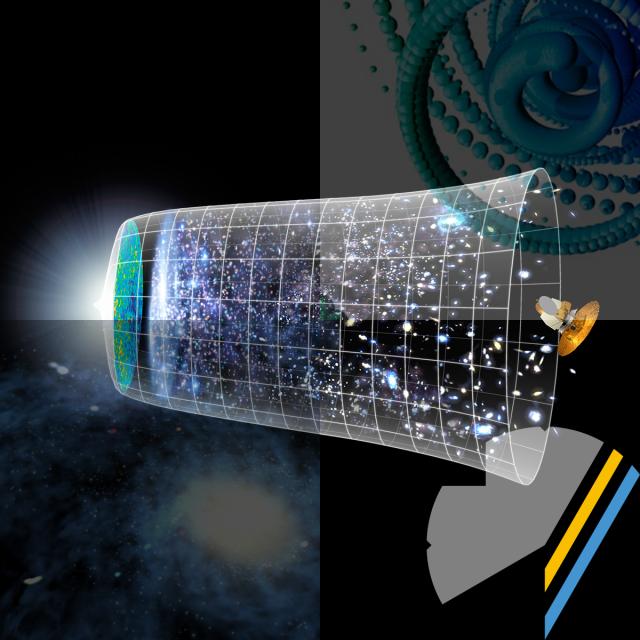
What we can say about the universe as a whole. Hubble Expansion. Big bang cosmology. The cosmic microwave background. Recent determination of cosmological parameters. Early universe physics.

Recommended Background

  1. An interest in learning something about the universe we live in and a willingness to invest some thought and some work in this.
  2. A familiarity with the rudiments of high-school algebra.
  3. A basic background in science at a high school level. What elements, atoms, nuclei, magnetic fields, gravity, etc. are will be assumed familiar. The details of their physics or its mathematical description will not.
Note: This course is currently not available.

Related Courses

The Diversity of Exoplanets (Coursera) Coursera
University of Geneva

The Diversity of Exoplanets (Coursera)

In this MOOC, you will have the opportunity to practice several methods of detection and characterisation of exoplanets. You will discover their statistical properties and the current state of knowledge we have in this very recent field of research. You will also understand the limitations and biases of the different detection techniques.

Aug 24th 2026
5-12 Weeks
Density Functional Theory (Coursera) Coursera
École Polytechnique

Density Functional Theory (Coursera)

The aim of this course is to give a thorough introduction to Density Functional Theory (DFT). DFT is today the most widely used method to study interacting electrons, and its applicability ranges from atoms to solid systems, from nuclei to quantum fluids. In this course, we introduce the most important concepts underlying DFT, its foundation, and basic ideas. We will in particular stress the features and reasons that lead DFT to become the dominant method for simulating quantum mechanical systems.

Aug 24th 2026
3 Weeks
The Worldview of Thomas Berry: The Flourishing of the Earth Community (Coursera) Coursera
Yale University

The Worldview of Thomas Berry: The Flourishing of the Earth Community (Coursera)

Thomas Berry (1914-2009) was a historian of world religions and an early voice awakening moral sensibilities to the environmental crisis. He is known for articulating a “new story” of the universe that explores the implications of the evolutionary sciences and cultural traditions for creating a flourishing future. This course investigates Berry’s life and thought in relation to the Journey of the Universe project.

Aug 17th 2026
5-12 Weeks
The Sun and the Total Eclipse of August 2017 (Coursera) Coursera
University of Colorado Boulder

The Sun and the Total Eclipse of August 2017 (Coursera)

A total eclipse is one of the most spectacular sights you can ever see! It looks like the end of the world may be at hand. There is a black hole in the sky where the sun should be. Pink flames of solar prominences and long silver streamers of the sun's corona stretch across the sky. It gets cold, and animals do strange things. People scream and shout and cheer, and remember the experience their whole life. But total eclipses are important scientifically as well.

Aug 31st 2026
5-12 Weeks
Introduction to Particle Accelerators (NPAP MOOC) (Coursera) Coursera
Lund University

Introduction to Particle Accelerators (NPAP MOOC) (Coursera)

Welcome to the Nordic Particle Accelerator Program's (NPAP) Massive Open Online Courses and to the fascinating world of particle accelerators! Did you know that in the year of 2000 there were more than 15 000 particle accelerators in the world? Yet, today it has grown to more than 30 000 of them! A third of the particle accelerators are dedicated to medical applications, such as radio therapy, and a half are used for ion implantation in semiconductor devices.

Aug 31st 2026
5-12 Weeks
Conceptos y Herramientas para la Física Universitaria (Coursera) Coursera
Tecnológico de Monterrey

Conceptos y Herramientas para la Física Universitaria (Coursera)

Este curso provee al estudiante con conceptos y herramientas matemáticas para modelar problemas en física, que al aplicar podrá enfrentar con éxito los cursos de física universitarios. Así pues, la filosofía de este curso consiste en cubrir temas conceptuales relativos a la Física y desarrollar tu capacidad de aprender y aplicarlos en tu vida profesional.

Aug 17th 2026
5-12 Weeks
The Science of Gastronomy (Coursera) Coursera
The Hong Kong University of Science and Technology - HKUST

The Science of Gastronomy (Coursera)

This course introduces a number of basic scientific principles underpinning the methodology of cooking, food preparation and the enjoyment of food. All topics covered have a strong basis in biology, chemistry, and physics application. Among others, they include the consumption of cooked food, the physiological and evolutionary implication of the senses, geographic and cultural influences on food, and the rationale behind food preparation. We will also discuss issues such as coupling of senses to improve sense stimulation; altering flavor by chemical means; and modification of the coloration to improve the appearance of dishes. Following the video demonstrations of the scientific principles of cooking, you will learn to recognize the key ingredients and their combinations for preparing good healthy food.

Sep 1st 2026
5-12 Weeks
Magic in the Middle Ages (Coursera) Coursera
University of Barcelona

Magic in the Middle Ages (Coursera)

Magical thought has always attracted human imagination. In this course we will introduce you to the Middle Ages through a wide conception of magic. Students will have an approach to medieval culture, beliefs and practices from the perspective of History and History of Science. Popular magic, as well as learned magic (alchemy, geomancy and necromancy) will be addressed. Moreover, we will also deal with how eastern practices and texts influenced western culture. In July 2016, the course will contain a brand-new module devoted to astrology. Magic in the Middle Ages offers a captivating overview of medieval society and promotes reflection about certain stereotypes associated with this period.

Aug 17th 2026
5-12 Weeks
Global Warming I: The Science and Modeling of Climate Change (Coursera) Coursera
University of Chicago

Global Warming I: The Science and Modeling of Climate Change (Coursera)

This class describes the science of global warming and the forecast for humans’ impact on Earth’s climate. Intended for an audience without much scientific background but a healthy sense of curiosity, the class brings together insights and perspectives from physics, chemistry, biology, earth and atmospheric sciences, and even some economics—all based on a foundation of simple mathematics (algebra).

Aug 24th 2026
5-12 Weeks
Philosophy and the Sciences: Introduction to the Philosophy of Physical Sciences (Coursera) Coursera
University of Edinburgh

Philosophy and the Sciences: Introduction to the Philosophy of Physical Sciences (Coursera)

What is the origin of our universe? What are dark matter and dark energy? This is the first part of the course 'Philosophy and the Sciences', dedicated to Philosophy of the Physical Sciences. Scientific research across the physical sciences has raised pressing questions for philosophers. The goal of this course is to introduce you to some of the main areas and topics at the key juncture between philosophy and the physical sciences.

Aug 24th 2026
4 Weeks