EdX

Introduction to Analytics Modeling (edX)

Introduction to Analytics Modeling (edX)

Learn essential analytics models and methods and how to appropriately apply them, using tools such as R, to retrieve desired insights. Analytical models are key to understanding data, generating predictions, and making business decisions. Without models it’s nearly impossible to gain insights from data.

Class Deals by MOOC List - Click here and see EdX's Active Discounts, Deals, and Promo Codes.

In modeling, it’s essential to understand how to choose the right data sets, algorithms, techniques and formats to solve a particular business problem.
In this course, part of the Analytics: Essential Tools and Methods MicroMasters program, you’ll gain an intuitive understanding of fundamental models and methods of analytics and practice how to implement them using common industry tools like R.
You’ll learn about analytics modeling and how to choose the right approach from among the wide range of options in your toolbox.
You will learn how to use statistical models and machine learning as well as models for:

  • classification;
  • clustering;
  • change detection;
  • data smoothing;
  • validation;
  • prediction;
  • optimization;
  • experimentation;
  • decision making.

This course is part of the Analytics: Essential Tools and Methods MicroMasters.

What you'll learn

  • Fundamental analytics models and methods
  • How to use analytics software, including R, to implement various types of models
  • Understanding of when to apply specific analytics models
Go to Class
MOOC List is learner-supported. When you buy through links on our site, we may earn an affiliate commission.

Related Courses

Simulating a Quadcopter's Electromechanics (edX) EdX
MathWorks

Simulating a Quadcopter's Electromechanics (edX)

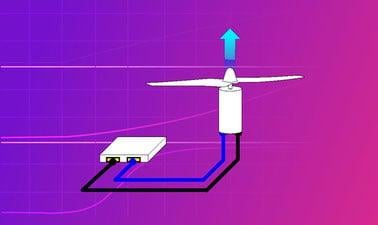
Learn how to integrate multiple physical domains and optimize system performance of a quadcopter. Welcome to Modeling the Quadcopter Electromechanical System, the third course in the Engineering Design and Simulation Program. This course introduces the electrical part of the system to model the battery and the transfer of electrical energy to power the mechanical components powering the flight of the quadcopter.

Self Paced
Self-Paced
Question Everything: Scientific Thinking in Real Life (edX) EdX
University of Queensland,UQx

Question Everything: Scientific Thinking in Real Life (edX)

Learn how to use math and science to solve everyday problems and better prepare yourself to continue studying science in high school and beyond. Have you ever wondered how you can apply math and science skills to real life? Do you wish you could go beyond what you've learned in the classroom? This science course will advance your knowledge as we unpack some important scientific thinking skills using real-world examples.

Self Paced
Self-Paced
Techniques of Design-Oriented Analysis (Coursera) Coursera
University of Colorado Boulder

Techniques of Design-Oriented Analysis (Coursera)

This is Course #2 in the Modeling and Control of Power Electronics course sequence. The course is focused on techniques of design-oriented analysis that allow you to quickly gain insights into models of switching power converters and to translate these insights into practical converter designs. The design-oriented techniques covered are the Extra Element Theorem and the N-Extra Element Theorem (N-EET). Through practical examples, it is shown how the EET can be used to simplify circuit analysis, to examine the effects of initially unmodeled components, and to design damping of converters such as SEPIC and Cuk to achieve high-performance closed-loop controls.

Jul 20th 2026
3 Weeks
BIM Application for Engineers (Coursera) Coursera
National Taiwan University

BIM Application for Engineers (Coursera)

In order to effectively reach the goal of learning, students will get familiar with the model-building process. The second module of the course will be on how to use Autodesk Revit to build BIM models. We will use an example case and guide students to build a 6-story BIM model from the CAD drawings step by step.

Jul 27th 2026
5-12 Weeks
Viscoelasticidad y comportamiento mecánico-dinámico de materiales poliméricos. Modelización (edX) EdX
Universitat Politècnica de València,UPValenciaX

Viscoelasticidad y comportamiento mecánico-dinámico de materiales poliméricos. Modelización (edX)

Aprende sobre el comportamiento viscoelástico de polímeros para el diseño de componentes con materiales poliméricos. Los materiales poliméricos se caracterizan por tener un comportamiento viscoelástico lo cual implica que sus propiedades mecánicas surgen de la combinación de unas propiedades elásticas y viscosas.

Self Paced
Self-Paced
Healthy Urban systems Part 2 : Theories, models and tools (Coursera) Coursera
University of Lausanne

Healthy Urban systems Part 2 : Theories, models and tools (Coursera)

This MOOC is the second part (out of three parts) of the whole MOOC on Healthy Urban Systems. These PART II is very recommended (but not obliged) to take after the PART I and before the PART III. Once you understood the main concepts and visions of Urban Health, and the best practices of observation in PART I, you are ready to think about theories and to practice models for this PART II.

Jul 27th 2026
4 Weeks
Advanced Statistical Inference and Modelling Using R (edX) EdX
University of Canterbury,UCx

Advanced Statistical Inference and Modelling Using R (edX)

Extend your knowledge of linear regression to the situations where the response variable is binary, a count, or categorical as well as to hierarchical experimental set-up. Advanced Statistical Inference and Modelling Using R is part two of the Statistical Analysis in R professional certificate. This course is directed at people who are already familiar with basic linear regression and fundamentals of statistical inference. It extends the knowledge of linear regression to the situations where the response variable is binary, a count, or categorical as well as to hierarchical experimental set-up.

Self Paced
Self-Paced
Statistical Inference and Modeling for High-throughput Experiments (edX) EdX
HarvardX,Harvard University

Statistical Inference and Modeling for High-throughput Experiments (edX)

A focus on the techniques commonly used to perform statistical inference on high throughput data. In this course you’ll learn various statistics topics including multiple testing problem, error rates, error rate controlling procedures, false discovery rates, q-values and exploratory data analysis. We then introduce statistical modeling and how it is applied to high-throughput data. In particular, we will discuss parametric distributions, including binomial, exponential, and gamma, and describe maximum likelihood estimation.

Self Paced
Self-Paced
Current-Mode Control (Coursera) Coursera
University of Colorado Boulder

Current-Mode Control (Coursera)

This is Course #4 in the Modeling and Control of Power Electronics course sequence. The course is focused on current-mode control techniques, which are very frequently applied in practical realizations of switched-mode. Practical advantages of peak current mode control are discussed, including built-in overcurrent protection, simpler and more robust dynamic responses, as well as abilities to ensure current sharing in parallel connected converter modules.

Jul 20th 2026
4 Weeks
Basics of Statistical Inference and Modelling Using R (edX) EdX
University of Canterbury,UCx

Basics of Statistical Inference and Modelling Using R (edX)

Learn why a statistical method works, how to implement it using R and when to apply it and where to look if the particular statistical method is not applicable in the specific situation. Basics of Statistical Inference and Modelling Using R is part one of the Statistical Analysis in R professional certificate.

Self Paced
Self-Paced
Model-Based Automotive Systems Engineering (edX) EdX
Chalmers University of Technology,ChalmersX

Model-Based Automotive Systems Engineering (edX)

Learn how to model and simulate system dynamics in automotive engineering. Modeling, control design, and simulation are important tools supporting engineers in the development of automotive systems, from the early study of system concepts (when the system possibly does not exist yet) to optimization of system performance. This course provides a theoretical basis to model-based control design with the focus on systematically develop mathematical models from basic physical laws and to use them in control design process with specific focus on automotive applications.

Self Paced
Self-Paced