EdX

Introducción a la caligrafía y paleografía en archivos hispanos medievales y modernos (edX)

Introducción a la caligrafía y paleografía en archivos hispanos medievales y modernos (edX)

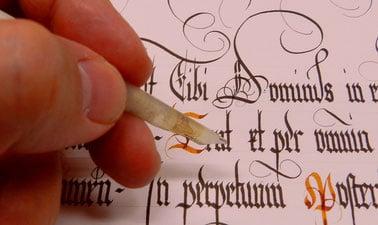
Una innovadora experiencia del aprendizaje mediante la lectura y la escritura de tipos de letra histórica. ¿Desea comprender el contexto histórico de las culturas medievales hispánicas que crearon documentos como forma de comunicación manuscrita? ¿Le interesa alcanzar unas competencias profesionales para leer y escribir tipos históricos de letra? ¿Cómo comprender y poner en práctica los fundamentos de la caligrafía histórica y las reglas de paleografía utilizando técnicas, materiales, herramientas originales, métodos y principios?

Class Deals by MOOC List - Click here and see EdX's Active Discounts, Deals, and Promo Codes.

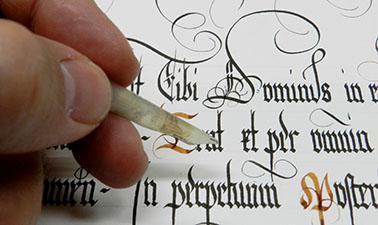
Este curso refleja un interés basado en los métodos colaborativos de aprendizaje que contextualizan las habilidades de lectura y escritura de los manuscritos medievales y modernos. Se inscribe dentro de los postulados de las humanidades digitales y busca la combinación de caligrafía y paleografía. Esta integración activa proporciona un conocimiento de calidad, superior a la mera reproducción aislada de letras o la mera transcripción paleográfica de los documentos. Se aprenderá caligrafía mientras se aprende paleografía y viceversa.

Ambas disciplinas se juntan en este curso de forma sinérgica para hacer de este curso una respuesta formativa adecuada al estudio de la cultura manuscrita medieval y moderna.
Este MOOC está especialmente orientado a profesionales de archivos y responsables de conservación y gestión de fondo antiguo dentro del patrimonio histórico documental. Estos expertos requieren un aprendizaje paleográfico esencial para poder alcanzar los objetivos de su trabajo con testimonios de la herencia cultural manuscrita.
El curso está también pensado para calígrafos profesionales y para estudiantes de grado y posgrado con interés activo por la cultura manuscrita hispana desde el siglo IX hasta el XVIII.

What you'll learn

  • Principios básicos de la práctica caligráfica (reproducción) en combinación con la práctica paleográfica (transcripción).
  • Métodos de paleografía para leer y analizar manuscritos medievales y modernos hispanos
  • Reglas, factores, materiales, herramientas y principios que intervienen en el desarrollo de los trazos caligráficos en cada época histórica, con ejercicios prácticos
  • Morfología y características de cada tipo de letra: desde la visigótica o precarolina hispánica hasta las cursivas del siglo XVIII pasando por todos los ciclos de góticas librarias y documentales

Syllabus

Semana 1: Introducción, Paleografía, Caligrafía y contexto cultural
Introducción a los conceptos básicos del curso, como la diferencia entre paleografía y caligrafía; y a los materiales y herramientas de la escritura. Se ofrece una visión global de la historia europea entre 800 y 1789.

Semana 2: Alta Edad Media en Europa y España y su legado escrito (800-1000)
Tras examinar el contexto histórico, se procede al análisis y de las letras precarolina hispánica (visigótica) y carolina.

Semana 3: La Baja Edad Media en Europa y España y su legado escrito (1000-1300 c.e.)
Se ofrece una visión de la historia europea de este período, en el que surge la escritura gótica. Se examina su importancia para la administración en las instituciones de la época. Se profundiza en el ciclo de Góticas tanto formadas librarias (textura) como documentales cursivas (letra de privilegios y letra de albalaes: morfología, análisis paleográfico y desarrollo caligráfico).

Semana 4: La Baja Edad Media en Europa y España y su legado escrito (1300-1450 c.e.)
En este período las letras góticas cursivas tardías inician su evolución hacia la escritura humanística. Se profundiza en las letras precortesana y cortesana: morfología, análisis paleográfico y desarrollo caligráfico.

Semana 5: Los “largos siglos XVI-XVII” en Europa y España: desarrollo caligráfico (1450-1640 c.e.)
El Renacimiento, además de provocar cambios culturales, religiosos y políticos cruciales, culmina la transición de las formas escritas medievales a las humanísticas. Es la Edad de Oro de la caligrafía en Europa. Dentro de la Corona de España, se profundiza en las letras procesal y en la gótica redonda así como en diferentes tipos de humanística cursiva.

Semana 6: La Edad Moderna en España y Europa: su influencia caligráfica (1640-1789)
La evolución histórica de este periodo produce cambios en la burocracia y, por lo tanto, en la caligrafía. Aparecen las escrituras ornamentales del Barroco.


Go to Class
MOOC List is learner-supported. When you buy through links on our site, we may earn an affiliate commission.

Related Courses

Creative Writing: The Craft of Style (Coursera) Coursera
Wesleyan University

Creative Writing: The Craft of Style (Coursera)

Your style is as unique and distinctive as your face, your voice, except that you can choose it, you can can work on it, enhance it. In this course we will introduce aspiring writers to the art of putting pressure on written language. We will study the use of metaphor and imagery, and demonstrate how clarity, grace, and inventiveness in word choice are imperative to a story’s success. Writers will emerge with the revision skills essential to all writers of good stories and good prose.

May 25th 2026
4 Weeks
Writing your World: Finding yourself in the academic space (Coursera) Coursera
University of Cape Town

Writing your World: Finding yourself in the academic space (Coursera)

Throughout the world, writing serves to express, record and even create meaningful moments. In academic spaces, writing becomes the bridge between ourselves and the world of ideas. In this course, we provide practical insights into how to write an academic essay. We show you how to develop the academic skills needed to be a competent academic writer. You will have an opportunity to engage with texts written by academics, and to see how some of the ideas in these texts are used by students in constructing an academic essay.

May 11th 2026
4 Weeks
Del trazo caligráfico al método paleográfico: experimentando la materialidad de los manuscritos históricos (edX) EdX
Universidad Carlos III de Madrid - UC3M,UC3Mx

Del trazo caligráfico al método paleográfico: experimentando la materialidad de los manuscritos históricos (edX)

Práctica paleográfica y caligráfica en ciclos de escritura histórica y procesos materiales de creación del manuscrito, conservación e interpretación. El tiempo y el espacio son elementos vertebradores de toda la propuesta de contenidos en torno al mundo del manuscrito histórico. En esta ocasión, la identificación de procesos, la materialidad de los testimonios y los modos de hacer (escritura caligráfica, lectura paleográfica) se suman a la familiaridad con lugares de escritura en momentos concretos del pasado.

Self Paced
Self-Paced
Discovering Science: Science Writing (FutureLearn) FutureLearn
University of Leeds

Discovering Science: Science Writing (FutureLearn)

What science discoveries will you choose to write about? Without science writing, science could not really exist. By recording experiments and publishing the results of studies and discoveries, scientists can share their important work, and find an engaged audience. Science writing takes many forms: from press releases to video scripts. You’ll learn about different types of science writing, and look at the factors which you need to consider to write a story.

Sep 23rd 2024
2 Weeks
Creative Writing: The Craft of Character (Coursera) Coursera
Wesleyan University

Creative Writing: The Craft of Character (Coursera)

At the center of a good story are the characters in it. In this course aspiring writers will discover how to build and bring to life complex, vivid and unforgettable characters. We will study the choices a writer makes to bring all characters to life on the page, and we will perform written exercises in order to develop a variety of writing and pre-writing techniques, in order to create a variety of characters.

Jun 1st 2026
4 Weeks
Writing Skills for University Success (Coursera) Coursera
University of California, Irvine

Writing Skills for University Success (Coursera)

Writing is a vital skill in university classes, whether you’re majoring in history or business management, economics or engineering. In this course, you’ll learn how to write effectively in different academic formats, especially essays and longer research papers. You’ll learn how to choose a topic for a paper, how to find reliable resources for writing it, and how to organize your ideas in a way that communicates clearly and fits the expectations of your professors.

May 25th 2026
4 Weeks
High-Impact Business Writing (Coursera) Coursera
University of California, Irvine

High-Impact Business Writing (Coursera)

Effective writing is a powerful tool in the business environment. Learn how to articulate your thoughts in a clear and concise manner that will allow your ideas to be better understood by your readers. Improve your business writing skill by learning to select and use appropriate formats for your audience, use the correct medium and adjust your writing style accordingly, as well as identify your objective and communicate it clearly. You'll also learn to spot, correct and avoid the most common writing pitfalls, and gain valuable experience analyzing, writing and revising a wide spectrum of business documents. From a simple interoffice memo to a twenty-page business proposal, learn how to put good business writing to work for you.

May 25th 2026
4 Weeks
Creative Writing: The Craft of Plot (Coursera) Coursera
Wesleyan University

Creative Writing: The Craft of Plot (Coursera)

In this course aspiring writers will be introduced to perhaps the most elemental and often the most challenging element of story: plot. We will learn what keeps it moving, how it manipulates our feelings, expectations, and desires. We will examine the choices storytellers make to snag our imaginations, drag them into a fictional world, and keep them there. We will learn how to outline and structure a plot, discuss narrative arc, pacing and reversals and reveal the inevitable surprise: connecting the beginning, middle and end.

May 25th 2026
4 Weeks
English for Journalists, Part 2 (edX) EdX
University of California, Berkeley,BerkeleyX

English for Journalists, Part 2 (edX)

Improve your English grammar, vocabulary and writing skills through topics in journalism including free speech, sports, humor and broadcast writing. English for Journalists offers instruction in English language development for students who are studying journalism, or working journalists who want to improve their English proficiency. Students with a basic understanding and interest in journalism are encouraged to sign up.

Self Paced
Self-Paced
Writing in English at University (Coursera) Coursera
Lund University

Writing in English at University (Coursera)

Acquiring good academic research and writing skills early on is essential for your success both at university and in your professional life. This course aims: - to give you an understanding of the conventions of academic writing in English and to teach you the components and benefits of what is called process writing. - to help you to put together your own “toolbox” of academic writing skills, as well as to give you a chance to test out these tools and to reflect on your own development as a writer. - to encourage reflection on discipline specific conventions; although the course deals with generic skills, you will be able to apply these generic skills to meet the particular needs of your own discipline.

May 18th 2026
4 Weeks