Introdução à Informática (UAb)

Offered by Universidade Aberta,
Introdução à Informática (UAb)

Este curso pretende tornar os participantes mais produtivos na utilização das tecnologias de informação e comunicação, fundamentais para melhor comunicar, gerir e produzir informação, economizando tempo e esforço. Desenvolva as suas competências digitais, essenciais para todas as atividades profissionais.

Na sociedade atual é fundamental saber utilizar ferramentas básicas para processar, guardar e gerir a informação. As literacias digitais constituem um desafio permanente e o seu desenvolvimento constitui uma preocupação constante.
Neste sentido, a Universidade Aberta disponibiliza este MOOC, respondendo a esse desafio social e possibilitando que qualquer pessoa, em qualquer lugar, possa desenvolver as suas competências digitais.

No final deste curso deve ser capaz de:

  • elaborar e reutilizar documentos escritos com boa apresentação;
  • efetuar cálculos numéricos, para suporte à decisão e modelação do raciocínio;
  • elaborar apresentações multimédia, para expor ideias e projetos;
  • organizar informação em pequenas bases de dados;
  • pesquisar e recolher informações na internet, bem como utilizar serviços da internet.

TEMAS:
TEMA 1 | Introdução aos computadores
TEMA 2 | Aplicações transversais: Processamento de Texto e Folhas de Cálculo
TEMA 3 | Bases de Dados


Go to Class
MOOC List is learner-supported. When you buy through links on our site, we may earn an affiliate commission.

Related Courses

Introduction to Self-Driving Cars (Coursera) Coursera
University of Toronto

Introduction to Self-Driving Cars (Coursera)

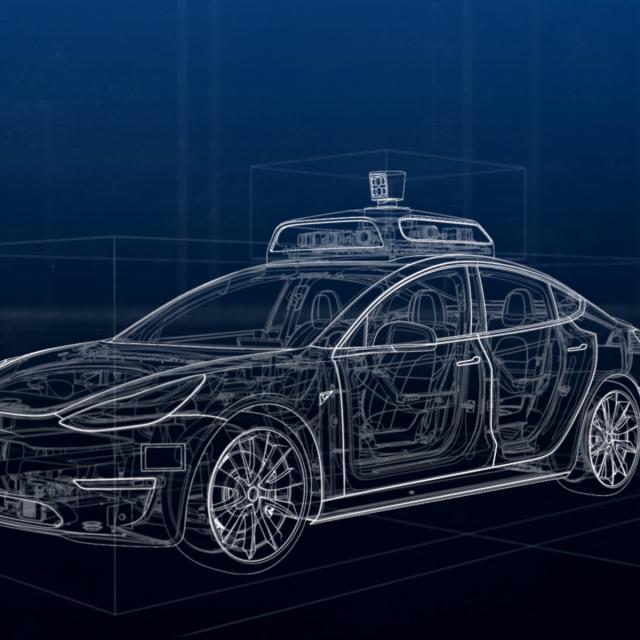
Welcome to Introduction to Self-Driving Cars, the first course in University of Toronto’s Self-Driving Cars Specialization. This course will introduce you to the terminology, design considerations and safety assessment of self-driving cars. By the end of this course, you will be able to: Understand commonly used hardware used for self-driving cars; Identify the main components of the self-driving software stack; Program vehicle modelling and control; Analyze the safety frameworks and current industry practices for vehicle development

Aug 24th 2026
5-12 Weeks
Introdução à Ciência da Computação com Python Parte 2 (Coursera) Coursera
Universidade de São Paulo, Brasil

Introdução à Ciência da Computação com Python Parte 2 (Coursera)

Bem vindo ao curso de Introdução à Ciência da Computação destinado aos alunos regulares da Universidade de São Paulo! Esta é a segunda parte do Curso, onde você vai continuar a aprender os principais conceitos introdutórios de Ciência da Computação e também aprenderá a desenvolver pequenos programas na linguagem Python.

Sep 7th 2026
5-12 Weeks
International Cyber Conflicts (Coursera) Coursera
The State University of New York

International Cyber Conflicts (Coursera)

By nature, cyber conflicts are an international issue that span across nation-state borders. By the end of the course, you will be able to apply the knowledge gained for analysis and management of international cyber incidents and conflicts including for activities such as development of policy related to cybercrime and cyberwarfare. Management of cyber incidents and conflicts requires an interdisciplinary perspective including an understanding of: 1) characteristics of the cyber threats and conflicts themselves, 2) international efforts to reduce and improve cyber security, and 3) psychological and sociopolitical factors.

Aug 31st 2026
5-12 Weeks
Architecting Smart IoT Devices (Coursera) Coursera
EIT Digital

Architecting Smart IoT Devices (Coursera)

This course will teach you how to develop an embedded systems device. In order to reduce the time to market, many pre-made hardware and software components are available today. You'll discover all the available hardware and software components, such as processor families, operating systems, boards and networks. You'll also learn how to actually use and integrate these components.

Aug 24th 2026
5-12 Weeks
Problem Solving, Python Programming, and Video Games (Coursera) Coursera
University of Alberta

Problem Solving, Python Programming, and Video Games (Coursera)

This course is an introduction to computer science and programming in Python. Important computer science concepts such as problem solving (computational thinking), problem decomposition, algorithms, abstraction, and software quality are emphasized throughout. The Python programming language and video games are used to demonstrate computer science concepts in a concrete and fun manner. However, a learner can take the knowledge and skills from this course and apply them to non-game problems, other programming languages, and other computer science courses.

Aug 24th 2026
5-12 Weeks
Python and Machine Learning for Asset Management (Coursera) Coursera
EDHEC Business School

Python and Machine Learning for Asset Management (Coursera)

This course will enable you mastering machine-learning approaches in the area of investment management. It has been designed by two thought leaders in their field, Lionel Martellini from EDHEC-Risk Institute and John Mulvey from Princeton University. Starting from the basics, they will help you build practical skills to understand data science so you can make the best portfolio decisions.

Aug 24th 2026
5-12 Weeks
Algorithmic Thinking (Part 2) (Coursera) Coursera
Rice University

Algorithmic Thinking (Part 2) (Coursera)

Experienced Computer Scientists analyze and solve computational problems at a level of abstraction that is beyond that of any particular programming language. This two-part class is designed to train students in the mathematical concepts and process of "Algorithmic Thinking", allowing them to build simpler, more efficient solutions to computational problems.

Sep 7th 2026
4 Weeks
Agile Planning for Software Products (Coursera) Coursera
University of Alberta

Agile Planning for Software Products (Coursera)

This course covers the techniques required to break down and map requirements into plans that will ultimately drive software production. Upon successful completion of this course, you will be able to: create effective plans for software development; map user requirements to developer tasks; assess and plan for project risks; apply velocity-driven planning techniques; generate work estimates for software products.

Aug 31st 2026
4 Weeks