Internet of Things & Augmented Reality Emerging Technologies (Coursera)

Offered by Yonsei University,
Internet of Things & Augmented Reality Emerging Technologies (Coursera)

What is the Internet of Things? What is augmented reality? This course deals with the new emerging technologies of IoT (Internet of Things) and AR (Augmented Reality).

Class Deals by MOOC List - Click here and see Coursera's Active Discounts, Deals, and Promo Codes.

A newer version of this course is available here:
AR (Augmented Reality) & Video Streaming Services Emerging Technologies

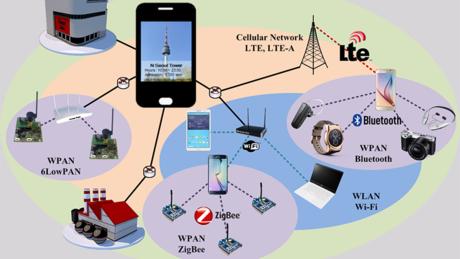
IoT is a new emerging technology domain which will be used to connect all objects through the Internet for remote sensing and control. IoT uses a combination of WSN (Wireless Sensor Network), M2M (Machine to Machine), robotics, wireless networking, Internet technologies, and Smart Devices.
AR is the most effective technology in providing real-time and real-world view information to users, where advancements in Smart Devices are expected to trigger various new AR services.
Currently, IoT and AR technologies already exist and available services can be found. However, there is so much more to come in IoT and AR technologies, which is why it is so important to understand what can be provided through these technologies and how these technologies work.

Syllabus

WEEK 1
IoT (Internet of Things)
The lectures cover the services and essential functions of IoT (Internet of Things), which will be used to connect all objects through the Internet for remote sensing and control. The lectures first focus on IoT Service Support and Economic Impact, and then explain IoT Applications and the IoT & M2M Ecosystem. In order to describe the IoT Architecture, details on the Application Layer, Management Service Layer, Gateway & Network Layer, and Sensor Layer are explained. Next, IoT Technologies and R&D (Research & Development) topics are presented. Finally, details on IoT supportive wireless networking technologies are explained.

WEEK 2
AR (Augmented Reality)
The lectures cover the services and essential functions of AR (Augmented Reality). First, the characteristics and a little on the history of VR (Virtual Reality) and AR (Augmented Reality) are presented, and some definitions of AR are presented. Next, AR Classifications based on Sensor, Vision, and Hybrid Tracking are described. Then the lecture focuses on AR Technology and describes the AR Process, which is composed of the stages of Image Acquisition, Feature Extraction, Feature Matching, Geometric Verification, and Associated Information Retrieval. Then further details on the AR Feature Extraction Process and Feature Extraction Techniques (e.g., SIFT and SURF) are explained.


Go to Class
MOOC List is learner-supported. When you buy through links on our site, we may earn an affiliate commission.

Related Courses

Transmedia Storytelling: Narrative worlds, emerging technologies, and global audiences (Coursera) Coursera
UNSW Sydney - University of New South Wales

Transmedia Storytelling: Narrative worlds, emerging technologies, and global audiences (Coursera)

Transmedia storytelling is the practice of designing, sharing, and participating in a cohesive story experience across multiple traditional and digital delivery platforms - for entertainment, advertising and marketing, or social change. Have you ever read a book, seen a movie, watched a television show, or played a game that centred around different aspects of a larger story or universe? You may be familiar with popular examples of such universes like Star Wars, Marvel, and The Walking Dead (to name a few). How do the professionals develop such expansive narratives? How do they ensure that each element stays true to the original story? How do they innovatively use different technologies to share the stories, grow audiences and create an active and involved community of fans?

Oct 5th 2026
5-12 Weeks
Cybersecurity and the Internet of Things (Coursera) Coursera
University System of Georgia

Cybersecurity and the Internet of Things (Coursera)

Welcome to “Cybersecurity and the Internet of Things”! This course is for you if you are curious about the most recent trends and activities in the internet capabilities and concerns about programmed devices. There are complexities and areas of necessary awareness when the industrial sector becomes connected to your home.

Sep 28th 2026
4 Weeks
Gestão da Cadeia de Suprimentos (Coursera) Coursera
FIA Business School

Gestão da Cadeia de Suprimentos (Coursera)

Nossas boas-vindas ao Curso Gestão da Cadeia de Suprimentos. Neste curso, você aprenderá sobre os principais conceitos necessários para entender o que é a cadeia de suprimentos, como ela pode gerar maior valor para a empresa, quais são as novas tecnologias que permitem uma maior eficácia na sua gestão e como podemos personalizar a oferta para os segmentos de cliente da empresa.

Oct 12th 2026
4 Weeks
Real-Time Big Data Access using HBase: Boosting Performance (Coursera) Coursera
LearnQuest

Real-Time Big Data Access using HBase: Boosting Performance (Coursera)

In the world of big data, the significant growth in both the sheer volume and variety of data has presented significant challenges. Apache HBase has emerged as a robust and scalable solution. HBase is a powerful, distributed, and scalable NoSQL database designed to handle large amounts of data while maintaining high performance.

Oct 12th 2026
3 Weeks
Enterprise and Infrastructure Security (Coursera) Coursera
New York University

Enterprise and Infrastructure Security (Coursera)

This course introduces a series of advanced and current topics in cyber security, many of which are especially relevant in modern enterprise and infrastructure settings. The basics of enterprise compliance frameworks are provided with introduction to NIST and PCI. Hybrid cloud architectures are shown to provide an opportunity to fix many of the security weaknesses in modern perimeter local area networks.

Sep 28th 2026
4 Weeks
Cloud Computing Applications, Part 2: Big Data and Applications in the Cloud (Coursera) Coursera
University of Illinois at Urbana-Champaign

Cloud Computing Applications, Part 2: Big Data and Applications in the Cloud (Coursera)

Welcome to the Cloud Computing Applications course, the second part of a two-course series designed to give you a comprehensive view on the world of Cloud Computing and Big Data! In this second course we continue Cloud Computing Applications by exploring how the Cloud opens up data analytics of huge volumes of data that are static or streamed at high velocity and represent an enormous variety of information. Cloud applications and data analytics represent a disruptive change in the ways that society is informed by, and uses information.

Sep 28th 2026
4 Weeks
Introdução ao Big Data (Coursera) Coursera
FIA Business School

Introdução ao Big Data (Coursera)

Este curso é indicado para profissionais que desejam entender de forma fácil o que é Big Data, conhecer algumas tecnologias de Big Data, ter acesso a algumas aplicações de Analytics, Internet das Coisas - IOT e de Big Data. Ao final do curso você será capaz de participar de um projeto de Big Data contribuindo com estratégias e direcionando o projeto para a escolha da adequada técnica de análise de dados.

Oct 5th 2026
4 Weeks
Managing Big Data with MySQL (Coursera) Coursera
Duke University

Managing Big Data with MySQL (Coursera)

This course is an introduction to how to use relational databases in business analysis. You will learn how relational databases work, and how to use entity-relationship diagrams to display the structure of the data held within them. This knowledge will help you understand how data needs to be collected in business contexts, and help you identify features you want to consider if you are involved in implementing new data collection efforts.

Sep 28th 2026
5-12 Weeks
Healthcare Data Management and Information Systems (Coursera) Coursera
Northeastern University

Healthcare Data Management and Information Systems (Coursera)

This course is the continuation of the Health Informatics for Healthcare Professionals course. If you have not yet taken the introductory course, it is recommend that you complete that course prior to this course. The foundational knowledge from the introduction is carried through in this deeper dive into informatics in healthcare.

Oct 12th 2026
4 Weeks
Infonomics I: Business Information Economics and Data Monetization (Coursera) Coursera
University of Illinois at Urbana-Champaign

Infonomics I: Business Information Economics and Data Monetization (Coursera)

Thriving in the Information Age compels organizations to deploy information as an actual business asset, not as an IT asset or merely as a business byproduct. This demands creativity in conceiving and implementing new ways to generate economic benefits from the wide array of information assets available to an organization. Unfortunately, information too frequently is underappreciated and therefore underutilized.

Oct 12th 2026
4 Weeks
IoT Communications and Networks (Coursera) Coursera
Institut Mines-Telecom

IoT Communications and Networks (Coursera)

By presenting the building blocks of the IoT network architecture, this MOOC will help learners adapt to the fast changing communications and networking environment of IoT. The IoT world represents billions of sophisticated objects, such as sensors, actuators and meters, that are deployed nearly everywhere, in homes, hospitals, factories, cities, and are connected to the Internet. However, they come with limited capacity in terms of memory storage, computational power and energy; how can these objects then ensure network reliability and timely transmission?

Oct 12th 2026
4 Weeks
The Arduino Platform and C Programming (Coursera) Coursera
University of California, Irvine

The Arduino Platform and C Programming (Coursera)

The Arduino is an open-source computer hardware/software platform for building digital devices and interactive objects that can sense and control the physical world around them. In this class you will learn how the Arduino platform works in terms of the physical board and libraries and the IDE (integrated development environment). You will also learn about shields, which are smaller boards that plug into the main Arduino board to perform other functions such as sensing light, heat, GPS tracking, or providing a user interface display. The course will also cover programming the Arduino using C code and accessing the pins on the board via the software to control external devices.

Sep 28th 2026
4 Weeks