Energy Management for IoT Devices (Coursera)

Offered by Starweaver,
Energy Management for IoT Devices (Coursera)

Energy Management for IoT Devices is a comprehensive course designed to introduce participants to the integration of energy management techniques within IoT systems. Through a blend of theoretical insights and practical applications, the course equips current and aspiring professionals with a deep understanding of the pivotal role energy management plays in the IoT landscape. Over 4.0 hours, participants will explore various thematic aspects of energy management in IoT, emphasizing real-world applications and skill-building exercises.

Class Deals by MOOC List - Click here and see Coursera's Active Discounts, Deals, and Promo Codes.

This course caters to professionals and enthusiasts keen on understanding IoT technology and its intersection with energy management practices. It is suitable for IoT developers/engineers seeking to optimize energy consumption in their devices, energy professionals interested in leveraging IoT for efficient energy management, as well as students and researchers exploring the convergence of IoT and energy efficiency. While prior knowledge of IoT concepts, including architecture and protocols, is beneficial, participants are expected to have a basic understanding of energy management principles, such as energy sources and consumption patterns.
The course comprises four modules, each focusing on different aspects of energy management in IoT. Module 1 introduces participants to energy management basics, covering principles, energy sources, and consumption patterns. Module 2 delves into technologies for IoT energy management, exploring hardware components, software solutions, and networking considerations. In Module 3, participants learn to design and implement IoT energy solutions, covering design principles, prototyping, and deployment strategies. Finally, Module 4 delves into advanced topics such as IoT in smart environments, industrial applications, and future trends in IoT energy management.
Upon completing this course, participants will be equipped with the necessary skills to identify and implement energy-efficient solutions for IoT devices. They will possess the ability to analyze and optimize energy consumption, design IoT systems with efficient energy management, and adapt to emerging trends in the dynamic field of IoT technology and energy management. This course sets the stage for a continuous learning journey, encouraging participants to stay abreast of developments and apply their knowledge innovatively in professional contexts.

What you'll learn

  • Understand the principles of energy management in IoT.
  • Explore energy-efficient technologies in IoT devices.
  • Analyze strategies for effective energy management in IoT applications.
  • Apply energy management techniques in real-world IoT scenarios.

Syllabus

Energy Management Basics in IoT
Module 1 serves as an introduction to the essential concepts of energy management within IoT devices. Participants will explore the fundamental principles at the intersection of IoT and energy, gaining insight into energy sources, consumption patterns, and management techniques. Through interactive sessions, learners will understand various energy sources and storage options, such as battery technologies and renewable energy solutions. Additionally, they will analyze energy consumption patterns in IoT devices and explore techniques for optimizing energy usage, including power management strategies and energy-efficient design principles.

Technologies for IoT Energy Management
Module 2 focuses on the technological aspects of managing energy within IoT ecosystems. Participants will delve into hardware components and software solutions tailored for enhancing energy efficiency in IoT devices. Through engaging sessions, learners will gain insight into energy-efficient sensors, actuators, and low-power communication technologies. They will also explore the role of software and analytics in optimizing energy consumption, including the integration of AI and data-driven approaches. Furthermore, participants will examine networking and connectivity considerations for enhancing energy efficiency in IoT systems.

Designing and Implementing IoT Energy Solutions
Module 3 focuses on the practical aspects of designing and implementing energy-efficient solutions within IoT environments. Participants will learn principles of efficient design, component selection, and integration of renewable energy sources. Through hands-on activities, learners will gain practical insight into building and testing energy-efficient IoT solutions, including prototyping, testing methodologies, and real-world case studies. Additionally, they will explore strategies for the deployment and ongoing monitoring of IoT energy solutions, considering scalability, performance optimization, and future trends.

Advanced Topics in IoT Energy Management
Module 4 delves into advanced topics and emerging trends in IoT energy management, providing participants with insights into innovative applications and future directions. Participants will explore the application of IoT in smart environments, including smart cities, smart grids, and sustainable development initiatives, with a focus on energy management perspectives. Additionally, they will examine IoT applications in industrial and commercial settings, such as energy management in manufacturing, building automation, and logistics. Furthermore, participants will gain insights into future trends and emerging challenges in IoT energy management, including ethical and environmental considerations, preparing them for the evolving landscape of IoT-driven energy solutions.

Go to Class
MOOC List is learner-supported. When you buy through links on our site, we may earn an affiliate commission.

Related Courses

IoT Communications (Coursera) Coursera
University of Illinois at Urbana-Champaign

IoT Communications (Coursera)

This course builds on the previous course: IoT Devices. After we have built and programmed a small self-driving vehicle, now it's time get into more advanced territory and enhance the device's connectivity further. To do so you will study radio frequency (RF) communication, the MAC layer, Mesh Networking as well as distributed algorithms for use with geographic locations. These techniques will be applied to your device in the lab, which is composed of four steps, one in each week of the course.

Jun 1st 2026
4 Weeks
Web3 and Blockchain Transformations in Global Supply Chains (Coursera) Coursera
INSEAD

Web3 and Blockchain Transformations in Global Supply Chains (Coursera)

The global supply chain is a $50 trillion industry and is the foundation of our global economy. While information technology has improved the flow of goods globally over the last few decades, as the COVID-19 crisis revealed there is still critical work to do. Today’s supply chains are complex, with parties conducting their transactions through a Byzantine network of computer systems with disparate applications like e-mail, phone, and fax.

May 31st 2026
5-12 Weeks
Internet of Things: How did we get here? (Coursera) Coursera
University of California, San Diego

Internet of Things: How did we get here? (Coursera)

It is hard to imagine life without your Smartphone – you have come to rely on it so much – for your work; to stay in touch with family and friends; to capture and share those special moments; to find your way around in a new neighborhood. Did you ever wonder how and when all this happened? Or how and when GPS sensors came to be in your cell phone?

Jun 1st 2026
2 Weeks
The Arduino Platform and C Programming (Coursera) Coursera
University of California, Irvine

The Arduino Platform and C Programming (Coursera)

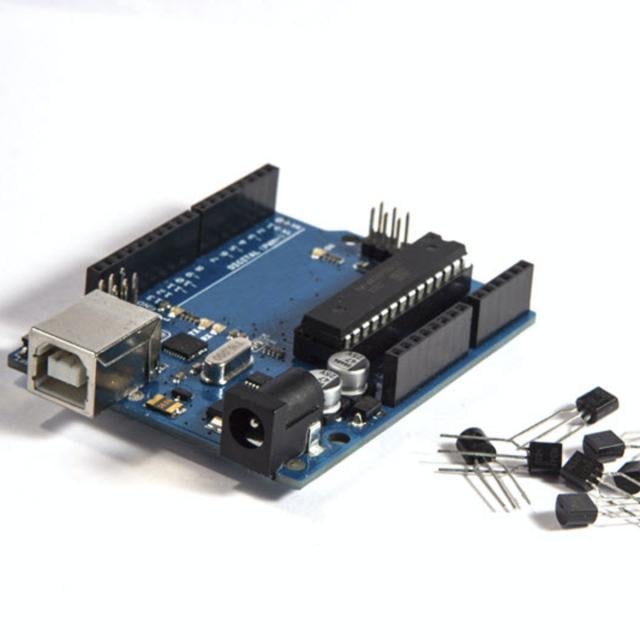
The Arduino is an open-source computer hardware/software platform for building digital devices and interactive objects that can sense and control the physical world around them. In this class you will learn how the Arduino platform works in terms of the physical board and libraries and the IDE (integrated development environment). You will also learn about shields, which are smaller boards that plug into the main Arduino board to perform other functions such as sensing light, heat, GPS tracking, or providing a user interface display. The course will also cover programming the Arduino using C code and accessing the pins on the board via the software to control external devices.

May 25th 2026
4 Weeks
Cadeia de Suprimentos na Nuvem (Coursera) Coursera
FIA Business School

Cadeia de Suprimentos na Nuvem (Coursera)

Nossas boas-vindas ao Curso Cadeia de Suprimentos na Nuvem. Neste curso, você aprenderá como o supply chain pode ampliar o valor da empresa explorando as diversas ferramentas disponíveis em cloud para potencializar a visibilidade e a responsividade da cadeia, melhorando o nível de serviço prestado aos clientes.

May 25th 2026
5-12 Weeks
Gestão da Cadeia de Suprimentos (Coursera) Coursera
FIA Business School

Gestão da Cadeia de Suprimentos (Coursera)

Nossas boas-vindas ao Curso Gestão da Cadeia de Suprimentos. Neste curso, você aprenderá sobre os principais conceitos necessários para entender o que é a cadeia de suprimentos, como ela pode gerar maior valor para a empresa, quais são as novas tecnologias que permitem uma maior eficácia na sua gestão e como podemos personalizar a oferta para os segmentos de cliente da empresa.

May 25th 2026
4 Weeks
Applied Industrial Internet of Things (Coursera) Coursera
L&T EduTech

Applied Industrial Internet of Things (Coursera)

Today, there exists a changing paradigm for every organization towards Digital Transformation in alignment with rapid growth of Industrial Automation. As automation impacts the business-returns directly, every organization, be it Designing, Manufacturing, Assembling or Logistics sector, sincerely is getting transformed as Digital Industries. The major objective of this course is to equip learners with advanced technical process of Data Collection in such Digital Industries. Thus, comprehensive course on “Applied Industrial IoT” provides a deep dive into the evolution of industrialization, from the phases of the Industrial Revolution to the transformative landscape of the Industrial Internet of Things (IIoT).

Jun 1st 2026
5-12 Weeks
Foundations of Secure IoT Architecture (Coursera) Coursera
LearnQuest

Foundations of Secure IoT Architecture (Coursera)

This course is designed for professionals and students are seeking a comprehensive understanding of IoT security. Participants will define IoT ecosystem components, identify security challenges, and explore threats and vulnerabilities. They will learn threat modeling techniques, differentiate risk assessment methodologies, and recognize best practices while understanding IoT security standards and controls.

Jun 1st 2026
3 Weeks
IoT Cloud (Coursera) Coursera
University of Illinois at Urbana-Champaign

IoT Cloud (Coursera)

This course is the last course in our series of four courses and builds on the previous three courses: IoT Devices, IoT Communications, and IoT Networking. After we have built and programmed a small self-driving vehicle, we then set out to enhance its connectivity and add important security infrastructure. In this course we will now look closer into various remaining types of decentralized network topography. In the lab, we will additionally cover important cloud technologies based on machine-learning. In the first two weeks' lectures, we will cover important components of networks.

Jun 1st 2026
4 Weeks
IoT Devices (Coursera) Coursera
University of Illinois at Urbana-Champaign

IoT Devices (Coursera)

The Internet of Things (IoT) stands to be the next revolution in computing. Billions of data-spouting devices connected to the Internet are already fundamentally changing the way we live and work. This course teaches a deep understanding of IoT technologies from the ground up. Students will learn IoT device programming (Arduino and Raspberry Pi), sensing and actuating technologies, IoT protocol stacks (Zigbee, 5G, NFC, MQTT, etc), networking backhaul design and security enforcement, data science for IoT, and cloud-based IoT platforms such as AWS IoT.

Jun 1st 2026
4 Weeks
Energy management for real estate. Methods and digital tools (Coursera) Coursera
Politecnico di Milano

Energy management for real estate. Methods and digital tools (Coursera)

The figure of the Energy Manager (EM), introduced in the United States in the early 1970s, during the first oil crisis, brought to light the need to get more work out of less energy. In Italy, this figure was officially introduced by Law 308/82, but had its first strong impulse thanks to Law 10/91, aimed at implementing the National Energy Plan on the rational use of energy, energy saving and the development of renewable energy sources. More in detail, an Energy Manager is a person whose task is to manage what concerns energy within a company, a public body, or more generally a structure, verifying the energy consumption, optimising it, and promoting interventions aimed at energy efficiency and the use of renewable sources.

Jun 1st 2026
4 Weeks
Technologies and platforms for Artificial Intelligence (Coursera) Coursera
Politecnico di Milano

Technologies and platforms for Artificial Intelligence (Coursera)

This course will address the hardware technologies for machine and deep learning (from the units of an Internet-of-Things system to a large-scale data centers) and will explore the families of machine and deep learning platforms (libraries and frameworks) for the design and development of smart applications and systems.

May 25th 2026
4 Weeks