Integrating Newly Arrived Migrant Students in Schools (SchoolEducationGateway)

Offered by Teacher Academy,
Integrating Newly Arrived Migrant Students in Schools (SchoolEducationGateway)

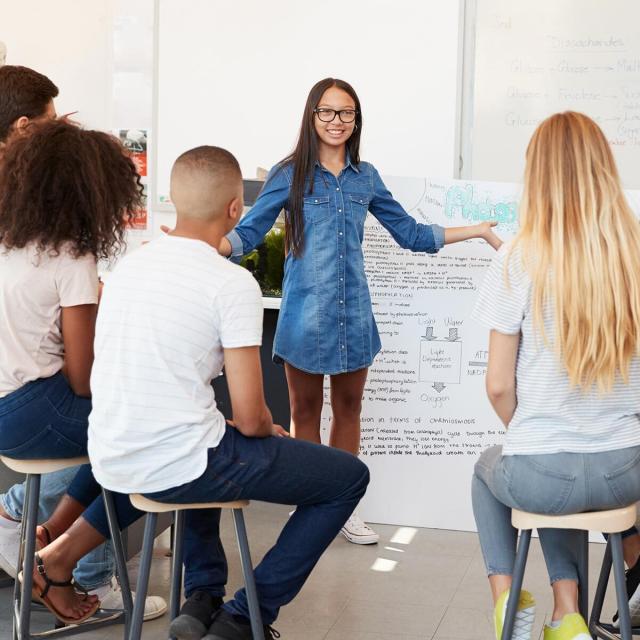
The course will explore the practicalities of integrating newly arrived migrant students in a school community and will look at how teachers can work at a very practical level with such students in their classrooms. The course will continue the work started by participants in course 2 of building a support infrastructure that can assist them beyond the course with guidance and resources.

By the end of the course, participants should have an understanding of different organizational models of how newly arrived migrants can be integrated into teaching and school life as well as understanding of different pedagogical models of how newly arrived migrants can be integrated into teaching and school life. Participants should also have an understanding of important requirements and strategies to support students who do not understand or speak the main language of instruction.

Participants should acquire as well practical experience on how to develop a set of concrete targets, ideas and actions to support newly arrived migrant students in their school. Will also reflect on the pedagogical strategies that work with non-native speakers in their classroom, will identify key contacts at school and local level, such as school leaders, psychologists, local councillors, parents, etc. that can support them in addressing some of the challenges that the integration of newly arrived migrants brings to the school and classroom. Last but not least will identify a set of fellow course participants who are facing similar challenges and establish informal connections with them in order to share resources and expertise and support each other after the course. Participants will also create an online or offline infrastructure that allows for regular exchanges and sharing of resources and ideas with colleagues, experts and organizations working on the integration of newly arrived migrant students.

Please note that this course has concluded, although its content remains available for perusal. You can access the modules by enrolling in the course and clicking the "Modules" tab above; however, it is no longer possible to receive the course badge, the module badges, or the course certificate. Finally, please note that support for this course is no longer provided by the course instructors or the Teacher Academy team.
Go to Class
MOOC List is learner-supported. When you buy through links on our site, we may earn an affiliate commission.

Related Courses

Disability Inclusion in Education: Building Systems of Support (Coursera) Coursera
University of Cape Town

Disability Inclusion in Education: Building Systems of Support (Coursera)

Worldwide millions of children are not able to fully participate in schooling, and this is especially a problem for children with disabilities. In this course, we explore the support that teachers need in order to meet the needs of children with severe to profound hearing, visual and intellectual disabilities. We consider how this can be done by talking with a range of experts (from teachers to activists) about inclusive education as well as sharing experiences of education.

Nov 9th 2026
5-12 Weeks
Training and Learning Programs for Volunteer Community Health Workers (Coursera) Coursera
Johns Hopkins University

Training and Learning Programs for Volunteer Community Health Workers (Coursera)

Volunteer community health workers (CHWs) are a major strategy for increasing access to and coverage of basic health interventions. Our village health worker training course reviews the process of training and continuing education of CHWs as an important component of involving communities in their own health service delivery. Participants will be guided through the steps of planning training and continuing education activities for village volunteers. The course draws on real-life examples from community-directed onchocerciasis control, village health worker programs, community case management efforts, peer educators programs and patent medicine vendor training programs, to name a few.

Nov 9th 2026
5-12 Weeks
Bullying - NOT in my class! Creating safe learning environments for students (SchoolEducationGateway) SchoolEducationGateway
Teacher Academy

Bullying - NOT in my class! Creating safe learning environments for students (SchoolEducationGateway)

Bullying is an age-old phenomenon that negatively impacts students’ learning and wellbeing, and technological advancements give space to the rise of new forms of harassment. The new course “Bullying – Not in my class!” helps to gain insight into different types of bullying and cyberbullying, and empowers participants to put actions in place to prevent and tackle bullying in the classroom and at school.

Self Paced
Self-Paced
Embracing Language Diversity in Your Classroom (SchoolEducationGateway) SchoolEducationGateway
Teacher Academy

Embracing Language Diversity in Your Classroom (SchoolEducationGateway)

Movement within and into Europe as well as international school projects made our continent more language diverse. But dealing with multilingual classrooms isn’t self-evident. The new Teacher Academy course ‘Embracing Language Diversity in Your Classroom’ helps you to utilise the different language skills in the classroom, and provides you with practical tools and resources. The course also introduces innovative pedagogical approaches and sheds light on different European initiatives supporting language learning.

Self Paced
Self-Paced
Multimodal Literacies: Communication and Learning in the Era of Digital Media (Coursera) Coursera
University of Illinois at Urbana-Champaign

Multimodal Literacies: Communication and Learning in the Era of Digital Media (Coursera)

Whereas the focus of traditional literacy pedagogy has been the written word in its standard and literary forms, this courser expands the scope of literacy learning to encompass contemporary multimodal texts and the wide range of ways of making meaning that occur in different social and cultural contexts. Another course, "Literacy Teaching and Learning: Aims, Approaches and Pedagogies" addresses pedagogical aspects of literacies. This "Multimodal Literacies" learning module does not require or expect that participants will have already completed the "Literacy Teaching and Learning" module.

Nov 9th 2026
4 Weeks
Educating Deaf Children: Becoming an Empowered Teacher (Coursera) Coursera
University of Cape Town

Educating Deaf Children: Becoming an Empowered Teacher (Coursera)

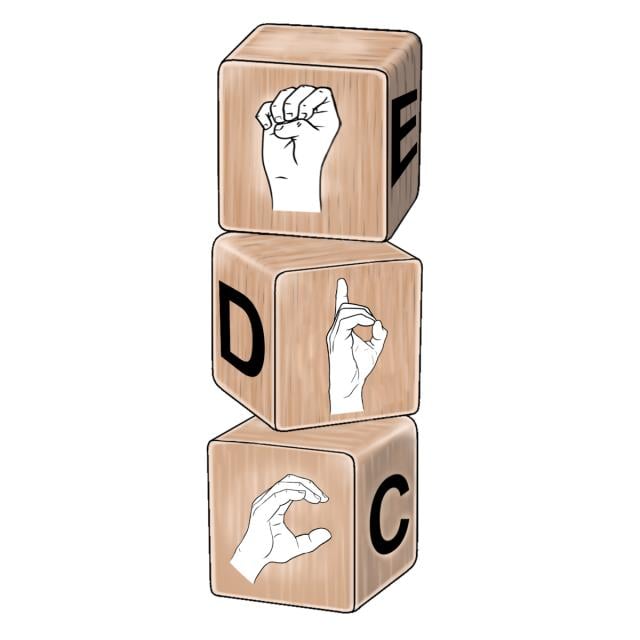
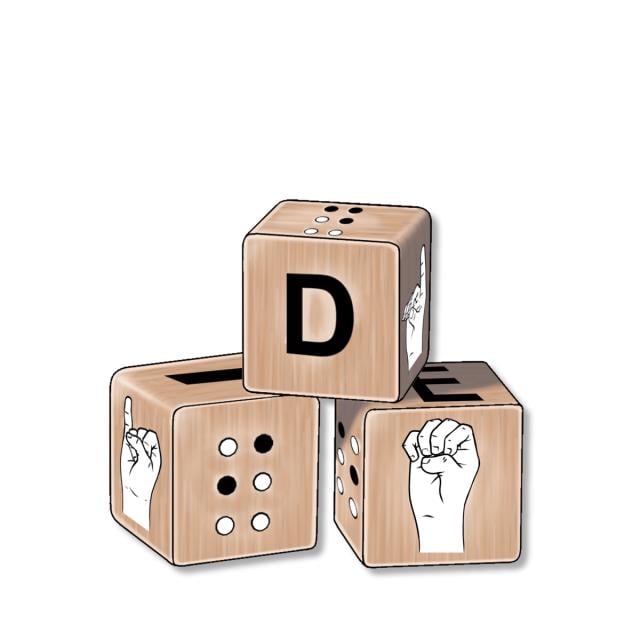
Many Deaf children around the world still leave school functionally illiterate. In some cases there is no allowance made for education of Deaf children at all. This 4 week course provides you with invaluable knowledge and skills about teaching Deaf children. You will learn about the importance of Deaf culture and community, the need for a language rich environment for the Deaf child from as young as possible, and that having access to sign language can help Deaf children academically, emotionally, and socially.

Nov 9th 2026
4 Weeks
Making Sense of the News: News Literacy Lessons for Digital Citizens (Coursera) Coursera
University of Hong Kong,The State University of New York

Making Sense of the News: News Literacy Lessons for Digital Citizens (Coursera)

Never before has the need for News Literacy been more urgent. As news consumers are bombarded with a constant stream of fake news, propaganda, hoaxes, rumors, satire, and advertising — that often masquerade as credible journalism — it is becoming more and more difficult to distinguish fact from fiction. While the public’s faith in the news media erodes, purveyors of misinformation have helped give rise to troubling cultural trends and alarming political movements.

Nov 2nd 2026
5-12 Weeks
Supporting Special Educational Needs in Every Classroom (SchoolEducationGateway) SchoolEducationGateway
School Education Gateway

Supporting Special Educational Needs in Every Classroom (SchoolEducationGateway)

Inclusion is about belonging: being part of a school, a community. That’s just one of the reasons why true inclusive education can be so powerful. Spurred by human rights declarations, more European students with special educational needs (SEN) are joining mainstream schools. But what can teachers do to best support and teach SEN students, and to create an inclusive learning environment? Join the latest Teacher Academy online course “Supporting Special Educational Needs in Every Classroom”– starting 15 October – to better understand the topic, learn about easy tools, methods and approaches for inclusive classrooms and schools, and discover how to coordinate the work with other general and special education teachers.

Self Paced
Self-Paced
Formación docente basada en la práctica para desarrollar habilidades del siglo XXI (Coursera) Coursera
Pontificia Universidad Católica de Chile

Formación docente basada en la práctica para desarrollar habilidades del siglo XXI (Coursera)

El curso presenta, en primer lugar, las habilidades del siglo XXI y su relevancia para la formación docente con el fin de preparar docentes para la sociedad del conocimiento, capaces de pensar de manera crítica y creativa y con habilidades de comunicación y colaboración para promover oportunidades de aprendizaje equitativas y de calidad en los contextos escolares. En segundo lugar, se discute sobre el enfoque basado en la práctica para la formación docente y la necesidad de ofrecer andamiajes que les permitan a los docentes aprender a poner en acto prácticas generativas complejas que requieren conocimientos especializados.

Nov 9th 2026
5-12 Weeks
e-Learning Ecologies: Innovative Approaches to Teaching and Learning for the Digital Age (Coursera) Coursera
University of Illinois at Urbana-Champaign

e-Learning Ecologies: Innovative Approaches to Teaching and Learning for the Digital Age (Coursera)

For three decades and longer we have heard educators and technologists making a case for the transformative power of technology in learning. However, despite the rhetoric, in many ways and at most institutional sites, education is still relatively untouched by technology. Even when technologies are introduced, the changes sometimes seem insignificant and the results seem disappointing. If the print textbook is replaced by an e-book, do the social relations of knowledge and learning necessarily change at all or for the better?

Nov 2nd 2026
4 Weeks
Aboriginal Worldviews and Education (Coursera) Coursera
University of Toronto

Aboriginal Worldviews and Education (Coursera)

Intended for both Aboriginal and non-Aboriginal learners, this course will explore indigenous ways of knowing and how they can benefit all students. Topics include historical, social, and political issues in Aboriginal education; terminology; cultural, spiritual and philosophical themes in Aboriginal worldviews; and how Aboriginal worldviews can inform professional programs and practices, including but not limited to the field of education.

Nov 2nd 2026
5-12 Weeks
Resilient Teaching Through Times of Crisis and Change (Coursera) Coursera
University of Michigan

Resilient Teaching Through Times of Crisis and Change (Coursera)

Resilient teaching is the ability to facilitate learning experiences that are designed to be adaptable to fluctuating conditions and disruptions. This teaching ability can be seen as an outcome of a design approach that attends to the relationship between learning goals and activities, and the environments they are situated in. Resilient teaching approaches take into account how a dynamic learning context may require new forms of interactions between teachers, students, content, and tools. Additionally, they necessitate the capacity to rethink the design of learning experiences based on a nuanced understanding of context.

Nov 9th 2026
4 Weeks