Industry 4.0: PLM, Value Chain, and Smart Factory (Coursera)

Offered by L&T EduTech,
Industry 4.0: PLM, Value Chain, and Smart Factory (Coursera)

This course is designed for Mechanical, Manufacturing, and Mechatronics Engineers. Throughout the course, students will obtain an extensive understanding of Product Life Cycle and Value Chain Management, Manufacturing Workflow, and integration into the Smart Factory concept. Participants will gain a holistic understanding of how these elements collaborate to revolutionize traditional production methods, driving us towards a more connected, efficient, and intelligent future.

Class Deals by MOOC List - Click here and see Coursera's Active Discounts, Deals, and Promo Codes.

The course begins with an overview of Product Life Management (PLM), which manages the whole product life cycle while encouraging collaboration and data consistency. Learners will explore modern technologies such as the Internet of Things (IoT), which is revolutionizing the digital product life cycle by increasing adaptability and responsiveness.
Understanding the relationship between PLM and ERP is critical. Participants will understand how these solutions align corporate processes, allowing for real-time data interchange and informed decision-making. The use of computer-aided technologies improves design and manufacturing processes, increasing efficiency and precision. The backbone of Digital Manufacturing, Value Chain Management (VCM), is also a key focus of this course. Students will gain insights into how VCM improves efficiency and responsiveness within the manufacturing process.
The course also covers Manufacturing Workflow, which introduces concepts like Robotic Process Automation (RPA) and Robot Workflow Management for increased efficiency. Learners will investigate the advantages of digital twins, Automated Guided Vehicles (AGVs), machine health monitoring, Manufacturing Analytics, Smart Material Flow, and the use of mobile applications to increase flexibility.
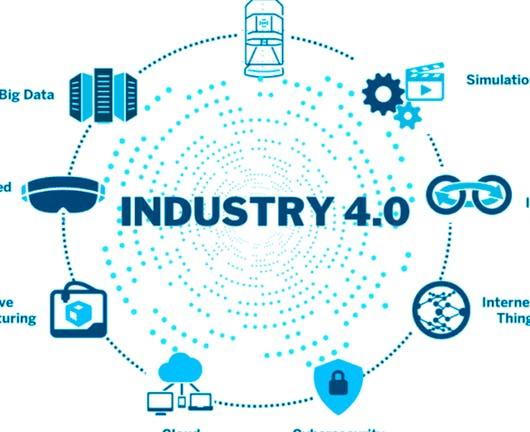
The Smart Factory concept is the focus point, emphasising real-time connectivity and data sharing facilitated by the Industrial Internet of Things (IIoT), Smart Energy Management, predictive maintenance, and augmented reality. Real-time data optimises logistics and supply chain management, whereas Quality Management 4.0 incorporates digital technology to improve product quality.
By the end of this course, participants will have gained a comprehensive understanding of Product Life Cycle and Value Chain Management, Manufacturing Workflow, and the Smart Factory in Digital Manufacturing. They will be well-prepared to navigate and succeed in today's rapidly evolving industrial environment.
This course is part of the Digital Technology in Manufacturing Specialization.

Skills you'll gain

  • Understanding of Manufacturing Workflow and integration into the Smart Factory concept
  • Understand the Manufacturing processes using advanced technologies like IoT and Computer-Aided Technology
  • Experience with in real-time data exchange, collaboration, and decision-making through ERP integration.
  • Familiarity with Industry 4.0 technologies such as Robotics, AGVs, IIoT, and predictive maintenance
  • Proficiency in Product Life Cycle and Value Chain Management concepts

Syllabus

Product Life Cycle and Value Chain Management in Digital Manufacturing
Product Life Cycle Management (PLM) and Value Chain Management (VCM) converge to revolutionize Digital Manufacturing, facilitating seamless coordination across product phases and supply chain operations. PLM serves as the cornerstone, orchestrating design, engineering, and manufacturing processes with digital innovations like AI and IoT enhancing efficiency. Integration with ERP systems fosters real-time data sharing, optimizing decision-making and promoting competitiveness in Industry 4.0.

Manufacturing Work flow
Digital Manufacturing revolutionizes the manufacturing workflow with automation and advanced technologies like RPA and digital twins, enhancing efficiency and quality management. Automated Guided Vehicles (AGVs) and machine health monitoring further optimize material handling and equipment maintenance, ensuring operational continuity and efficiency. Manufacturing analytics and smart material flow enable data-driven decision-making and real-time tracking, while mobile applications enhance flexibility and accessibility, shaping a more intelligent and responsive production environment.

Smart Factory
The Smart Factory revolutionizes manufacturing with advanced connectivity and technology, enhancing efficiency and agility. Through the Connected Factory, IIoT enables seamless integration and real-time data exchange, while Smart Energy Management and predictive maintenance optimize operations and sustainability. Industrial Remote Monitoring extends operational oversight beyond physical boundaries, ensuring continuity and rapid response, while augmented reality enhances visualization and maintenance procedures, shaping a more efficient and innovative manufacturing landscape.

Go to Class
MOOC List is learner-supported. When you buy through links on our site, we may earn an affiliate commission.

Related Courses

Getting Started with Automation 360 (Coursera) Coursera
Automation Anywhere

Getting Started with Automation 360 (Coursera)

Automation 360(tm) is the leading cloud-native end-to-end intelligent automation platform used by the world's top enterprises to automate business processes across systems and applications. This course is designed to introduce Robotic Process Automation (RPA), how RPA can be used to identify business processes for automation, and how to use Automation Anywhere Robotic Interface (AARI) to automate back office and front office business processes.

Feb 9th 2026
5-12 Weeks
Digital Thread: Components (Coursera) Coursera
University at Buffalo,The State University of New York

Digital Thread: Components (Coursera)

This course will help you recognize how the "digital thread" is the backbone of the digital manufacturing and design (DM&D) transformation, turning manufacturing processes from paper-based to digital-based. You will have a working understanding of the digital thread – the stream that starts at product concept and continues to accumulate information and data throughout the product’s life cycle – and identify opportunities to leverage it.

Aug 31st 2026
3 Weeks
The Challenge of Clean Growth and Clean Cities (FutureLearn) FutureLearn
Manchester Metropolitan University

The Challenge of Clean Growth and Clean Cities (FutureLearn)

Discover technologies for clean growth, consider clean growth strategy and explore the skills required to meet clean city targets. Explore one of the ten pillars of the industrial strategy. On this course, you’ll explore the latest research that’s contributing to the decarbonisation of the UK. You’ll explore the current targets which are forecast to be met using technologies and solutions such as hydrogen in the gas network and large-scale deployment of fuel cells.

Self Paced
2 Weeks
Understanding Agribusiness, Value Chains, and Consumers in Global Food Systems (edX) EdX
University of Adelaide,AdelaideX

Understanding Agribusiness, Value Chains, and Consumers in Global Food Systems (edX)

Learn about the dynamic business of food and agriculture, exploring value chain thinking and the role consumers play in our rapidly evolving food systems. Agribusiness is at the core of most economies around the world. The business of feeding people remains both complex and extremely important. According to the World Bank, food and agribusiness is a US $5 trillion industry that represents 10 percent of global consumer spending.

Self Paced
Self-Paced
Computer Vision: Image Understanding for Efficient Business and Industry (FutureLearn) FutureLearn
Luleå University of Technology

Computer Vision: Image Understanding for Efficient Business and Industry (FutureLearn)

Delve into the foundations of computer vision and explore its potential to transform business and industry as we know it. Discover the basics of computer vision and its role in Industry 4.0. Humans are in the midst of what is referred to as the Fourth Industrial Revolution, or Industry 4.0: the advent of new technologies that will forever change the face of business, and chief among them is computer vision. This three-week course from the Luleå University of Technology will give you a solid introduction to computer vision and help you explore its effects on industry and business.

May 2nd 2022
3 Weeks
Digital Manufacturing (openSAP) OpenSAP
SAP

Digital Manufacturing (openSAP)

Join this free online course to get an introduction to SAP Digital Manufacturing Cloud and learn about its key functionalities. SAP Digital Manufacturing Cloud is a manufacturing execution system (MES) of near real-time data and analytics. It helps you connect your top-floor business systems to your shop-floor equipment for global visibility across all plants, while orchestrating execution and monitoring production operations down to the individual work center.

Jun 21st 2022
4 Weeks
Local Economic Development (Coursera) Coursera
Erasmus University Rotterdam

Local Economic Development (Coursera)

Welcome to this MOOC on Local Economic Development (LED). Local economic development refers to the processes by which local governments, businesses, and civil society groups get together to raise income sustainably and improve their lives in a well-defined area. It’s about creating jobs, securing livelihoods, improving infrastructure and managing local resources.

Aug 24th 2026
5-12 Weeks
Control Flow in RPA (Coursera) Coursera
UiPath

Control Flow in RPA (Coursera)

The Control Flow in RPA course provides a deep understanding of the automation flow. Control Flow is a concept that refers to the order in which actions are executed and "control" flows in an automation project with the help of sequences, decision making, loops, and flowcharts. This course also focuses on the error handling mechanism which is vital for an automation project. The course has multiple practice exercises which will help in strengthening your knowledge and understanding of workflows in Studio.

Aug 31st 2026
2 Weeks
Cyber Security in Manufacturing (Coursera) Coursera
University at Buffalo,The State University of New York

Cyber Security in Manufacturing (Coursera)

The nature of digital manufacturing and design (DM&D), and its heavy reliance on creating a digital thread of product and process data and information, makes it a prime target for hackers and counterfeiters. This course will introduce students to why creating a strong and secure infrastructure should be of paramount concern for anyone operating in the DM&D domain, and measures that can be employed to protect operational technologies, systems and resources.

Aug 24th 2026
4 Weeks
Advanced Manufacturing Process Analysis (Coursera) Coursera
University at Buffalo,The State University of New York

Advanced Manufacturing Process Analysis (Coursera)

Extreme variability is a fact of life in manufacturing environments, impacting product quality and yield. Through this course, students will learn why performing advanced analysis of manufacturing processes is integral for diagnosing and correcting operational flaws in order to improve yields and reduce costs. Gain insights into the best ways to collect, prepare and analyze data, as well as computational platforms that can be leveraged to collect and process data over sustained periods of time. Become better prepared to participate as a member of an advanced analysis team and share valuable inputs on effective implementation.

Aug 24th 2026
3 Weeks
Applying Data Analytics in Accounting (Coursera) Coursera
University of Illinois at Urbana-Champaign

Applying Data Analytics in Accounting (Coursera)

This course explores business analytic applications in accounting. First, it presents a survey of technology topics in accounting, including process mining, blockchain and applications in audit, tax, and assurance. Next, the course explores visualization and basic analytics in audit and control testing using R and Alteryx. Next, the course examines the uses of text analysis in accounting and conducts text analysis using R and RStudio. Finally, the course examines robot process automation in general using UiPath and its applications in accounting.

Aug 31st 2026
4 Weeks