The Challenge of Clean Growth and Clean Cities (FutureLearn)

The Challenge of Clean Growth and Clean Cities (FutureLearn)

Discover technologies for clean growth, consider clean growth strategy and explore the skills required to meet clean city targets. Explore one of the ten pillars of the industrial strategy. On this course, you’ll explore the latest research that’s contributing to the decarbonisation of the UK. You’ll explore the current targets which are forecast to be met using technologies and solutions such as hydrogen in the gas network and large-scale deployment of fuel cells.

Class Deals by MOOC List - Click here and see FutureLearn's Active Discounts, Deals, and Promo Codes.

You’ll learn about the future green skills economy and equip yourself with the skills to be part of the workforce that helps regions achieve their carbon net zero targets.
You’ll also consider the impact of the successful meeting of these targets on climate change and sustainable industrial development.

Syllabus

Week 1: What is the challenge of clean growth?
Week 2: The pathway to a cleaner city

What will you achieve?
By the end of the course, you‘ll be able to...

  • Identify the challenge of decarbonising our cities and regions, how to achieve this and the opportunities this provides
  • Investigate emerging technologies such as Hydrogen and Fuel Cells
  • Explore the impact of research in reducing climate change
  • Discuss how Industry 4.0 will accelerate clean growth

Who is the course for?
The course is designed for anyone with an interest in learning more about smart cities, clean growth, and industry 4.0.
It will be particularly useful for anyone looking at courses for developing their careers in this emerging economy or those with a genuine learning need to become more literate on the topic (eg if you’ve already attended carbon literacy training).
It will also be useful for researchers who want to showcase their expertise in working in the clean growth areas and entities with a desire to educate on their plans to achieve net zero carbon targets.

Go to Class
MOOC List is learner-supported. When you buy through links on our site, we may earn an affiliate commission.

Related Courses

Smart Service Welt (mooc house) Mooc.house
acatech

Smart Service Welt (mooc house)

Mit Industrie 4.0 wurde der Schritt in Deutschland unternommen, die digitale Transformation in der Produktion voranzutreiben. Aktivitäten im Bereich der Industrie 4.0 sind jedoch nicht ausreichend, um die branchenübergreifende und service-orientierte Digitalisierung von Wertschöpfungsketten zu beschleunigen. Unsere Gesellschaft produziert bereits heute gigantische Datenmengen, die für innovative Produkte und Dienstleistungen genutzt werden können. Individualisierte Smart Services, die aus den Daten eines Produktes generiert werden, werden dabei oft wichtiger als das Produkt selbst. Sie tragen dazu bei, neue Geschäftsmodelle zu entwickeln, Ressourcen zu schonen, Arbeitsplätze zu schaffen und dabei die Wettbewerbsfähigkeit Deutschlands zu sichern.

Self Paced
Self-Paced
Climate Change Science and Negotiations (edX) EdX
SDGAcademyX,SDG Academy

Climate Change Science and Negotiations (edX)

Humanity is up against a tight timeline to address climate change. Learn how we can deeply decarbonize the global energy systems, and put the world on a 2°C pathway. In this course, learn solutions to mitigate the effects of the global greenhouse gas emissions causing temperature rise, and how to apply these solutions in different national contexts improvements.

Self Paced
Self-Paced
Causes of Human Disease: Exploring Cancer and Genetic Disease (FutureLearn) FutureLearn
University of Leeds

Causes of Human Disease: Exploring Cancer and Genetic Disease (FutureLearn)

Explore how the unravelling of genetic code has led to a deeper understanding of genetic diseases and cancer. It’s widely known that some diseases run in families. The discovery of the structure of DNA and the unravelling of the genetic code has led to a deeper understanding of such diseases. We now know more about the genetic basis of cancer and how cancer cells are formed and reproduce. On this course you’ll explore the structure of DNA, its processes and learn how genetic disease results from DNA alterations.

Self Paced
2 Weeks
Discovering Science: Science Writing (FutureLearn) FutureLearn
University of Leeds

Discovering Science: Science Writing (FutureLearn)

What science discoveries will you choose to write about? Without science writing, science could not really exist. By recording experiments and publishing the results of studies and discoveries, scientists can share their important work, and find an engaged audience. Science writing takes many forms: from press releases to video scripts. You’ll learn about different types of science writing, and look at the factors which you need to consider to write a story.

Self Paced
2 Weeks
Net-Zero Building Fundamentals (Coursera) Coursera
Indian Institute for Human Settlements

Net-Zero Building Fundamentals (Coursera)

Interested in decarbonisation, high performance, and climate resilient buildings? Then this course is for you. Our future is low-carbon, net-zero buildings that are super-efficient and self-sufficient in terms of their energy and water use. Decarbonisation, digitisation, and deglobalisation are driving the infrastructure revolution over the next 20 years. This course, offered jointly by the Alliance for an Energy Efficient Economy (AEEE) and the Indian Institute for Human Settlements (IIHS), will enable you to reap the benefits of this revolution and work on climate change.

Sep 28th 2026
5-12 Weeks
Hydrogen for Mobility (IFP School) Other Providers
IFP School

Hydrogen for Mobility (IFP School)

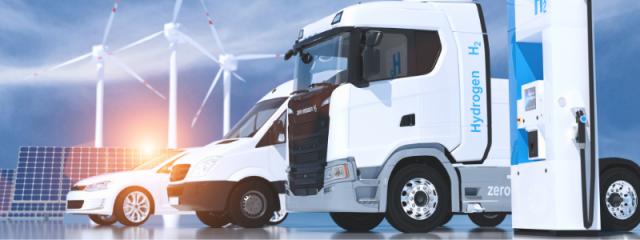
Hydrogen is a hot topic nowadays. Why? Because society must find solutions to reduce its impact on climate change and because there is now a political will (in Europe) to develop a hydrogen economy. The mobility sector, and in particular the heavy mobility, is concerned by this transformation. After some general information about hydrogen production and the hydrogen economy, you will gain a deep understanding of the hydrogen solution for mobility. We will explore both the fuel cells and the hydrogen thermal engine solutions as a mean to reduce the environmental footprint of heavy mobility.

Jan 16th 2023
1 Week
Industrial IoT Markets and Security (Coursera) Coursera
University of Colorado Boulder

Industrial IoT Markets and Security (Coursera)

This course can also be taken for academic credit as ECEA 5385, part of CU Boulder’s Master of Science in Electrical Engineering degree. Developing tomorrow's industrial infrastructure is a significant challenge. This course goes beyond the hype of consumer IoT to emphasize a much greater space for potential embedded system applications and growth: The Industrial Internet of Things (IIoT), also known as Industry 4.0. Cisco’s CEO stated: “IoT overall is a $19 Trillion market. IIoT is a significant subset including digital oilfield, advanced manufacturing, power grid automation, and smart cities”.

Sep 14th 2026
5-12 Weeks
Energy Transition Selection (IFP School) Other Providers
IFP School

Energy Transition Selection (IFP School)

This module is intended either for students and professionals interested in the energy transition challenges and innovative solutions to reduce CO2 emissions. But more specifically it is intended for those willing to gain knowledge about developing a decarbonized energy mix based on both renewables and natural gas, underground CO2 and energy storage, energy efficiency and CO2 abatements in processes, biofuels. In general, for those who are convinced that climate change is really a challenge that can also be sustained through concrete solutions and societal awareness. **ENERGY TRANSITION SELECTION WILL BE AVAILABLE UNTIL MARCH 31ST.**

Available Now
1 Week
How the Internet of Things and Smart Services Will Change Society (openSAP) OpenSAP
SAP

How the Internet of Things and Smart Services Will Change Society (openSAP)

The Internet of Things will forever change our personal and professional lives. By 2020, there will be 50 billion connected devices communicating through the Internet. Devices can range from connected coffee makers, cars, or sensors on cattle to connected machines in a production plant. These devices provide data that offers new insights, and as they talk to each other, they develop their own intelligence and can advise customers about optimal ways to put them to use. This will revolutionize consumer habits and the way we do business.

Self Paced
Self-Paced