EdX

Indigenous Languages: From Policy and Planning to Implementation and Assessment (edX)

Indigenous Languages: From Policy and Planning to Implementation and Assessment (edX)

Gain theoretical knowledge and practical skills to develop and implement a language plan. Explore how to approach learning, teaching and transmitting Indigenous languages to present and future generations, in a variety of forms and channels.

Class Deals by MOOC List - Click here and see EdX's Active Discounts, Deals, and Promo Codes.

Learners will explore how to develop and implement a language plan that will support individual and community-centered goals for reclamation, revitalization, resurgence, education and/or maintenance based on available resources (e.g., human, financial, linguistic, technology), or resources they need to seek.
Learners will have access to IDIL resources and events through UNESCO’s International Decade of Indigenous Languages (IDIL) Global Community. Learners are also encouraged to build and participate in a global community by sharing open access resources with their community members and engaging in global dialogue surrounding language policy, planning, implementation and assessment.
This course offers free or low-cost digital learning that does not rely on high-bandwidth or infrastructure to access resources.
This course is for:
Indigenous community members wanting to develop a language plan for their family, local community, local schools or other settings
Indigenous community members interested in language and linguistic human rights, language policies, language conservation and maintenance
Graduate students and advanced undergraduate students in international development, teaching, public policy, political science, social sciences and other fields who are interested in language policy, planning, implementation and assessment
Teachers, policy makers, government officials and other practitioners interested in the policy and language factors impacting the communities they support and serve
Sustainable development practitioners who want to understand linguistic needs and the support that is necessary to help communities locally, regionally, nationally and/or internationally
Those who work for international aid organizations and nonprofits in the realms of human rights, language rights, Indigenous Peoples’ rights and education

What you'll learn

  • Policies and frameworks that impact Indigenous language use, linguistic rights and access to resources
  • How to plan, develop, implement and assess Indigenous language projects for different contexts
  • Case studies from Indigenous language scholar-educators and community members that offer insight into specific language initiatives, projects, programs, etc.

Syllabus

Module 1: What is Language Policy?
Week 1: Key Concepts and Ideas
Local policies & frameworks
National policies & frameworks
Global policies & frameworks
Human, language, & linguistic rights
Intellectual property & copyright
Guiding principles regarding Indigenous knowledges
Week 2: Case Studies and Practice

Module 2: What is Language Planning?
Week 3: Key Concepts and Ideas
Language vitality & language use
Overall goals for the community and language
Environmental scan: Assessment of resources (financial, physical, human)
Community-centered, -driven and -led language plans
Vision
Goals
Language activities
Language policies (to facilitate language use)
Project action plan
Funding
Week 4: Case Studies and Practice

Module 3: What is Implementation?
Week 5: Key Concepts and Ideas
Building a team that is Indigenous-led
Roles & responsibility
Accountability
Bench marks
Outcome driven results
Flexibility
Working through challenges
Week 6: Case Studies and Practice

Module 4: What is Assessment?
Week 7: Key Concepts and Ideas
Ensuring outcomes driven
Summative vs formative assessment
Performative assessment
Community ownership of assessment
Week 8: Case Studies and Practice

Go to Class
MOOC List is learner-supported. When you buy through links on our site, we may earn an affiliate commission.

Related Courses

Reconciliation Through Indigenous Education (edX) EdX
The University of British Columbia,UBCx

Reconciliation Through Indigenous Education (edX)

Advancing reconciliation in classrooms, organizations, and communities through the teaching and learning of Indigenous ways of knowing. This course will help you envision how Indigenous histories, perspectives, worldviews, and approaches to learning can be made part of the work we do in classrooms, organizations, communities, and our everyday experiences in ways that are thoughtful and respectful.

Sep 22nd 2026
5-12 Weeks
Language Revival: Securing the Future of Endangered Languages (edX) EdX
University of Adelaide,AdelaideX

Language Revival: Securing the Future of Endangered Languages (edX)

Learn how the world’s endangered languages are revived and why this process is critical to preserving cultural identity. Language is an integral part of society. Wherever we come from, the words we use and the way in which we use them are fundamental to our cultural identity. In today’s increasingly globalised world, however, ‘linguicide’ – the loss of a language – is becoming all too common. But there is hope. The language revival movement has emerged as an important and effective response, and this course will introduce you to its key principles and techniques.

Self Paced
Self-Paced
Greening the Economy: Sustainable Cities (Coursera) Coursera
Lund University

Greening the Economy: Sustainable Cities (Coursera)

How can we shape urban development towards sustainable and prosperous futures? This course will explore sustainable cities as engines for greening the economy. We place cities in the context of sustainable urban transformation and climate change. Sustainable urban transformation refers to structural transformation processes – multi-dimensional and radical change – that can effectively direct urban development towards ambitious sustainability and climate goals. We will connect the key trends of urbanization, decarbonisation and sustainability.

Nov 23rd 2026
5-12 Weeks
Salmon, People, and Place (edX) EdX
University of Alaska Fairbanks,AlaskaX

Salmon, People, and Place (edX)

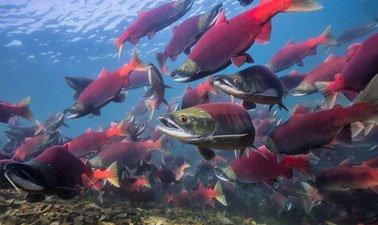
This course explores the relationships between salmon and people with an emphasis on the special ties of salmon to Indigenous peoples and to Alaska Natives in particular. No wild animal has more profoundly influenced the cultures and well-being of societies in North America than salmon. Salmon and people have been entwined in a relationship for millennia. This six-week course is an exploration and celebration of this relationship, as well as an examination of the current major issues, including habitat alterations, climate change, and management actions currently straining the relationship between salmon and salmon-dependent people.

Self Paced
Self-Paced
Planning for Risk and Retirement (edX) EdX
Indiana University,IUx

Planning for Risk and Retirement (edX)

Learn to assess your tolerance for risk, evaluate investment products, and develop an investment mindset. This course prepares you to compare insurance policies, calculate your need for retirement income, and includes a step-by-step workshop on retirement planning. Planning for Risk, Retirement and Investment is made possible by the Brian and Sheila Jellison Family Foundation.

Self Paced
Self-Paced
AP® Psychology - Course 3: How the Mind Works (edX) EdX
The University of British Columbia,UBCx

AP® Psychology - Course 3: How the Mind Works (edX)

Learn about the neuroscience and psychology of the mind including memory, thinking, reasoning, and language. In this psychology course, you will learn about the mind and the psychology of learning, including coverage of classical conditioning, operant conditioning, and social learning. We will look at the psychology and neuroscience of cognition — including memory, thinking and reasoning. The course will conclude with the coverage of language.

Self Paced
Self-Paced
One Health: A Ten-Thousand-Year-Old View into the Future (edX) EdX
University of Alaska Fairbanks,AlaskaX

One Health: A Ten-Thousand-Year-Old View into the Future (edX)

Explore the connectedness of people, animals, and the environment through this unique approach to One Health that connects traditional ways of knowing with the natural and social sciences. Combine Western and Indigenous knowledge to form a holistic understanding of the future of life in the Circumpolar North.

Self Paced
Self-Paced
Climate change and Indigenous People and local communities (Coursera) Coursera
Universitat Autònoma de Barcelona

Climate change and Indigenous People and local communities (Coursera)

Climate change is a global phenomenon, but its impacts vary among different social groups, who perceive and adapt to climate change impacts in different ways. In this course, you will: a) understand the different debates around climate change impacts on Indigenous Peoples and local communities (IPLC); b) familiarize yourself with different impacts of climate change on IPLC, with the IPLC understanding of climate change impacts and with their strategies to adapt to climate change; and c) learn about different strategies to incorporate Indigenous peoples and local communities in climate change research and policy.

Nov 23rd 2026
5-12 Weeks
Performance Assessment in the Virtual Classroom (Coursera) Coursera
University of California, Irvine

Performance Assessment in the Virtual Classroom (Coursera)

Welcome to Performance Assessment in the Virtual Classroom! This course will help you effectively assess student performance virtually, including compliance issues, feedback models, online grade book functions, and data analysis. We will discuss why effective measures of performance and assessment are a crucial component of any virtual program, and the importance of teachers and administrators understanding both the myths and challenges of assessing performance virtually, administering standardized testing with geographical challenges, and complying with state and local requirements to make sure students are meeting requirements.

Nov 23rd 2026
5-12 Weeks
Ecodesign for Cities and Suburbs (edX) EdX
The University of British Columbia,UBCx

Ecodesign for Cities and Suburbs (edX)

Using real examples, learn how ecology can guide urban design to avert environmental disasters and improve people’s lives. Too often modern cities and suburbs are disorganized places where most new development makes daily life less pleasant, creates more traffic congestion, and contributes to climate change. This trend has to change; and our course is going to show you how.

Self Paced
Self-Paced