History of Racial Inequity in Healthcare (Coursera)

History of Racial Inequity in Healthcare (Coursera)

The first course of the Addressing Racial Health Inequity in Healthcare specialization will first situate the role of public health in healthcare, and walk through important concepts and definitions that you will see throughout the course and subsequent courses. You will walk through the social and biological perspectives on the concepts of race and racism, and unpack the history of unequal treatment in the U.S.

Class Deals by MOOC List - Click here and see Coursera's Active Discounts, Deals, and Promo Codes.

You will learn about the health insurance system in the U.S., differential access to care, and professional challenges to diversity in healthcare. And finally, you will explore examples of resilience in healthcare that were critical to preserving the health of marginalized populations.

What You Will Learn

  • How history & the factors of lack of access & representation in healthcare parallels other sectors in the U.S. and international contexts
  • The evolution of the health insurance system in the United States and in international contexts, and its impact on racial and ethnic populations
  • Historical events, policies, economic and legal mechanisms created disproportionate disease burden within racial and ethnic groups

Course 1 of 3 in the Addressing Racial Health Inequity in Healthcare Specialization.

Syllabus

WEEK 1
Unpacking Concepts and Definitions
This week, we will structure and root our understanding of what race is and how it interacts and affects all aspects of our society. To observe and understand inequities in the healthcare system, we must first have a basic understanding of concepts and definitions in the health equity literature, and the origins of race and how it came to be a ubiquitous part of modern society.

WEEK 2
Historical Roots of Racial & Ethnic Disparities in Healthcare
The purpose of this week’s lessons are to understand specific events that contributed to the disproportionate disease burden seen in certain communities, and illustrate why health disparities, and in turn, healthcare disparities, exist by race.

WEEK 3
Evolution & Impact of the Health Insurance System
This week, we will learn about the history of health insurance in the United States. The US health insurance system is complex and can vary based on your location, age, ability status, and for some groups, your identity. Understanding these differences helps shed a light on how health insurance plays a role in health inequity and specifically, racial health inequity.

WEEK 4
Access & Professional Representation in Healthcare
This week, we will explore how lack of access and representation in various sectors have had an impact on healthcare equity. By illustrating exclusion and discrimination in other sectors of society, we can better see the same parallels that are observed in healthcare, and how exclusionary practices outside of healthcare contribute to health disparities and causes of inequities that will be detailed in Course 2.

WEEK 5
History of Resilience in Healthcare
This week, we will spend time learning about how marginalized communities came together to take care of themselves and their demonstration of resilience in the face of inequity. This not only occurred in the US but around the world with many groups.
Go to Class
MOOC List is learner-supported. When you buy through links on our site, we may earn an affiliate commission.

Related Courses

Understanding Prostate Cancer (Coursera) Coursera
Johns Hopkins University

Understanding Prostate Cancer (Coursera)

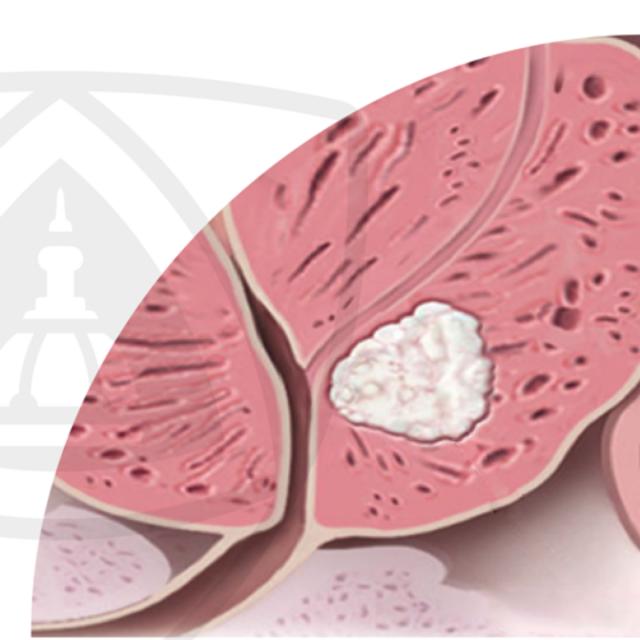
Welcome to Understanding Prostate Cancer. My name is Ken Pienta, Professor of Urology and Oncology at the Johns Hopkins School of Medicine. I have been studying prostate cancer and treating patients with prostate cancer for over 25 years. I've put together this course in order to introduce you to the essentials of prostate cancer. This Understanding Prostate Cancer Course should be helpful to anyone who wants to develop a deeper understanding of prostate cancer biology and treatment. It should be useful to students who are interested in a deeper understanding of the science of cancer.

Nov 16th 2026
3 Weeks
Tools and Practices for Addressing Pandemic Challenges (Coursera) Coursera
Politecnico di Milano

Tools and Practices for Addressing Pandemic Challenges (Coursera)

An overview of the tools, techniques, and practices that can be enacted by policy makers, countries, and organizations to monitor, manage, and react to pandemics and mitigate and govern their impacts. An introductory, multidisciplinary course covering data science, social science, healthcare, and management, paving the way to various courses on specific matters.

Nov 23rd 2026
2 Weeks
Data Use for Disease Control & Global Health Decision-Making (Coursera) Coursera
Johns Hopkins University

Data Use for Disease Control & Global Health Decision-Making (Coursera)

This informative three-week course will prepare you to meet the challenges of conducting epidemiologic surveillance to gather data to inform decision-making and planning. Using the polio eradication effort as a case study, you’ll address the application of surveillance systems in a wide variety of settings.

Nov 23rd 2026
3 Weeks
Breastfeeding: Public Health Perspectives (Coursera) Coursera
University of Michigan

Breastfeeding: Public Health Perspectives (Coursera)

Engaging in this course will provide you with the opportunity to think about breastfeeding and its public health implications. The Socio-Ecological Model will be the framework of the course as we think about how each level of the Model (individual, interpersonal, community, organizational, and public policy) impacts breastfeeding practices in the United States, and globally.

Nov 23rd 2026
4 Weeks
Responsible Medication Prescribing for Older Adults (Coursera) Coursera
Icahn School of Medicine at Mount Sinai

Responsible Medication Prescribing for Older Adults (Coursera)

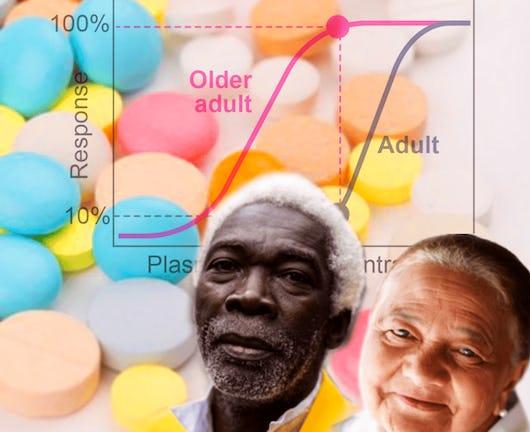
Older adults are more likely to consume more prescription and non-prescription medications, and this can place them at high risk for unintended harmful effects. An important component of the care of older adults relates to medication management. This course offers healthcare professionals and learners a comprehensive understanding of the physiological changes that occur with aging and their implications on medication management. It aims to equip participants with essential knowledge and skills to ensure safe and appropriate prescribing for older adults.

Nov 23rd 2026
5-12 Weeks
Palliative Care Capstone Projects (Coursera) Coursera
University of Colorado System

Palliative Care Capstone Projects (Coursera)

In the Capstone Course you have the opportunity to put what you have been learning about in the Palliative Care Specialization into practice. Our team has created five activities that directly relate to what you have been learning in the course. You will need to talk with someone you know, perhaps a friend or family member, about their experiences living with serious and life limiting illness. You may want to engage several people as you go through the 5 assignments as they each will have unique experiences.

Nov 23rd 2026
5-12 Weeks
Structural Racism: Causes of Health Inequities in the U.S. (Coursera) Coursera
University of Michigan

Structural Racism: Causes of Health Inequities in the U.S. (Coursera)

Racial health disparities - differences in health outcomes based on race - are rampant in the U.S., and many incorrectly assume these are due to differences in behavior or genetics. To understand these differences, and ultimately identify solutions to eliminate these disparities, we need to dig deeper and look at the root causes. We need to examine how our socio-political institutions have racial inequities embedded within their policies and practices. We need to re-examine history to learn how and why race was created and how it was used to advance the interests of whites. We need to examine how state violence is selectively used to reinforce racial inequities.

Nov 23rd 2026
3 Weeks
HI-FIVE: Health Informatics For Innovation, Value & Enrichment (Social/Peer Perspective) (Coursera) Coursera
Columbia University

HI-FIVE: Health Informatics For Innovation, Value & Enrichment (Social/Peer Perspective) (Coursera)

HI-FIVE (Health Informatics For Innovation, Value & Enrichment) Training is an approximately 10-hour online course designed by Columbia University in 2016, with sponsorship from the Office of the National Coordinator for Health Information Technology (ONC). The training is role-based and uses case scenarios. Our nation’s healthcare system is changing at a rapid pace. Transformative health care delivery programs depend heavily on health information technology to improve and coordinate care, maintain patient registries, support patient engagement, develop and sustain data infrastructure necessary for multi-payer value-based payment, and enable analytical capacities to inform decision making and streamline reporting.

Nov 23rd 2026
4 Weeks
HI-FIVE: Health Informatics For Innovation, Value & Enrichment (Clinical Perspective) (Coursera) Coursera
Columbia University

HI-FIVE: Health Informatics For Innovation, Value & Enrichment (Clinical Perspective) (Coursera)

HI-FIVE (Health Informatics For Innovation, Value & Enrichment) Training is a 12-hour online course designed by Columbia University in 2016, with sponsorship from the Office of the National Coordinator for Health Information Technology (ONC). The training is role-based and uses case scenarios. Also, it has additional, optional modules on other topics of interest or relevance. Although we suggest to complete the course within a month's timeframe, the course is self-paced and so you can start and finish the course at anytime during a month's time period. No additional hardware or software are required for this course.

Nov 23rd 2026
4 Weeks
Take the Lead on Healthcare Quality Improvement (Coursera) Coursera
Case Western Reserve University

Take the Lead on Healthcare Quality Improvement (Coursera)

In this course you will learn about the importance of quality in healthcare and how you can contribute by implementing a quality improvement (QI) project to improve processes of care and patient outcomes. You will learn about powerful tools to add to your QI ‘toolbox’ during short lectures and reflective exercises. You will apply these tools to the implementation of a QI project in your own practice setting or an area of personal improvement. At the completion of the course, you will have a storyboard that captures your QI project success to share with others.

Nov 23rd 2026
5-12 Weeks