Healthcare Data Quality and Governance (Coursera)

Healthcare Data Quality and Governance (Coursera)

Career prospects are bright for those qualified to work with healthcare data or as Health Information Management (HIM) professionals. Perhaps you work in data analytics but are considering a move into healthcare, or you work in healthcare but are considering a transition into a new role. In either case, Healthcare Data Quality and Governance will provide insight into how valuable data assets are protected to maintain data quality. This serves care providers, patients, doctors, clinicians, and those who carry out the business of improving health outcomes.

Class Deals by MOOC List - Click here and see Coursera's Active Discounts, Deals, and Promo Codes.

"Big Data" makes headlines, but that data must be managed to maintain quality. High-quality data is one of the most valuable assets gathered and used by any business. This holds greater significance in healthcare where the maintenance and governance of data quality directly impact people’s lives. This course will explain how data quality is improved and maintained. You’ll learn why data quality matters, then see how healthcare professionals monitor, manage and improve data quality. You’ll see how human and computerized systems interact to sustain data quality through data governance. You’ll discover how to measure data quality with metadata, tracking data provenance, validating and verifying data, along with a communication framework commonly used in healthcare settings.
This knowledge matters because high-quality data will be transformed into valuable insights that can save lives, reduce costs, to improve healthcare and make it more accessible and affordable. You will make yourself more of an asset in the healthcare field by what you gain from this course.
Course 3 of 4 in the Health Information Literacy for Data Analytics Specialization.

Syllabus

WEEK 1
Why Data Quality Matters
In this module, you will be able to define data quality and what drives it. You'll be able to recall and describe four key aspects of data quality. You'll be able to explain why data quality is important for operations, for patient care, and for the finances of healthcare providers. You'll be able to discuss how data may change over time, and how finding those changes allows us to recognize and work with the issues the changes cause. You will be able to explain why requirements for data quality depend on how we intend to use that data and understand four levels of quality that may be applied for different kinds of analysis. You will also be able to discuss how all of this supports our ability to do our best work in the best ways possible.

WEEK 2
Measuring Data Quality
This module focuses on measuring data quality. After this module, you will be able to describe metadata, list what metadata may include, give some examples of metadata and recall some of its uses as it relates to measuring data quality. We will describe data provenance to explains how knowing the origin of a data set can help data analysts determine if a data set is suitable for a particular use. We’ll also describe 5 components of data quality you can recall and use when evaluating data. You will also learn to be able to distinguish between data verification and validation, recalling 4 applicable data validation methods and 3 concepts useful to validate data. In addition to your video lessons, you will read and discuss a scholarly article on Methods and dimensions of electronic health record data quality assessment: enabling reuse for clinical research. We wrap up the module with a framework abbreviated as S-B-A-R that is often used in healthcare team situations to communicate about issues that must be solved.

WEEK 3
Monitoring, Managing and Improving Data Quality
In this module, we focus on monitoring, managing, and improving data quality. You will be able to explain how to monitor data on a day-to-day basis to see that it remains consistent. You will explain how measures can help us monitor the patient health and the quality of care they receive over time. Also, you will be able to discuss establishing the culture of quality throughout the data lifecycle and improving data quality from the baseline by posing questions to determine a baseline of data quality. You will be able to manage data quality through expected and unexpected changes, along with tracking monitoring strategies along the data pipeline. After this module, you will be able to identify and fix common deficiencies in the data and implement change control systems as a monitoring tool. You’ll also recall several best practices you can apply on the job to monitor data quality in the healthcare field.

WEEK 4
Sustaining Quality through Data Governance
IIn this module, we focus on sustaining quality through data governance. We will define data governance and consider why it matters in healthcare. You will discuss who makes up data governance committees, how these committees function relative to data analysts and describe how stakeholders work together to ensure data quality. You’ll be able to describe how high-quality data is a valuable asset for any business. You will also define data governance systems. You will recall several ways data can be repurposed and explain how data governance maintains data quality as it is repurposed for a use other than that for which it was originally gathered. In addition to your video lessons, you will read and discuss the article, Big Data, Bigger Outcomes and practice applying some of these important concepts.
Go to Class
MOOC List is learner-supported. When you buy through links on our site, we may earn an affiliate commission.

Related Courses

Saúde Baseada em Evidências (Coursera) Coursera
Universidade Estadual de Campinas - UNICAMP

Saúde Baseada em Evidências (Coursera)

Por que as informações na área da saúde são tão conflitantes? Existe algum lugar em que a informação sobre saúde é confiável? O que devo considerar ao deparar com alguma novidade que parece mágica? Como o sistema de saúde é afetado por essas questões? Essas e outras perguntas nortearam o curso Saúde Baseada em Evidências. Além dessas reflexões, são apontados aspectos sobre o desenvolvimento de pesquisas médicas que fornecem subsídios para uma interpretação mais apurada dos fatos.

Oct 5th 2026
5-12 Weeks
Cybersecurity in Healthcare (Hospitals & Care Centres) (Coursera) Coursera
Erasmus University Rotterdam

Cybersecurity in Healthcare (Hospitals & Care Centres) (Coursera)

The Cybersecurity in Healthcare MOOC was developed as part the SecureHospitals.eu project. This project has received funding from the European Union’s Horizon 2020 Coordination Research and Innovation Action under Grant Agreement No. 826497. The course "Cybersecurity in Healthcare" has been developed to raise awareness and understanding the role of cybersecurity in healthcare (e.g., hospitals, care centres, clinics, other medical or social care institutions and service organisations) and the challenges that surround it.

Oct 5th 2026
5-12 Weeks
Practical Time Series Analysis (Coursera) Coursera
The State University of New York

Practical Time Series Analysis (Coursera)

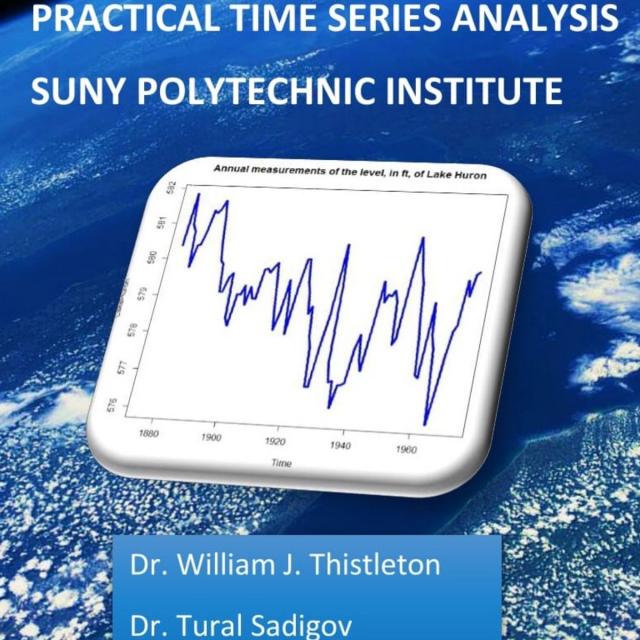
Many of us are "accidental" data analysts. We trained in the sciences, business, or engineering and then found ourselves confronted with data for which we have no formal analytic training. This course is designed for people with some technical competencies who would like more than a "cookbook" approach, but who still need to concentrate on the routine sorts of presentation and analysis that deepen the understanding of our professional topics.

Oct 5th 2026
5-12 Weeks
Introdução ao Big Data (Coursera) Coursera
FIA Business School

Introdução ao Big Data (Coursera)

Este curso é indicado para profissionais que desejam entender de forma fácil o que é Big Data, conhecer algumas tecnologias de Big Data, ter acesso a algumas aplicações de Analytics, Internet das Coisas - IOT e de Big Data. Ao final do curso você será capaz de participar de um projeto de Big Data contribuindo com estratégias e direcionando o projeto para a escolha da adequada técnica de análise de dados.

Oct 5th 2026
4 Weeks
Community Awareness Course: Sexuality and Disability (Coursera) Coursera
University of Minnesota

Community Awareness Course: Sexuality and Disability (Coursera)

This community awareness course from the University of Minnesota Program on Human Sexuality will provide you with a solid introduction to human sexuality for those living with disabilities. Often there are assumptions that the disabled or differently abled people are not sexual, do not have sexual needs, or cannot be involved sexually. In this professionally produced one-hour course, you'll learn about the basics of disabilities and human sexuality.

Oct 5th 2026
5-12 Weeks
Population Health: Responsible Data Analysis (Coursera) Coursera
Leiden University

Population Health: Responsible Data Analysis (Coursera)

In most areas of health, data is being used to make important decisions. As a health population manager, you will have the opportunity to use data to answer interesting questions. In this course, we will discuss data analysis from a responsible perspective, which will help you to extract useful information from data and enlarge your knowledge about specific aspects of interest of the population.

Oct 5th 2026
4 Weeks
Visualization for Data Journalism (Coursera) Coursera
University of Illinois at Urbana-Champaign

Visualization for Data Journalism (Coursera)

While telling stories with data has been part of the news practice since its earliest days, it is in the midst of a renaissance. Graphics desks which used to be deemed as “the art department,” a subfield outside the work of newsrooms, are becoming a core part of newsrooms’ operation. Those people (they often have various titles: data journalists, news artists, graphic reporters, developers, etc.) who design news graphics are expected to be full-fledged journalists and work closely with reporters and editors.

Oct 5th 2026
5-12 Weeks
Applied Plotting, Charting & Data Representation in Python (Coursera) Coursera
University of Michigan

Applied Plotting, Charting & Data Representation in Python (Coursera)

This course will introduce the learner to information visualization basics, with a focus on reporting and charting using the matplotlib library. The course will start with a design and information literacy perspective, touching on what makes a good and bad visualization, and what statistical measures translate into in terms of visualizations. The second week will focus on the technology used to make visualizations in python, matplotlib, and introduce users to best practices when creating basic charts and how to realize design decisions in the framework.

Oct 5th 2026
4 Weeks
Business Applications of Hypothesis Testing and Confidence Interval Estimation (Coursera) Coursera
Rice University

Business Applications of Hypothesis Testing and Confidence Interval Estimation (Coursera)

Confidence intervals and Hypothesis tests are very important tools in the Business Statistics toolbox. A mastery over these topics will help enhance your business decision making and allow you to understand and measure the extent of ‘risk’ or ‘uncertainty’ in various business processes. This course advances your knowledge about Business Statistics by introducing you to Confidence Intervals and Hypothesis Testing. These are done by easy to understand applications.

Oct 5th 2026
4 Weeks
Security and Privacy for Big Data - Part 1 (Coursera) Coursera
EIT Digital

Security and Privacy for Big Data - Part 1 (Coursera)

This course sensitizes regarding security in Big Data environments. You will discover cryptographic principles, mechanisms to manage access controls in your Big Data system. By the end of the course, you will be ready to plan your next Big Data project successfully, ensuring that all security related issues are under control. You will look at decent-sized big data projects with security-skilled eyes, being able to recognize dangers. This will allow you to improve your systems to a grown and sustainable level.

Oct 5th 2026
1 Week