Health and Safety of a Home-Based Childcare Center (Coursera)

Health and Safety of a Home-Based Childcare Center (Coursera)

This course is targeted toward individuals wishing to operate a safe and healthy family day care center, and it covers topics including staffing; creating a safe environment; nutrition; mental health & wellness; and emergency planning.

Class Deals by MOOC List - Click here and see Coursera's Active Discounts, Deals, and Promo Codes.

Since a Family Policy Handbook is essential for anyone operating a family day care center, this course includes the development of one of three imperative sections of the handbook. The remaining two sections are created in other courses of the Home-Based Childcare series available on Coursera.

Syllabus

WEEK 1
Introduction: Family Policy Handbook Project
The intention of this module is to introduce you to the Home-Based Child Care Final Project, including the rubric which will be used to score your final project submission.

WEEK 2
Safety and Prevention of Injuries
This module covers injury prevention and the importance of safety and training.

WEEK 3
Physical Health and Young Children
This module focuses on physical health, including the benefits of exercise and how to reduce the spread of illnesses.

WEEK 4
Nutrition in Early childhood
This module covers the importance of nutrition and the advantages of following federal guidelines when preparing weekly menus.

WEEK 5
Mental Health and Wellness
This module focuses on emotional intelligence, the effects of stress and trauma, and strategies to teach social-emotional skills.

WEEK 6
Preparing for Emergencies
This module covers the importance of having an emergency plan, caring for minor injuries, and incident reporting.

Go to Class
MOOC List is learner-supported. When you buy through links on our site, we may earn an affiliate commission.

Related Courses

The New Nordic Diet - from Gastronomy to Health (Coursera) Coursera
University of Copenhagen

The New Nordic Diet - from Gastronomy to Health (Coursera)

The New Nordic Diet is a new food culture developed in 2009-13 with key emphasis on gastronomy, health, and environment. Major research in its effect on acceptability, behaviour and learning skills, and disease prevention have been conducted by the OPUS centre at the University of Copenhagen and the people behind the award-winning restaurant Noma in Copenhagen. This course will give the participants the opportunity to experience a healthy and palatable new food and eating concept diet “The New Nordic Diet” and an understanding of how food and diets can affect mental and physical health and ensure the foundation for a healthier life style for future generations with a regional based diet and food culture.

Jun 8th 2026
5-12 Weeks
Take the Lead on Healthcare Quality Improvement (Coursera) Coursera
Case Western Reserve University

Take the Lead on Healthcare Quality Improvement (Coursera)

In this course you will learn about the importance of quality in healthcare and how you can contribute by implementing a quality improvement (QI) project to improve processes of care and patient outcomes. You will learn about powerful tools to add to your QI ‘toolbox’ during short lectures and reflective exercises. You will apply these tools to the implementation of a QI project in your own practice setting or an area of personal improvement. At the completion of the course, you will have a storyboard that captures your QI project success to share with others.

Jun 8th 2026
5-12 Weeks
Understanding Clinical Research: Behind the Statistics (Coursera) Coursera
University of Cape Town

Understanding Clinical Research: Behind the Statistics (Coursera)

If you’ve ever skipped over`the results section of a medical paper because terms like “confidence interval” or “p-value” go over your head, then you’re in the right place. You may be a clinical practitioner reading research articles to keep up-to-date with developments in your field or a medical student wondering how to approach your own research. Greater confidence in understanding statistical analysis and the results can benefit both working professionals and those undertaking research themselves.

Jun 8th 2026
5-12 Weeks
Doping : Sports, Organizations and Sciences (Coursera) Coursera
University of Lausanne

Doping : Sports, Organizations and Sciences (Coursera)

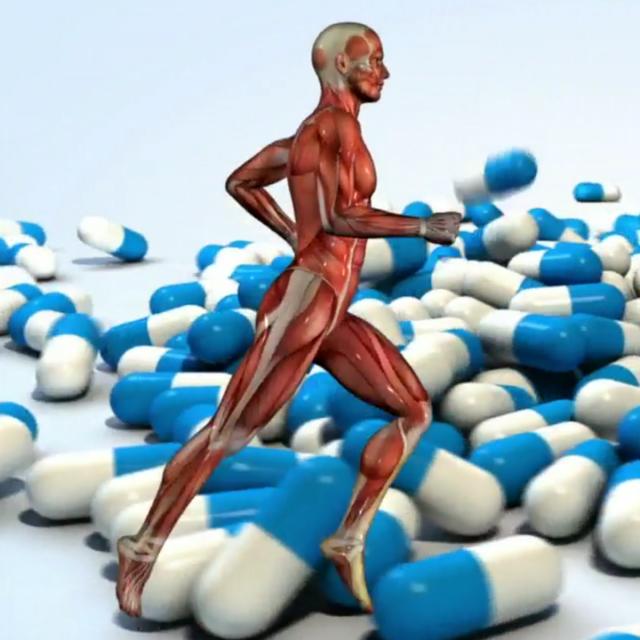
The objective of this course is to encourage a critical understanding of doping. To achieve this goal, this course will rely on a multidisciplinary approach that allow you to see how different disciplines get into a single object, in different perspectives and in often complementary ways. This approach will also allow us to appreciate the complexity of a subject like doping. Doping in sports is a complex practice whose definition and identification is the result of socially and historically constructed norms. This course offers to shed light on the processes that led to the use and prohibition of doping substances.

Jun 8th 2026
4 Weeks
Health Care IT: Challenges and Opportunities (Coursera) Coursera
Icahn School of Medicine at Mount Sinai

Health Care IT: Challenges and Opportunities (Coursera)

A strong argument can be made that the health care field is one of the most information-intensive sectors in the U.S. economy and avoidance of the rapid advances in information technology is no longer an option. Consequently, the study of health care information technology and systems has become central to health care delivery effectiveness. This course covers the modern application of information technology that is critical to supporting the vision and operational knowledge of the health care leaders in managing the health care organization.

Jun 8th 2026
5-12 Weeks
Health Across the Gender Spectrum (Coursera) Coursera
Stanford University

Health Across the Gender Spectrum (Coursera)

This course offers an intimate, story-based introduction to the experiences of six transgender children and their families. Through illustrated stories and short teaching videos, learners will gain a better understanding of gender identity and the gender spectrum. Stanford physicians, K-12 educators, and transgender faculty members offer practical tips for parents, teachers, healthcare providers and anyone who wants to help create a more gender-expansive environment - one in which all people can live authentically. As a global community of unique individuals, we can begin to build a world that is ready to nurture and love each and every child.

Jun 8th 2026
3 Weeks
Introduction to Reproduction (Coursera) Coursera
Northwestern University

Introduction to Reproduction (Coursera)

Do you have questions about sex hormones or menstrual cycles? This is a crash-course in human reproductive health through fact and biology-based information on a variety of topics. "Sex 101" will cover reproductive anatomy, key biological changes during puberty, sexual biology and contraceptive methods, reproductive disorders, and a special introduction to the exciting field of Oncofertility. Specific lecture titles are as follows: 1) Reproductive Anatomy & Hormones, 2) Menstrual Cycle, Oocyte Maturation, & Sperm Activation, 3) Sexual Biology, Fertilization, & Contraception, and 4) Reproductive Health & Disorders.

Jun 8th 2026
4 Weeks
Introduction to the Biology of Cancer (Coursera) Coursera
Johns Hopkins University

Introduction to the Biology of Cancer (Coursera)

Over 500,000 people in the United States and over 8 million people worldwide are dying every year from cancer. As people live longer, the incidence of cancer is rising worldwide and the disease is expected to strike over 20 million people annually by 2030. This open course is designed for people who would like to develop an understanding of cancer and how it is prevented, diagnosed, and treated.

Jun 8th 2026
5-12 Weeks
Positive Psychology Specialization Project: Design Your Life for Well-hebeing (Coursera) Coursera
University of Pennsylvania

Positive Psychology Specialization Project: Design Your Life for Well-hebeing (Coursera)

You are encouraged to take the first four courses of the Foundations of Positive Psychology Specialization before starting this course and completing the Specialization Project. This course, taught by Dr. Martin E.P. Seligman brings all the key concepts from the first four courses to practice as you develop and test a new positive intervention for an audience of your choice.

Jun 8th 2026
4 Weeks
Water Supply and Sanitation Policy in Developing Countries Part 1: Understanding Complex Problems (Coursera) Coursera
University of Manchester

Water Supply and Sanitation Policy in Developing Countries Part 1: Understanding Complex Problems (Coursera)

Our course explores what can be done to solve the complex problem that half a billion people worldwide do not have improved water supplies and two billion do not have improved sanitation. We look forward to you joining us. We want to help you develop the skills you need to address this major global challenge of the 21st century.

Jun 8th 2026
5-12 Weeks
Genomics: Decoding the Universal Language of Life (Coursera) Coursera
University of Illinois at Urbana-Champaign

Genomics: Decoding the Universal Language of Life (Coursera)

What is a genome? A genome contains all of the information that a cell needs to develop, function, and reproduce itself, and all the information needed for those cells to come together to form a person, plant, or animal. Genomes contain an organism’s complete set of genes, and also the even tinier genetic structures that help regulate when and how those genes are used. The ability to regrow a torn ligament, the clues that might predict the onset of mental illness, the nutritional potential of crops, and even the history of life itself, are all encoded in genomes. By taking this course, you will discover how scientists are deciphering the language of genomes to learn how to develop sustainable food and fuel supplies, improve disease treatment and prevention, and protect our environment.

Jun 8th 2026
5-12 Weeks