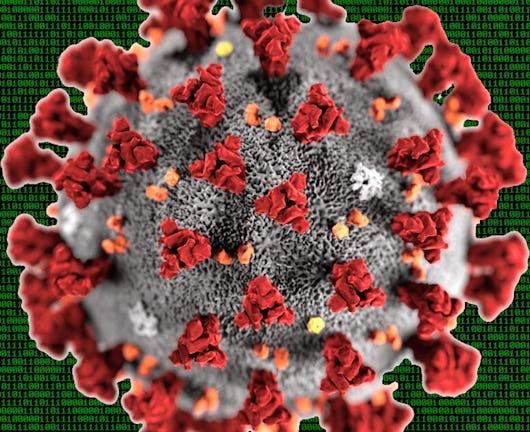
Hacking COVID-19 — Course 5: Tracing SARS-CoV-2's Evolution (Coursera)

Hacking COVID-19 — Course 5: Tracing SARS-CoV-2's Evolution (Coursera)

INTROIn this course, you will follow in the footsteps of the bioinformaticians investigating the COVID-19 outbreak by tracing the evolution of SARS-CoV-2. Whether you’re new to the world of computational biology, or you’re a bioinformatics expert seeking to learn about its applications in the COVID-19 pandemic, or somewhere in between, this course is for you! As you go through this journey, we will introduce and explain genomic concepts and give you many opportunities to practice your skills, and we will provide a series of problems with gradually increasing complexity.

Class Deals by MOOC List - Click here and see Coursera's Active Discounts, Deals, and Promo Codes.

This fifth course will discuss the "Italy First" hypothesis of COVID-19 origins, and it will cover bioinformatics methods for rooting and dating a phylogenetic tree inferred from SARS-CoV-2 genome sequences.
This course is part of the Applied Bioinformatics Specialization.

Syllabus

Week 1
In Chapter 7, we will discuss how we can use rooted and dated phylogenetic trees to study the emergence of a virus, with the origins of COVID-19 as our primary inspiration, but with a real case study about HIV transmission as our focus.

Week 2
In Chapter 8, we will perform multiple sequence alignment, phylogenetic inference, tree rooting, and tree dating to investigate the "Italy First" hypothesis of COVID-19 origins.
Go to Class
MOOC List is learner-supported. When you buy through links on our site, we may earn an affiliate commission.

Related Courses

Reflections from 40 Years Fighting International Epidemics (Coursera) Coursera
Dartmouth College

Reflections from 40 Years Fighting International Epidemics (Coursera)

Reflections on patients, policies, pan-epidemics, prose and medical humanities from a 40-year career fighting epidemics around the world by an infectious disease public health physician. Examples include HIV/AIDS, Anthrax, SARS, MERS, H5N1 and H1N1 influenza, Nipah, Ebola (with MSF 2014), Zika, Plague (with WHO 2017) and COVID-19. Working side-by-side with international colleagues to provide hands-on patient care and to share stories is an expression of medical humanities.

Aug 3rd 2026
5-12 Weeks
Bioinformatic Methods I (Coursera) Coursera
University of Toronto

Bioinformatic Methods I (Coursera)

Large-scale biology projects such as the sequencing of the human genome and gene expression surveys using RNA-seq, microarrays and other technologies have created a wealth of data for biologists. However, the challenge facing scientists is analyzing and even accessing these data to extract useful information pertaining to the system being studied. This course focuses on employing existing bioinformatic resources – mainly web-based programs and databases – to access the wealth of data to answer questions relevant to the average biologist, and is highly hands-on.

Jul 27th 2026
5-12 Weeks
Genomic Data Science and Clustering (Bioinformatics V) (Coursera) Coursera
University of California, San Diego

Genomic Data Science and Clustering (Bioinformatics V) (Coursera)

How do we infer which genes orchestrate various processes in the cell? How did humans migrate out of Africa and spread around the world? In this class, we will see that these two seemingly different questions can be addressed using similar algorithmic and machine learning techniques arising from the general problem of dividing data points into distinct clusters.

Jul 27th 2026
3 Weeks
Rastreamento de contato da COVID-19 (Coursera) Coursera
Johns Hopkins University

Rastreamento de contato da COVID-19 (Coursera)

A crise da COVID-19 criou uma necessidade sem precedentes de rastreamento de contato em todo o país, exigindo que milhares de pessoas aprendessem rapidamente as principais habilidades. As qualificações para os cargos de rastreamento de contato diferem em todo o país e no mundo, com alguns novos cargos abertos a indivíduos com diploma de ensino médio ou equivalente.

Jul 27th 2026
1 Week
Introduction to Genomic Technologies (Coursera) Coursera
Johns Hopkins University

Introduction to Genomic Technologies (Coursera)

This course introduces you to the basic biology of modern genomics and the experimental tools that we use to measure it. We'll introduce the Central Dogma of Molecular Biology and cover how next-generation sequencing can be used to measure DNA, RNA, and epigenetic patterns. You'll also get an introduction to the key concepts in computing and data science that you'll need to understand how data from next-generation sequencing experiments are generated and analyzed.

Jul 20th 2026
4 Weeks
Hacking COVID-19: Metabolic Pathway Analysis Yields SARS-CoV-2 Drug Targets (Coursera) Coursera
University of California, San Diego

Hacking COVID-19: Metabolic Pathway Analysis Yields SARS-CoV-2 Drug Targets (Coursera)

Pathway Bioinformatics is a subfield of Bioinformatics that is concerned with computationally deriving functional insights from genomic data through analysis of molecular networks. This course will present principles and techniques from Pathway Bioinformatics, and will apply these methodologies to the search for drug targets for SARS-CoV-2.

Aug 10th 2026
1 Week
Genetics and Society: A Course for Educators (Coursera) Coursera
American Museum of Natural History

Genetics and Society: A Course for Educators (Coursera)

How have advances in genetics affected society? What do we need to know to make ethical decisions about genetic technologies? This course includes the study of cloning, genetic enhancement, and ownership of genetic information. Course participants will acquire the tools to explore the ethics of modern genetics and learn how to integrate these issues into their classrooms.

Jul 27th 2026
4 Weeks
Comparing Genes, Proteins, and Genomes (Bioinformatics III) (Coursera) Coursera
University of California, San Diego

Comparing Genes, Proteins, and Genomes (Bioinformatics III) (Coursera)

Once we have sequenced genomes in the previous course, we would like to compare them to determine how species have evolved and what makes them different. In the first half of the course, we will compare two short biological sequences, such as genes (i.e., short sequences of DNA) or proteins. We will encounter a powerful algorithmic tool called dynamic programming that will help us determine the number of mutations that have separated the two genes/proteins.

Jul 20th 2026
5-12 Weeks
Genomics: Decoding the Universal Language of Life (Coursera) Coursera
University of Illinois at Urbana-Champaign

Genomics: Decoding the Universal Language of Life (Coursera)

What is a genome? A genome contains all of the information that a cell needs to develop, function, and reproduce itself, and all the information needed for those cells to come together to form a person, plant, or animal. Genomes contain an organism’s complete set of genes, and also the even tinier genetic structures that help regulate when and how those genes are used. The ability to regrow a torn ligament, the clues that might predict the onset of mental illness, the nutritional potential of crops, and even the history of life itself, are all encoded in genomes. By taking this course, you will discover how scientists are deciphering the language of genomes to learn how to develop sustainable food and fuel supplies, improve disease treatment and prevention, and protect our environment.

Aug 3rd 2026
5-12 Weeks
Introduction to Digital health (Coursera) Coursera
Imperial College London

Introduction to Digital health (Coursera)

This course introduces the field of digital health and the key concepts and definitions in this emerging field. The key topics include Learning Health Systems and Electronic Health Records and various types of digital health technologies to include mobile applications, wearable technologies, health information systems, telehealth, telemedicine, machine learning, artificial intelligence and big data. These technologies are assessed in terms of the key opportunities and challenges to their use and the evidence of their effectiveness in the field of digital health in relation to public health and healthcare globally. The use and application of digital health for COVID-19 forms a case study demonstrating the use of different types of digital health technologies to address key aspects of the response to the virus globally.

Jul 27th 2026
4 Weeks
Введение в биоинформатику (Introduction to Bioinformatics) (Coursera) Coursera
Saint Petersburg State University

Введение в биоинформатику (Introduction to Bioinformatics) (Coursera)

Курс «Введение в биоинформатику» адресован тем, кто хочет получить расширенное представление о том, что такое биоинформатика и как она помогает биологам и медикам в их работе. The course is aimed at those who would like to have a better idea of what bioinformatics is and how it helps biologists and medical scientists in research and clinical work.

Jul 27th 2026
5-12 Weeks
Finding Mutations in DNA and Proteins (Bioinformatics VI) (Coursera) Coursera
University of California, San Diego

Finding Mutations in DNA and Proteins (Bioinformatics VI) (Coursera)

In previous courses in the Specialization, we have discussed how to sequence and compare genomes. This course will cover advanced topics in finding mutations lurking within DNA and proteins. In the first half of the course, we would like to ask how an individual's genome differs from the "reference genome" of the species.

Jul 20th 2026
5-12 Weeks