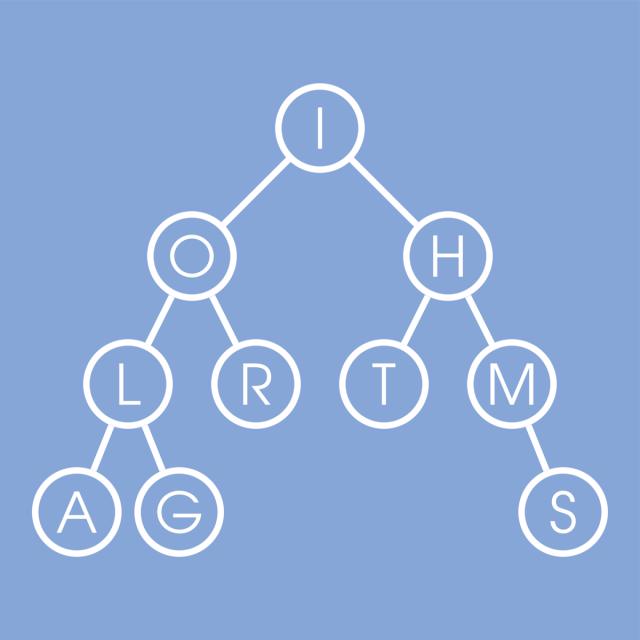
Genome Assembly Programming Challenge (Coursera)

Genome Assembly Programming Challenge (Coursera)

In Spring 2011, thousands of people in Germany were hospitalized with a deadly disease that started as food poisoning with bloody diarrhea and often led to kidney failure. It was the beginning of the deadliest outbreak in recent history, caused by a mysterious bacterial strain that we will refer to as E. coli X. Soon, German officials linked the outbreak to a restaurant in Lübeck, where nearly 20% of the patrons had developed bloody diarrhea in a single week. At this point, biologists knew that they were facing a previously unknown pathogen and that traditional methods would not suffice – computational biologists would be needed to assemble and analyze the genome of the newly emerged pathogen.

Class Deals by MOOC List - Click here and see Coursera's Active Discounts, Deals, and Promo Codes.

To investigate the evolutionary origin and pathogenic potential of the outbreak strain, researchers started a crowdsourced research program. They released bacterial DNA sequencing data from one of a patient, which elicited a burst of analyses carried out by computational biologists on four continents.
The 2011 German outbreak represented an early example of epidemiologists collaborating with computational biologists to stop an outbreak. In this Genome Assembly Programming Challenge, you will follow in the footsteps of the bioinformaticians investigating the outbreak by developing a program to assemble the genome of the E. coli X from millions of overlapping substrings of the E.coli X genome.
Course 6 of 6 in the Data Structures and Algorithms Specialization

Syllabus

WEEK 1
The 2011 European E. coli Outbreak
In April 2011, hundreds of people in Germany were hospitalized with a deadly disease that often started as food poisoning with bloody diarrhea. It was the beginning of the deadliest outbreak in recent history, caused by a mysterious bacterial strain that we will refer to as E. coli X. Within a few months, the outbreak had infected thousands and killed 53 people. To prevent the further spread of the outbreak, computational biologists all over the world had to answer the question “What is the genome sequence of E. coli X?” in order to figure out what new genes it acquired to become pathogenic. The 2011 German outbreak represented an early example of epidemiologists collaborating with computational biologists to stop an outbreak. In this Genome Assembly Programming Challenge, you will follow in the footsteps of the bioinformaticians investigating the outbreak by developing a program to assemble the genome of the deadly E. coli X strain. However, before you embark on building a program for assembling the E. coli X strain, we have to explain some genomic concepts and warm you up by having you solve a simpler problem of assembling a small virus.

WEEK 2
Assembling Genomes Using de Bruijn Graphs
DNA sequencing approach that led to assembly of a small virus in 1977 went through a series of transformations that contributed to the emergence of personalized medicine a few years ago. By the late 1980s, biologists were routinely sequencing viral genomes containing hundreds of thousands of nucleotides, but the idea of sequencing a bacterial (let alone the human) genome containing millions (or even billions) of nucleotides remained preposterous and would cost billions of dollars. In 1988, three biologists (independently and simultaneously!) came up with an idea to reduce sequencing cost and proposed the futuristic and at the time completely implausible method of DNA arrays. None of these three biologists could have possibly imagined that the implications of his own experimental research would eventually bring him face-to-face with challenging algorithmic problems. In this module you will learn about the algorithmic challenge of DNA sequencing using information about short k-mers provided by DNA arrays. You will also travel to the 18the century to learn about the Bridges of Konigsberg and solve a related problem of assembling a jigsaw puzzle!

WEEK 3
Genome Assembly Faces Real Sequencing Data
Our discussion of genome assembly has thus far relied upon various assumptions. In this module, we will face practical challenges introduced by quirks in modern sequencing technologies and discuss some algorithmic techniques that have been devised to address these challenges. Afterwards, you will assemble the smallest bacterial genome that lives symbiotically inside leafhoppers. Its sheltered life has allowed it to reduce its genome to only about 112,091 nucleotides and 137 genes. And afterwards, you will be ready to assemble the E. coli X genome!
Go to Class
MOOC List is learner-supported. When you buy through links on our site, we may earn an affiliate commission.

Related Courses

Creative Programming for Digital Media & Mobile Apps (Coursera) Coursera
University of London,Goldsmiths, University of London

Creative Programming for Digital Media & Mobile Apps (Coursera)

This course is for anyone who would like to apply their technical skills to creative work ranging from video games to art installations to interactive music, and also for artists who would like to use programming in their artistic practice. This course will teach you how to develop and apply programming skills to creative work. This is an important skill within the development of creative mobile applications, digital music and video games. It will teach the technical skills needed to write software that make use of images, audio and graphics, and will concentrate on the application of these skills to creative projects. Additional resources will be provided for students with no programming background.

Jun 22nd 2026
5-12 Weeks
Data Engineering with Rust (Coursera) Coursera
Duke University

Data Engineering with Rust (Coursera)

Are you a data engineer, software developer, or a tech enthusiast with a basic understanding of Rust, seeking to enhance your skills and dive deep into the realm of data engineering with Rust? Or are you a professional from another programming language background, aiming to explore the efficiency, safety, and concurrency features of Rust for data engineering tasks? If so, this course is designed for you.

Jun 25th 2026
4 Weeks
Functional Programming Principles in Scala (Coursera) Coursera
École Polytechnique Fédérale de Lausanne

Functional Programming Principles in Scala (Coursera)

Functional programming is becoming increasingly widespread in industry. This trend is driven by the adoption of Scala as the main programming language for many applications. Scala fuses functional and object-oriented programming in a practical package. It interoperates seamlessly with both Java and Javascript. Scala is the implementation language of many important frameworks, including Apache Spark, Kafka, and Akka. It provides the core infrastructure for sites such as Twitter, Tumblr and also Coursera.

Jun 22nd 2026
5-12 Weeks
Introduction to Genomic Technologies (Coursera) Coursera
Johns Hopkins University

Introduction to Genomic Technologies (Coursera)

This course introduces you to the basic biology of modern genomics and the experimental tools that we use to measure it. We'll introduce the Central Dogma of Molecular Biology and cover how next-generation sequencing can be used to measure DNA, RNA, and epigenetic patterns. You'll also get an introduction to the key concepts in computing and data science that you'll need to understand how data from next-generation sequencing experiments are generated and analyzed.

Jun 22nd 2026
4 Weeks
Bioinformatics: Introduction and Methods 生物信息学: 导论与方法 (Coursera) Coursera
Peking University

Bioinformatics: Introduction and Methods 生物信息学: 导论与方法 (Coursera)

A big welcome to “Bioinformatics: Introduction and Methods” from Peking University! In this MOOC you will become familiar with the concepts and computational methods in the exciting interdisciplinary field of bioinformatics and their applications in biology, the knowledge and skills in bioinformatics you acquired will help you in your future study and research.

Jun 22nd 2026
13-24 Weeks
Interactivity with JavaScript (Coursera) Coursera
University of Michigan

Interactivity with JavaScript (Coursera)

If you want to take your website to the next level, the ability to incorporate interactivity is a must. But adding some of these types of capabilities requires a stronger programming language than HTML5 or CSS3, and JavaScript can provide just what you need. With just a basic understanding of the language, you can create a page that will react to common events such as page loads, mouse clicks & movements, and even keyboard input.

Jun 22nd 2026
4 Weeks
How To Create a Website in a Weekend! (Project-Centered Course) (Coursera) Coursera
The State University of New York

How To Create a Website in a Weekend! (Project-Centered Course) (Coursera)

In this project-centered course*, you’ll design, build, and publish a basic website that incorporates text, sound, images, hyperlinks, plug-ins, and social media interactivity. We’ll provide you with step-by-step instructions, exercises, tips, and tools that enable you to set up a domain name, create an attractive layout for your pages, organize your content properly, ensure that your site functions well across different operating systems and on mobile devices, keep your site safe, and finally, let people know your site is online. We’ll even show you how to track your visitors.

Jun 22nd 2026
3 Weeks
Interfacing with the Raspberry Pi (Coursera) Coursera
University of California, Irvine

Interfacing with the Raspberry Pi (Coursera)

The Raspberry Pi uses a variety of input/output devices based on protocols such as HDMI, USB, and Ethernet to communicate with the outside world. In this class you will learn how to use these protocols with other external devices (sensors, motors, GPS, orientation, LCD screens etc.) to get your IoT device to interact with the real world.

Jun 22nd 2026
4 Weeks
Introduction to HTML5 (Coursera) Coursera
University of Michigan

Introduction to HTML5 (Coursera)

Thanks to a growing number of software programs, it seems as if anyone can make a webpage. But what if you actually want to understand how the page was created? There are great textbooks and online resources for learning web design, but most of those resources require some background knowledge. This course is designed to help the novice who wants to gain confidence and knowledge. We will explore the theory (what actually happens when you click on a link on a webpage?), the practical (what do I need to know to make my own page?), and the overlooked (I have a page, what do I do now?).

Jun 22nd 2026
3 Weeks
Approximation Algorithms (Coursera) Coursera
EIT Digital

Approximation Algorithms (Coursera)

Many real-world algorithmic problems cannot be solved efficiently using traditional algorithmic tools, for example because the problems are NP-hard. The goal of this course is to become familiar with important algorithmic concepts and techniques needed to effectively deal with such problems. These techniques apply when we don't require the optimal solution to certain problems, but an approximation that is close to the optimal solution. We will see how to efficiently find such approximations.

Jun 26th 2026
4 Weeks