Fundamentals of the Chinese character writing. Part 2 (Coursera)

Fundamentals of the Chinese character writing. Part 2 (Coursera)

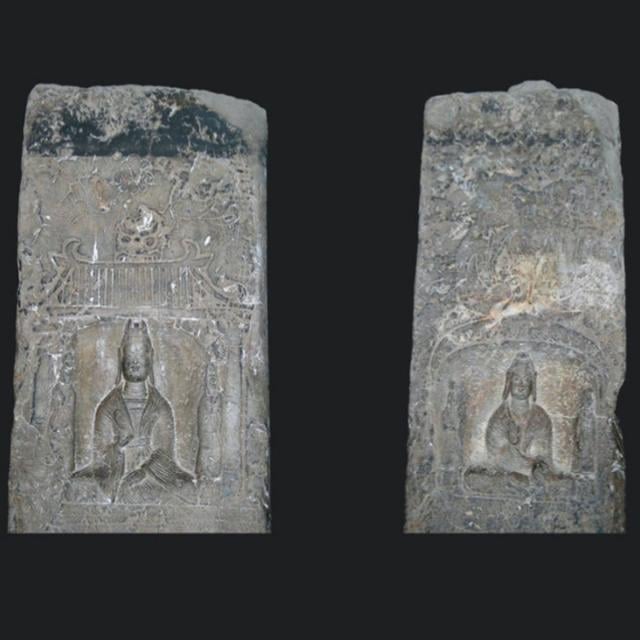
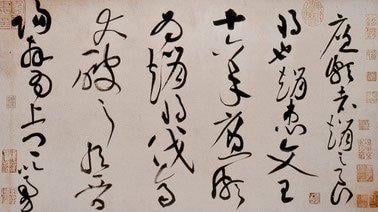
If you just finished the first course, you will definitely love the second one! The course gives a concise survey of the Chinese character-writing tradition. You’ll master the fundamentals of the Chinese writing aesthetics; maintain the main techniques, gain more knowledge about writing tools and materials.

Class Deals by MOOC List - Click here and see Coursera's Active Discounts, Deals, and Promo Codes.

You’ll get the explanation of the 214 Chinese character radicals (the first part in Part 1 of the Course, the second — in Part 2) and can practice their writing, using the animated and static samples given in videos and on pages. Elaborate tests are going to help you regularizing the new information and filling the lacunae.
Welcome to the mysterious world of the Chinese characters!

Go to Class
MOOC List is learner-supported. When you buy through links on our site, we may earn an affiliate commission.

Related Courses

Fundamentals of the Chinese character writing (Part 1) (Coursera) Coursera
Saint Petersburg State University

Fundamentals of the Chinese character writing (Part 1) (Coursera)

The course gives a concise survey of the Chinese character-writing tradition. You’ll master the fundamentals of the Chinese writing aesthetics; learn about the main phases of the characters’ evolution and about the great calligraphers of the past. You are going to distinguish 6 types of the Chinese written symbols, become skilled in history of Chinese scripts and possibility of their modern usage.

Aug 8th 2022
5-12 Weeks
Cosmopolitan Tang: Aristocratic Culture in China (edX) EdX
HarvardX,Harvard University

Cosmopolitan Tang: Aristocratic Culture in China (edX)

Explore the reunification of China under the Tang with a focus on aristocratic culture — from poetry to calligraphy to literature. By the Tang period, China was divided into northern and southern dynasties with different rulers and political systems. The north was conquered by relatively unsophisticated barbarians, but in the south, the aristocratic families established a refined appreciation of writing and literature.

Self Paced
Self-Paced
Religious Transformation in Early China: the Period of Division (Coursera) Coursera
The Chinese University of Hong Kong

Religious Transformation in Early China: the Period of Division (Coursera)

This sequence of four courses will propose a multi-disciplinary approach to the study of Chinese cultural history conceived of as a succession of modes of rationality (philosophical, bureaucratic, and economic). The focus will be on the moments of paradigm shift from one mode of rationality to another. For each of these moments, cultural facts and artifacts—thought, literature, ritual—will be examined in relationship to changing social, political, and economic systems.

Nov 2nd 2026
5-12 Weeks
Literati China: Examinations, Neo-Confucianism, and Later Imperial China (edX) EdX
HarvardX,Harvard University

Literati China: Examinations, Neo-Confucianism, and Later Imperial China (edX)

Explore China’s imperial period, with a focus on the Song dynasty and the role of the exam system in government. Fundamental changes in government, the economy, and broader society took place between the 8th and 11th centuries in China. The state aristocracy gave way to new literati elite: educated men who sought to enter government through competitive examinations. A new kind of Confucianism also took shape, which prized the moral autonomy of individuals. With this, the later imperial period of China’s history begins.

Self Paced
Self-Paced
Structuring Values in Modern China (Coursera) Coursera
The Chinese University of Hong Kong

Structuring Values in Modern China (Coursera)

This sequence of four courses will propose a multi-disciplinary approach to the study of Chinese cultural history conceived of as a succession of modes of rationality (philosophical, bureaucratic, and economic). The focus will be on the moments of paradigm shift from one mode of rationality to another. For each of these moments, cultural facts and artifacts—thought, literature, ritual—will be examined in relationship to changing social, political, and economic systems.

Nov 9th 2026
5-12 Weeks
International Communication and East Asian Affairs (2) (Coursera) Coursera
National Taiwan University

International Communication and East Asian Affairs (2) (Coursera)

Law

"International Communication and East Asian Affairs: Current Political and Economic Conditions" is an online course provided by the Graduate Institute of Journalism, National Taiwan University, and Radio Taiwan International. This course delves into East Asian affairs, particularly focusing on China and Taiwan. Topics covered include China's Third Revolution and its implications for the Sino-American strategic competition, the political economy of China, state-society relations within China, and an exploration of recent youth politics in Taiwan.

Nov 16th 2026
5-12 Weeks
Selling to Chinese Consumers (Coursera) Coursera
The Chinese University of Hong Kong

Selling to Chinese Consumers (Coursera)

This course is designed to help learners sell their products, goods and services to Chinese consumers. To achieve this goal, the course will use evidence-based research in psychology, economics, legal studies and marketing to help learners understand the historical, economic and legal contexts of doing business in China and the behavioral characteristics of Chinese consumers. The course will cover topics in Chinese and global marketing, Chinese consumers, institutional and cultural influence on consumer motivation and behaviors in Chinese markets, and brand management in China.

Oct 26th 2026
4 Weeks
More Chinese for Beginners (Coursera) Coursera
Peking University

More Chinese for Beginners (Coursera)

This is an advanced course for Chinese for beginners. Learners will expand vocabularies about personal information, daily life, food and drink, healthy, and expressions about greeting, suggestion, agreement, comparison, complaint, prohibition, experience, plan, recommendation, etc. Learners can improve their listening and speaking and know much more about Chinese social cultures.

Oct 26th 2026
5-12 Weeks
Mandarin Chinese 3: Chinese for Beginners (Coursera) Coursera
Shanghai Jiao Tong University

Mandarin Chinese 3: Chinese for Beginners (Coursera)

Mandarin Chinese 3: Chinese for beginners is a beginner's course of Mandarin Chinese in continuation of Mandarin Chinese 2: Chinese for beginners. It uses lectures, short plays, interactive exercises and cultural tips to help learners build a fundamental capability of oral Chinese in real-life situations. At the end of the 5-lesson course, the learners will reach the following proficiency: 500 words; 60 language points; handling 15 real-life situations.

Nov 2nd 2026
5-12 Weeks
Social Science Approaches to the Study of Chinese Society Part 2 (Coursera) Coursera
The Hong Kong University of Science and Technology - HKUST

Social Science Approaches to the Study of Chinese Society Part 2 (Coursera)

This course is intended as a first step for learners who seek to become producers of social science research. It is organized as an introduction to the design and execution of a research study. It introduces the key elements of a proposal for a research study, and explains the role of each. It reviews the major types of qualitative and quantitative data used in social science research, and then introduces some of the most important sources of existing data available freely or by application, worldwide and for China.

Nov 16th 2026
5-12 Weeks
Health Concepts in Chinese Medicine (Coursera) Coursera
The Hong Kong University of Science and Technology - HKUST

Health Concepts in Chinese Medicine (Coursera)

Chinese Medicine and Modern Medicine are two distinct medical systems, yet they both aim at the prevention and treatment of human diseases. With this in mind, we should understand the practice of Chinese Medicine in the context of Modern Medicine. In this course, we explore the basic theories underlying the practice of Chinese Medicine, compare and contrast the use of Chinese Medicine and Modern Medicine in Preventive Health, and discuss how to restore a healthy condition and understand the pharmacological basis of different types of Chinese tonifying herbs.

Oct 26th 2026
5-12 Weeks