Fundamental Human Physiology in Sports Medicine (Coursera)

Fundamental Human Physiology in Sports Medicine (Coursera)

This is a course on fundamental sports-related musculoskeletal anatomy which provides students with a basic understanding of the musculoskeletal structure and function of different body regions. Topics include an overview of the musculoskeletal system, spine, upper limb, and lower limb.

Class Deals by MOOC List - Click here and see Coursera's Active Discounts, Deals, and Promo Codes.

Syllabus

WEEK 1
Homeostasis
This module will be focused on Homeostasis which includes the levels of organization in the human body, regulations of homeostasis, cellular transport mechanism, and solute and water transport. Students will be able to explain the concept of homeostasis after finishing this module.

WEEK 2
Neuromusculoskeletal System
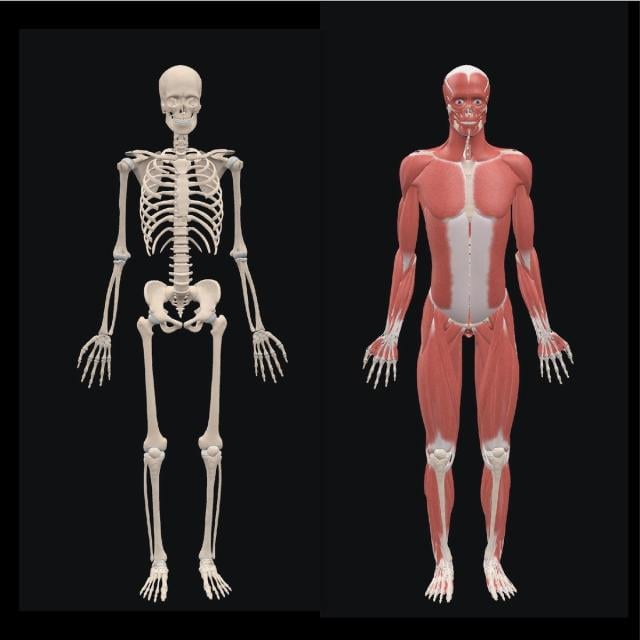
This module will focus on the Neuromusculoskeletal System, which includes an introduction to bone, muscle, tendon, and nerve. Students will be able to explain the structure and functional organization of the human neuromusculoskeletal system and its subdivisions after finishing this module.

WEEK 3
Cardiovascular System
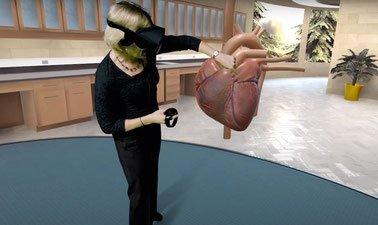
Students will be able to develop a comprehensive understanding of cardiovascular physiology which include the muscular nature of the heart as a fluid pump, and the blood vessels as elements for blood flow and gases exchange.

WEEK 4
Respiratory System
This module will focus on the Respiratory System, which includes the basic anatomy, breathing muscles, respiratory mechanics, physiology of the respiratory system, effects of exercise on the respiratory system, and etiology of hypoxia and common lung diseases. Students will be able to describe the basic anatomy and functions of the respiratory system after finishing this module.

WEEK 5
Endocrine System
This module will focus on the Endocrine System, after finishing this module, students will be able to know the physiological relationships between endocrine organs, distributed endocrine tissues, and their target tissues.
Go to Class
MOOC List is learner-supported. When you buy through links on our site, we may earn an affiliate commission.

Related Courses

Anatomy: Gastrointestinal, Reproductive and Endocrine Systems (Coursera) Coursera
University of Michigan

Anatomy: Gastrointestinal, Reproductive and Endocrine Systems (Coursera)

In this anatomy course, part of the Anatomy Specialization, you’ll learn about the various digestive, endocrine, and reproductive organs, their functions, and pathways of nerves and blood vessels serving these organs. Clinical correlations and vignettes will be used to highlight the importance of these anatomical structures and their relationships. Images and videos from cadaveric and artistic materials will be used to illustrate these concepts.

Jul 27th 2026
3 Weeks
Medical Terminology II (Coursera) Coursera
Rice University

Medical Terminology II (Coursera)

This is the second course of the Medical Terminology specialization. It builds on the basic concepts of medical terminology with the introduction of new roots, terms, and abbreviations specific to the endocrine system (hormones). The body's transportation and defense systems (cardiovascular, blood, and lymphatic) will also be covered as well as the respiratory system (lungs).

Jul 27th 2026
4 Weeks
Ergonomics in Design (edX) EdX
The Hong Kong University of Science and Technology - HKUST,HKUSTx

Ergonomics in Design (edX)

The course is designed to provide a basic understanding of ergonomics in design through the introduction of human anatomy, anthropometry, and modeling techniques with the aim of improving safety, productivity, comfort and health of people. Ergonomics is the application of scientific information about people in order to design products and systems so that they are safe, productive, comfortable and healthy for people to use.

Self Paced
Self-Paced
The Social Context of Mental Health and Illness (Coursera) Coursera
University of Toronto

The Social Context of Mental Health and Illness (Coursera)

Learn how social factors promote mental health, influence the onset and course of mental illness, and affect how mental illnesses are diagnosed and treated. This course explores how our understanding of mental health and illness has been influenced by social attitudes and social developments in North America and around the world. The course begins by situating our contemporary mental health practices in historical context, then looks at different aspects of mental health, mental illness and mental health services and their connections to what’s going on in our social environment.

Aug 17th 2026
5-12 Weeks
The Skin, Bones, and Muscles (Coursera) Coursera
MedCerts

The Skin, Bones, and Muscles (Coursera)

In this course on The Skin, Bones, and Muscles, you will learn about the wonderful diversity of the integumentary, skeletal, and muscular systems and the medical language that is used to describe these systems. Throughout each Lesson, the roots of terms are explained to help students understand how medical terminology works in healthcare and to increase their knowledge and understanding of the material discussed.

Jul 27th 2026
3 Weeks
The Heart, Blood, and Lungs (Coursera) Coursera
MedCerts

The Heart, Blood, and Lungs (Coursera)

In this course on The Heart, Blood, and Lungs, you will learn about the wonderful diversity of the cardiovascular, immune, and respiratory systems and the medical language that is used to describe these systems. Throughout each Lesson, the roots of terms are explained to help students understand how medical terminology works in healthcare and to increase their knowledge and understanding of the material discussed.

Jul 27th 2026
3 Weeks
Understanding the Brain: The Neurobiology of Everyday Life (Coursera) Coursera
University of Chicago

Understanding the Brain: The Neurobiology of Everyday Life (Coursera)

Learn how the nervous system produces behavior, how we use our brain every day, and how neuroscience can explain the common problems afflicting people today. We will study functional human neuroanatomy and neuronal communication, and then use this information to understand how we perceive the outside world, move our bodies voluntarily, stay alive, and play well with others.

Jul 27th 2026
5-12 Weeks