Medical Terminology II (Coursera)

Offered by Rice University,
Medical Terminology II (Coursera)

This is the second course of the Medical Terminology specialization. It builds on the basic concepts of medical terminology with the introduction of new roots, terms, and abbreviations specific to the endocrine system (hormones). The body's transportation and defense systems (cardiovascular, blood, and lymphatic) will also be covered as well as the respiratory system (lungs).

Class Deals by MOOC List - Click here and see Coursera's Active Discounts, Deals, and Promo Codes.

Course 2 of 3 in the Medical Terminology Specialization.

Syllabus

WEEK 1
Welcome to Medical Terminology Part II
This module is the introduction to the course that will cover hormones, blood, the heart, and the lungs.
Endocrine System
Welcome to the endocrine system module! This module will introduce you to medical terms related to glands and hormones. Following the SOAP note format, we will look at common complaints, tests, diagnoses, and treatments used in endocrinology. I hope you enjoy learning about medical terms related to the endocrine system.

WEEK 2
Blood and Lymphatic Systems
Welcome to the blood and lymphatic system module. This module will introduce you to medical terms related to blood cells and immunity. Following the SOAP note format, we will look at common complaints, tests, diagnoses, and treatments used in hematology and immunology. Let's get started learning more specific terms about the blood and lymphatic systems. Enjoy!

WEEK 3
Cardiovascular System
Welcome to perhaps the most well-known system module of the whole specialization: the cardiovascular system. This module will introduce you to medical terms related to the heart and blood vessels. Following the SOAP note format, we will look at common complaints, tests, diagnoses, and treatments used in cardiology. So let's jump right into the cardiovascular system. This module has "heart"!

WEEK 4
Respiratory System
Welcome to another well-known system module: the respiratory system. This module will introduce you to medical terms related to the lungs. Following the SOAP note format, we will look at common complaints, tests, diagnoses, and treatments used in pulmonology. Have fun working your way through the respiratory system module. And keep breathing. It will help.
Course II Final Assessments and Conclusion
Congratulations on making to the final assessment module of this course! The exam will focus on the new module materials from this course: the endocrine system, blood and lymphatic systems, cardiovascular system, and respiratory system. However, you still have to know all the basic rules, roots, prefixes, and suffixes from the beginning of the specialization since they apply to these systems as well. Learning a language is cumulative like that! I'm confident you've got this. So breathe and believe...

Go to Class
MOOC List is learner-supported. When you buy through links on our site, we may earn an affiliate commission.

Related Courses

Medical Terminology I (Coursera) Coursera
Rice University

Medical Terminology I (Coursera)

This course will discuss the importance of learning medical language as well as introduce basic word parts and concepts applied in medical terminology. We will also learn about common organization and terms seen in medical records before moving into system-specific terms for the integumentary system (skin), musculoskeletal system (muscles and bones), and urinary (kidneys).

Jun 1st 2026
4 Weeks
Cardiovascular & Respiratory Systems (edX) EdX
University of Queensland,UQx

Cardiovascular & Respiratory Systems (edX)

Gain insight into the complexities of the cardiovascular and respiratory systems, and how gases and nutrients are regulated in healthy humans. The human body is an amalgamation of specialised and complex systems. Normal, healthy body functions rely on a symphony of these systems, dynamically working in concert to keep us in a stable homeostatic state. This course begins by examining the unconscious regulation of body systems by the autonomic nervous system, helping us respond when homeostasis is challenged.

Self Paced
Self-Paced
Introduction to Particle Accelerators (NPAP MOOC) (Coursera) Coursera
Lund University

Introduction to Particle Accelerators (NPAP MOOC) (Coursera)

Welcome to the Nordic Particle Accelerator Program's (NPAP) Massive Open Online Courses and to the fascinating world of particle accelerators! Did you know that in the year of 2000 there were more than 15 000 particle accelerators in the world? Yet, today it has grown to more than 30 000 of them! A third of the particle accelerators are dedicated to medical applications, such as radio therapy, and a half are used for ion implantation in semiconductor devices.

Jun 8th 2026
5-12 Weeks
Causes of Human Disease: Understanding Cardiovascular Disease (FutureLearn) FutureLearn
University of Leeds

Causes of Human Disease: Understanding Cardiovascular Disease (FutureLearn)

Explore normal cardiovascular function and risk factors associated with heart attack, stroke and other cardiovascular diseases. Cardiovascular diseases are the leading global cause of death. On this course, you’ll learn how the cardiovascular system functions and understand common cardiovascular diseases like heart attack and stroke, as well as the risk factors associated with them.

Sep 23rd 2024
2 Weeks
Anatomy: Cardiovascular, Respiratory and Urinary Systems (Coursera) Coursera
University of Michigan

Anatomy: Cardiovascular, Respiratory and Urinary Systems (Coursera)

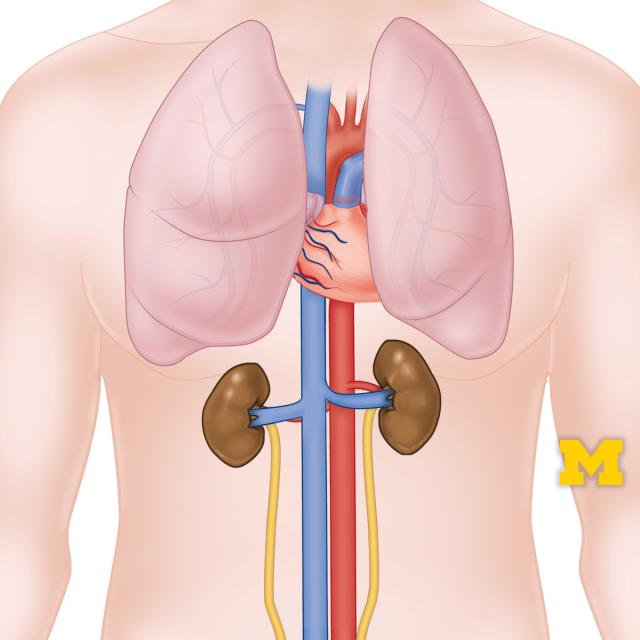
In this anatomy course, part of the Anatomy Specialization, you will explore the interactive relationships of the cardiovascular, respiratory and urinary systems, and the roles they play in your body. This course is a primer for the cardiovascular, respiratory, and urinary systems in which students learn the pertinent details of the structures and functions through a combination of lectures, videos, labeling activities and quizzes.

Jun 1st 2026
4 Weeks
Your Body Inside and Out: Using Exercise Physiology to Slow Aging (edX) EdX
Stanford University,StanfordOnline

Your Body Inside and Out: Using Exercise Physiology to Slow Aging (edX)

This online class will present the latest scientific information on the interaction between aging and physical activity. In an approachable style, you will learn how your physiology changes with age and how different types of movement can impact that trajectory of aging. Physical activity is a powerful medicine and you will learn how to harness its benefits to improve your health and wellness throughout the lifespan. Whether you are new to exercise or a life-long athlete, this class will open your eyes to the amazing systems within your body and help you strategize on activities that fit your goals for a healthy life.

No sessions available
5-12 Weeks
Understanding Medical Research: Your Facebook Friend is Wrong (Coursera) Coursera
Yale University

Understanding Medical Research: Your Facebook Friend is Wrong (Coursera)

How can you tell if the bold headlines seen on social media are truly touting the next big thing or if the article isn't worth the paper it's printed on? Understanding Medical Studies, will provide you with the tools and skills you need to critically interpret medical studies, and determine for yourself the difference between good and bad science. The course covers study-design, research methods, and statistical interpretation. It also delves into the dark side of medical research by covering fraud, biases, and common misinterpretations of data. Each lesson will highlight case-studies from real-world journal articles.

May 18th 2026
5-12 Weeks
Specialty Topics: Biology Across Disciplines (Coursera) Coursera
University of Colorado Boulder

Specialty Topics: Biology Across Disciplines (Coursera)

In this course, we will explore the applicability and relationship of biology to the arts, business, and psychology. First, we’ll discuss art as a foundational practice to biology and how biology as a science can explain how we interact with the arts, in particular, our experiences making and listening to music. Next, we will discuss the business of biology and how research is funded and the process of clinical trials and human subjects research.

Jun 8th 2026
5-12 Weeks
Anatomy: Cardiovascular, Urinary, and Respiratory Systems (edX) EdX
University of Michigan,MichiganX

Anatomy: Cardiovascular, Urinary, and Respiratory Systems (edX)

Learn the multifaceted structures and functions of the cardiovascular, urinary, and respiratory systems. This course is a primer for the cardiovascular, respiratory, and urinary systems in which students learn the pertinent details of the structures and functions through a combination of lectures, videos, labeling activities and quizzes.

Self Paced
Self-Paced