Anatomy & Physiology: Filtration and Reproduction (Coursera)

Offered by Rice University,
Anatomy & Physiology: Filtration and Reproduction (Coursera)

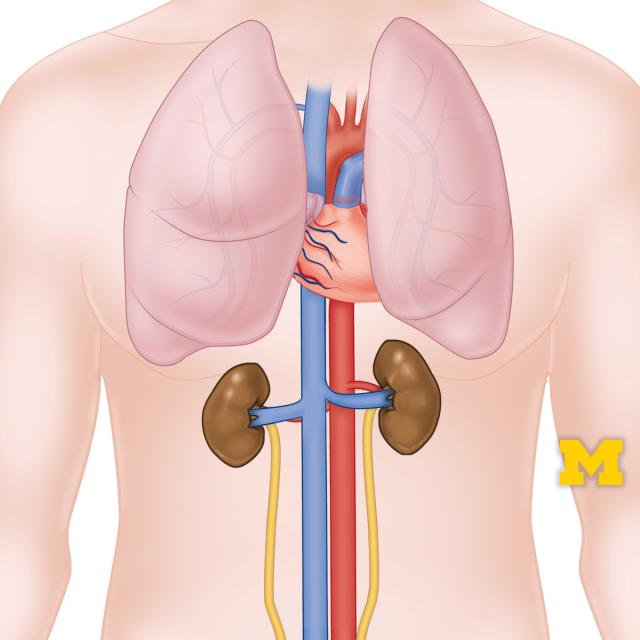
This course of the second A&P specialization concludes with a systems-based approach to human anatomy and physiology at the organ, organ system, and organism level with the major body systems related to blood filtration and continuity of life: the urinary and reproductive systems.

Class Deals by MOOC List - Click here and see Coursera's Active Discounts, Deals, and Promo Codes.

Course material will cover both the structure (anatomy) and function (physiology) of each system with direct application to human development and disease.
After completing this course, you will be able to:

  1. Identify the major parts of the urinary and reproductive systems;
  2. Describe normal human anatomy structure and function for the urinary and reproductive systems;
  3. Relate anatomical structure and function at the cellular, tissue, organ, and body system levels to clinical diagnoses and dysfunction of the urinary system; and
  4. Explain the process of typical human gestation and delivery.

This course is part of the Human Anatomy & Physiology II Specialization.

Syllabus

Welcome to Filtration & Reproduction
The Urinary System
The Reproductive System - Biological Male
The Reproductive System: Biological Female, Pregnancy, & Birth
Course Final Assessment & Summary

Go to Class
MOOC List is learner-supported. When you buy through links on our site, we may earn an affiliate commission.

Related Courses

Heart Physiology (Coursera) Coursera
Saint Petersburg State University

Heart Physiology (Coursera)

The program of the course "Heart Physiology" is compiled taking into account the state standard for teaching the basic course of physiology according to the undergraduate curriculum. An important feature of the course is the presentation of the material at different levels: a combination of molecular, cellular and systemic approaches in describing the functions of organs.

Jul 18th 2022
5-12 Weeks
Anatomy of the Upper and Lower Extremities (Coursera) Coursera
Yale University

Anatomy of the Upper and Lower Extremities (Coursera)

This course has two main parts, one for the lower extremity and the other for the upper extremity. We will show how the various systems that supply and organize the limb control its function. There are a set of introductory lectures which will allow more experienced students to refresh their knowledge of the limbs and a guide to those with less experience. These lectures will be followed by detailed dissections of the extremities emphasizing locomotion for the lower extremities and hand positioning and function for the upper extremities.

Jul 27th 2026
5-12 Weeks
Human Anatomy: Musculoskeletal Cases (edX) EdX
HarvardX,Harvard University

Human Anatomy: Musculoskeletal Cases (edX)

Learn the anatomy basic to understanding five musculoskeletal injuries commonly seen in primary care medicine and orthopedic clinical specialty practice. Follow hypothetical patients from injury to operating room. Human Anatomy: Musculoskeletal Cases invites students to join medical and basic science faculty at Harvard Medical School (HMS) to learn about musculoskeletal injuries commonly seen in clinical practice.

Self Paced
Self-Paced
Exercise Prescription for the Prevention and Treatment of Disease (FutureLearn) FutureLearn
Trinity College Dublin

Exercise Prescription for the Prevention and Treatment of Disease (FutureLearn)

Learn how physical exercise can help patients including those with cardiovascular disease, mental health problems and cancer. In the last few decades physical exercise has become well established as a tool to prevent and treat disease. Perceptions within the healthcare sector of exercise and its prescription as a treatment have changed dramatically in recent years.

Self Paced
2 Weeks
Essential Human Biology: Cells and Tissues (edX) EdX
University of Adelaide,AdelaideX

Essential Human Biology: Cells and Tissues (edX)

An introduction to the human body's most fundamental building blocks and their behaviours in health and disease. Are you preparing for a health-related career, or planning to study in the health sciences? Perhaps you're just keen to learn more about the wonders of the human body? Our bodies are amazing but complex biological machines. This course will provide you with an outstanding foundation of knowledge in human anatomy and physiology.

Self Paced
Self-Paced
The Heart, Blood, and Lungs (Coursera) Coursera
MedCerts

The Heart, Blood, and Lungs (Coursera)

In this course on The Heart, Blood, and Lungs, you will learn about the wonderful diversity of the cardiovascular, immune, and respiratory systems and the medical language that is used to describe these systems. Throughout each Lesson, the roots of terms are explained to help students understand how medical terminology works in healthcare and to increase their knowledge and understanding of the material discussed.

Jul 27th 2026
3 Weeks
Developing the SIR Model (Coursera) Coursera
Imperial College London

Developing the SIR Model (Coursera)

Compartmental modelling is a cornerstone of mathematical modelling of infectious diseases and this course will introduce some of the basic concepts in building compartmental models, including how to interpret and represent rates, durations and proportions. You'll learn to place the mathematics to one side and concentrate on gaining intuition into the behaviour of a simple epidemic, and be introduced to further basic concepts of infectious disease epidemiology, such as the basic reproduction number (R0) and its implications for infectious disease dynamics.

Jul 27th 2026
4 Weeks
Advanced Neurobiology I (Coursera) Coursera
Peking University

Advanced Neurobiology I (Coursera)

Hello everyone! Welcome to advanced neurobiology! Neuroscience is a wonderful branch of science on how our brain perceives the external world, how our brain thinks, how our brain responds to the outside of the world, and how during disease or aging the neuronal connections deteriorate. We’re trying to understand the molecular, cellular nature and the circuitry arrangement of how nervous system works.

Jul 27th 2026
5-12 Weeks
Biomedical Visualisation (Coursera) Coursera
University of Glasgow

Biomedical Visualisation (Coursera)

Visualisation is a rapidly progressive specialty in academia, research and industry, and becoming the future of science. With the advancement of digital technologies and their applications, biomedical visualisation is an evolving and popular field. With new techniques and technologies to image, process and analyse data related to the human body, and its biological processes, it is at the forefront of the digital revolution.

Jun 15th 2026
4 Weeks
Medical Terminology I (Coursera) Coursera
Rice University

Medical Terminology I (Coursera)

This course will discuss the importance of learning medical language as well as introduce basic word parts and concepts applied in medical terminology. We will also learn about common organization and terms seen in medical records before moving into system-specific terms for the integumentary system (skin), musculoskeletal system (muscles and bones), and urinary (kidneys).

Jul 27th 2026
4 Weeks