Forensic Science and Criminal Justice (FutureLearn)

Forensic Science and Criminal Justice (FutureLearn)

Learn how police use science in criminal investigations and its role in the criminal justice system with this free online course.

Class Deals by MOOC List - Click here and see FutureLearn's Active Discounts, Deals, and Promo Codes.

Over the past two decades, the criminal justice system has been dramatically affected by technological advances in scientific contributions to the law. The most influential developments have been in the area of DNA profiling, and its forensic applications for both identifying perpetrators and exonerating the innocent.
Although there have been some extraordinary victories for the forensic science community in recent years, there has also been scepticism about the infallibility of some forensic science practices, and the interpretation of physical evidence in the courtroom.
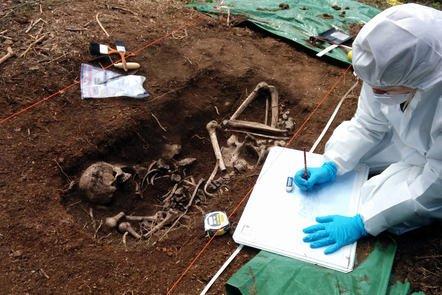
This free online course begins by introducing you to the historical context of forensic science and how science is used by the police during criminal investigations.
We will then explore some of the implications that these forensic techniques have on the criminal justice system, such as controversies surrounding biometric databases, the portrayal of forensic science in popular media (“the CSI effect”), and how forensic science is used in the courtroom.
Finally, we will consider what the future of forensic science looks like and where the discipline may be heading in the years to come.
Go to Class
MOOC List is learner-supported. When you buy through links on our site, we may earn an affiliate commission.

Related Courses

Introduction to International Criminal Law (Coursera) Coursera
Case Western Reserve University

Introduction to International Criminal Law (Coursera)

From the Nuremberg trial to the case against Saddam Hussein, from the prosecution of Al-Qaeda terrorists to the trial of Somali pirates – no area of law is as important to world peace and security as international criminal law. Taught by one of the world’s leading experts in the field, this course will educate students about the fundamentals of international criminal law and policy. We will explore the contours of international crimes such as genocide, war crimes, terrorism, and piracy. We will examine unique modes of international criminal liability and specialized defenses. And we will delve into the challenges of obtaining custody of the accused and maintaining control of the courtroom.

Jul 27th 2026
5-12 Weeks
How Does the Body Use DNA as a Blueprint? (FutureLearn) FutureLearn
University of Aberdeen

How Does the Body Use DNA as a Blueprint? (FutureLearn)

Get an introduction to the basics of molecular biology, and how DNA code works. Find out how the body repairs and regulates itself. Every part of the body is made according to a code that is carried in the body’s cells. This code is called DNA, and knowing how it works is fundamental to understanding how the body regulates itself throughout our lives.

Self Paced
3 Weeks
Decoding Forensics for Legal Professionals (FutureLearn) FutureLearn
Monash University,Project 39A

Decoding Forensics for Legal Professionals (FutureLearn)

Delve into forensic science and examine its limitations to better understand how to use forensics in criminal trials. Explore the basics of forensic pathology. Explore commonly relied on disciplines in forensics. Today, forensic evidence is integral to criminal investigations and trials. Therefore, it is important for legal professionals to have an understanding of the scientific foundations and limitations of different types of forensic evidence, in order to engage more meaningfully with such evidence.

Self Paced
5-12 Weeks
Forensic Engineering: Learning from Failures (edX) EdX
Delft University of Technology,DelftX

Forensic Engineering: Learning from Failures (edX)

Don’t let good failures go to waste! Identify the causes of failure and use this knowledge to enhance safety and improve performance. What do collapsed buildings, infected hospital patients, and crashed airplanes have in common? If you know the causes of these events and conditions, they can all be prevented. In this course, you will learn how to use the TU Delft mind-set to investigate the causes of such events so you can prevent them in the future.

Self Paced
Self-Paced
Genetics and Society: A Course for Educators (Coursera) Coursera
American Museum of Natural History

Genetics and Society: A Course for Educators (Coursera)

How have advances in genetics affected society? What do we need to know to make ethical decisions about genetic technologies? This course includes the study of cloning, genetic enhancement, and ownership of genetic information. Course participants will acquire the tools to explore the ethics of modern genetics and learn how to integrate these issues into their classrooms.

Jul 27th 2026
4 Weeks
Forensic Facial Reconstruction: Finding Mr. X (FutureLearn) FutureLearn
The University of Sheffield

Forensic Facial Reconstruction: Finding Mr. X (FutureLearn)

Learn about the forensic technique of facial reconstruction from the experts involved in a real crime case. On Saturday 22 January 2000, two men found a small holdall, abandoned on an industrial estate in the north of Sheffield. Upon opening the bag they made a gruesome discovery. A badly decomposed body. Who was this person? Why did they die? Where had the body been stored all of this time? On this course from The University of Sheffield, you’ll learn alongside the experts who worked to determine the identity of Mr. X. You’ll discover the forensic science techniques that were used to identify the body and understand the circumstances surrounding their death.

Sep 21st 2020
2 Weeks
The Science Behind Forensic Science (FutureLearn) FutureLearn
King's College London

The Science Behind Forensic Science (FutureLearn)

Get an introduction to the science of forensic science and discover how it's applied in the real world. Discover the biology and chemistry behind forensic science. How does forensic science really work? How are scientific principles applied in crime scenes? Answer these questions and more with this course from the team who teach the longest-running forensic science programme of its type in England.

Self Paced
4 Weeks
Non-Invasive Prenatal Testing (NIPT): An Introduction for Healthcare Professionals (FutureLearn) FutureLearn
St George's, University of London

Non-Invasive Prenatal Testing (NIPT): An Introduction for Healthcare Professionals (FutureLearn)

Get broad insight into the key issues surrounding Non-Invasive Prenatal Testing with this course for healthcare professionals. Learn about the history, limitations, and ethical considerations of NIPT. Non-Invasive Prenatal Testing (NIPT) is a timely issue in the UK. Already available within the private healthcare system, this maternal blood test is set to be offered by England’s National Health Service (NHS) in 2019.

Self Paced
3 Weeks
Introduction to Forensic Science (FutureLearn) FutureLearn
University of Strathclyde

Introduction to Forensic Science (FutureLearn)

Explore the methods underpinning forensic science, from crime scene investigation to reporting evidential value within a case. The course addresses four major evidence types: drugs of abuse, DNA, firearms and impression evidence, and discusses these through the exploration of a case-based scenario presented across a six-week modular framework.

Self Paced
5-12 Weeks
The Little Stuff: Energy, Cells, and Genetics (Coursera) Coursera
University of Colorado Boulder

The Little Stuff: Energy, Cells, and Genetics (Coursera)

In this course, we will explore the smaller side of biology: molecular biology. We’ll cover basic topics including cell biology and how cells can go “rogue” and turn into cancer, how energy from the sun is transferred to fuel our bodies, basics of genetics and inheritance, and genetic technologies. At the end of this course, we will discuss ethical and moral implications of several exciting and new genetic technologies.

Jul 27th 2026
4 Weeks