EdX

Exploring Volcanoes and Their Hazards: Iceland and New Zealand (edX)

Exploring Volcanoes and Their Hazards: Iceland and New Zealand (edX)

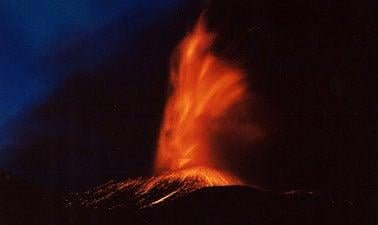
Experience the science of volcanology whilst learning the skill set of a volcanologist on a virtual fieldtrip to volcanoes in Iceland and New Zealand. In this course, you will learn the scientific terminology and skills of a field volcanologist. Unlike most courses, we will be taking you outside of the classroom. These field experiences are where volcanologists get their hands dirty and really learn the tools of the trade.

Class Deals by MOOC List - Click here and see EdX's Active Discounts, Deals, and Promo Codes.

We will take you on an interactive tour around Icelandic volcanoes where we will be talking to experts on location, digging holes to discover past eruptions, and hearing amazing stories of survival. We will discuss how to better manage volcanic hazards, using examples in New Zealand drawing on Māori knowledge. You will also get to explore rocks and landscapes while navigating around 360° videos and 3D landscapes and rock samples. You will gauge your learning all along the way, building knowledge and skills, and thinking about why volcanoes matter to you.

What you'll learn

  • Describe why volcanoes erupt in Iceland and New Zealand.
  • Use the field skills of a volcanologist to describe volcanic rocks and landscapes.
  • Explain why different volcano types have different eruption hazards.
  • Apply field data and historic eruption stories to discuss volcanic hazard implications in different locations in Iceland and New Zealand.
  • Evaluate a plan to drill into a magma chamber, weigh up the societal benefits such as renewable geothermal energy and better eruption prediction with risks and costs.
Go to Class
MOOC List is learner-supported. When you buy through links on our site, we may earn an affiliate commission.

Related Courses

Tropical Coastal Ecosystems (edX) EdX
University of Queensland,UQx

Tropical Coastal Ecosystems (edX)

Take the challenge and understand problems and solutions to managing tropical coastal ecosystems. Do you want to develop the skills and knowledge needed to help preserve tropical coastal ecosystems? These habitats provide goods and services for hundreds of millions of people but human activities have led to their global decline.

Self Paced
Self-Paced
Risk Communication (KTU) Other Providers
Kaunas University of Technology - KTU

Risk Communication (KTU)

This MOOC provides practical tips, hands-on tools and the most recent examples for the effective risk communication. Course is open for everyone who is interested in individual, national or global risks in contemporary world and would like to acquire skills in designing, visualising and using media for risk messages. This course is based on the Erasmus+ project "Risk and Security Governance Studies within Baltic – Nordic Academic Community of Practice".

No sessions available
5-12 Weeks
Natural Disasters (edX) EdX
McGill,McGillX

Natural Disasters (edX)

Learn the science behind different types of natural disasters and our ability, or inability, to control and predict these events. No region on Earth is immune from natural disasters. As we gain scientific understanding into the causes and nature of such phenomena, we become better able to mitigate the effects of disasters. Yet as the world's population continues to grow, an increasingly large number of people are at risk.

No sessions available
5-12 Weeks
The Earth in My Pocket: an Introduction to Geology (FutureLearn) FutureLearn
The Open University

The Earth in My Pocket: an Introduction to Geology (FutureLearn)

Get an introduction to geology. Discover where materials that make up everyday objects come from and how to use them sustainably. Everything we use that has not been grown either contains or relies on materials that have been sourced by a geoscientist. Whether we are standing out in the wilderness, in the middle of a city or in our home, geology and the Earth’s natural resources are all around us, forming an integral part of our everyday lives.

No sessions available
4 Weeks
Monitoring the Oceans from Space (FutureLearn) FutureLearn
EUMETSAT

Monitoring the Oceans from Space (FutureLearn)

Explore our oceans from space. Discover how Earth observation allows us to monitor ocean health, and inform policy and planning. This free online course will provide an introduction to ocean monitoring Earth Observation (EO) satellite data, and its uses, types and challenges. It will explain how the data is acquired and used, the range of data types available, and the terminology and techniques involved.

No sessions available
5-12 Weeks
Seismic tomography: look inside the Earth (Coursera) Coursera
Novosibirsk State University

Seismic tomography: look inside the Earth (Coursera)

Welcome to the course “Seismic tomography: Look inside the Earth”. We will speak about the use of seismic tomography and its mathematical base, we’ll learn about earthquakes and find out how they start, also we’ll conduct some experiments and go on an expedition to Kamchatka. By the end of the course you’ll know the basics of seismology and how to use the technical instruments and programs in practice. So it doesn't matter what level you’re on. Complex things are explained with simple and accessible language.

Jul 18th 2022
4 Weeks
Climate Change Science and Negotiations (edX) EdX
SDGAcademyX,SDG Academy

Climate Change Science and Negotiations (edX)

Humanity is up against a tight timeline to address climate change. Learn how we can deeply decarbonize the global energy systems, and put the world on a 2°C pathway. In this course, learn solutions to mitigate the effects of the global greenhouse gas emissions causing temperature rise, and how to apply these solutions in different national contexts improvements.

Self Paced
Self-Paced
The Transition to the Decarbonised Economy of Tomorrow (edX) EdX
Delft University of Technology,DelftX

The Transition to the Decarbonised Economy of Tomorrow (edX)

Dive into the economic strategies for promoting the energy transition: technologies, policies, pricing, emission trading and more. How can economic strategies bring our current, fossil fuel based energy system into a carbon neutral future? According to the International Panel on Climate Change, we have only limited time left to keep global temperatures below 1.50 C and to avoid a climate crisis. How do we go about decarbonizing our economy? What are the best renewable energy sources to bring about this transition? And how do we convince investors that renewables really are the best option?

Apr 30th 2024
5-12 Weeks
New Zealand Landscape as Culture: Motu (Islands) (edX) EdX
Victoria University of Wellington,VictoriaX

New Zealand Landscape as Culture: Motu (Islands) (edX)

Come and learn about the islands of New Zealand, 42 degrees south of the equator and rich in stories. In this course, you will learn about the islands of New Zealand, or Ngā Motu o Aotearoa, where humans have lived for a thousand years. The indigenous Māori people of New Zealand tell a powerful origin story about our islands. New Zealanders take pride in being islanders as it is part of their story, national identity and culture.

No sessions available
4 Weeks
Volcanology field science and society (edX) EdX
University of Canterbury,UCx

Volcanology field science and society (edX)

In this introductory course, you will use interactive technologies to learn the science of how volcanoes work and the skills of a field volcanologist. You will explore the intersection of field volcanology and society, by looking into cultural perspectives of volcanoes, hazard mapping and communication using examples in Aotearoa New Zealand and drawing on Mātauranga Māori (Māori knowledge).

Self Paced
Self-Paced