Exploring Possible Futures: Modeling in Environmental and Energy Economics (FutureLearn)

Offered by University of Basel,
Exploring Possible Futures: Modeling in Environmental and Energy Economics (FutureLearn)

Look to the future, learning how to develop and use models in environmental and energy economics, with this free online course.

Class Deals by MOOC List - Click here and see FutureLearn's Active Discounts, Deals, and Promo Codes.

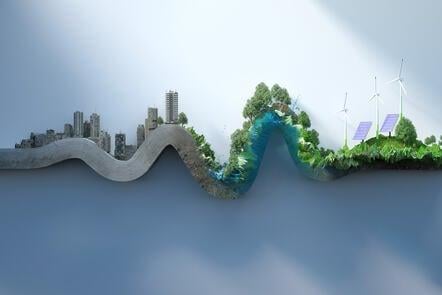
What will efficient cities look like in future? How do humans contribute to climate change? Is a completely renewable energy supply possible? To explore our possible futures, we need models.

Get an introduction to economic modeling
In this free online course, you’ll learn how to develop and use models in environmental economics and energy economics, covering both conceptual aspects and numerical modeling.
We’ll discuss topical issues like climate change and energy policies. Together, we’ll explore different modeling approaches, highlight their strengths and weaknesses, and discuss how to interpret and use their results to make informed decisions.

Develop your own economic model
In exercises, you’ll be taken through the steps of developing a simple environmental or energy economics model, and use this model to assess policy.
The course benefits from being part of the educational programme of the Swiss Competence Center for Research in Energy, Society and Transition (SCCER CREST), which brings together research groups from eight major Swiss research institutions. CREST provides state-of-the-art research and detailed, evidence-based recommendations on current problems of energy policy.

Go to Class
MOOC List is learner-supported. When you buy through links on our site, we may earn an affiliate commission.

Related Courses

Sustainable Food Teach-Out (FutureLearn) FutureLearn
University of Michigan

Sustainable Food Teach-Out (FutureLearn)

Discover the link between food and climate change and learn about the collective journey towards a sustainable global diet. Explore the importance of food choices in reducing greenhouse gas emissions. What we choose to eat matters. Did you know that a quarter of all greenhouse gas emissions come from food and agricultural systems? One way each and every one of us can reduce our impact on the environment is to change what is on the end of our forks.

Nov 1st 2021
2 Weeks
Innovation in Arable Farming: Technologies for Sustainable Farming Systems (FutureLearn) FutureLearn
University of Reading,EIT Food,EIT

Innovation in Arable Farming: Technologies for Sustainable Farming Systems (FutureLearn)

Explore how innovative, digital technologies can help achieve sustainable intensification of arable farming systems. Consider ways arable farmers in the EU can use agri-tech to benefit business. On this course, you’ll explore evidence-based information that outlines the benefits and challenges of adopting new technologies within the EU, and have the chance to read case study examples of some of these applications.

Jan 2nd 2023
3 Weeks
Renewable Energy: Achieving Sustainability through Bioenergy (FutureLearn) FutureLearn
University of Leeds

Renewable Energy: Achieving Sustainability through Bioenergy (FutureLearn)

Understand the principles of bioenergy and learn how to harness this form of renewable energy to achieve sustainability. Learn about the principles and environmental implications of bioenergy. On this two week course, you will explore bioenergy, one of the most diverse and readily available sources of renewable energy. You’ll look into what types of biomass can be used and how sustainable energy solutions can be developed in a wide range of communities.

Sep 23rd 2024
2 Weeks
Real Climate Action: How to Engage People in Climate Change (FutureLearn) FutureLearn
EIT Climate-KIC

Real Climate Action: How to Engage People in Climate Change (FutureLearn)

Engage with and motivate others to join you in the fight against climate change using a variety of approaches. Inspire climate action in others with strategies that really work. To take effective climate action, it’s important to communicate and engage with others around climate change. This four-week course from EIT Climate-KIC will show you how to do that, while achieving audience buy-in and behaviour change.

Nov 1st 2021
5-12 Weeks
Climate Change and Resilience in Food Systems (FutureLearn) FutureLearn
University of Leeds,Africap

Climate Change and Resilience in Food Systems (FutureLearn)

Learn new research-led strategies designed to mitigate the effects of climate change on agriculture and food systems. Learn about the effects of climate change and how to build resilience in agriculture and food systems. Even small climate changes can have large-scale consequences in agriculture and food systems with devastating effects for the people and their economies. On this course, you will learn strategies designed to mitigate the impact of climate change, develop resilient food systems and create sustainable development in local communities.

Sep 23rd 2024
2 Weeks
Climate and Energy: An Interdisciplinary Perspective (FutureLearn) FutureLearn
University of Glasgow,CIVIS

Climate and Energy: An Interdisciplinary Perspective (FutureLearn)

Explore climate change issues from an interdisciplinary perspective to find innovative solutions for a better future. Gain interdisciplinary skills for climate change solutions. On this four-week course, you’ll join educators from ten universities on a virtual field trip to a remote Swedish island to gain perspectives on climate and energy from a multitude of disciplines.

Jan 30th 2023
4 Weeks
Climate Solutions: India (FutureLearn) FutureLearn
University of Edinburgh,Climate Solutions,Edinburgh Climate Change Institute(ECCI)

Climate Solutions: India (FutureLearn)

Explore the effects of climate change and how to address the biggest challenge to our civilisation in the 21st century. Tackle the climate emergency in India. Climate Change is one of the greatest threats we face. The impacts of climate change are already being felt around the world, affecting both natural and human systems, and these impacts are expected to become greater in years to come.

Dec 6th 2021
5-12 Weeks