Equipamentos - Utilização e monitoramento em Unidades Hemoterápicas e Laboratórios de Saúde Pública (TELELAB)

Equipamentos - Utilização e monitoramento em Unidades Hemoterápicas e Laboratórios de Saúde Pública (TELELAB)

O Curso aborda os procedimentos de utilização e conservação de equipamentos rotineiramente utilizados em Laboratórios de Saúde Pública e Unidades Hemoterápicas, o monitoramente de equipamentos termo-controláveis e os modos de utilização, conservação e controle de pipetagens.

Objetivo:
Descrever as condutas para o uso, a conservação e o monitoramento de equipamentos utilizados em Laboratórios de Saúde Pública e de Unidades Hemoterápicas.

Conteúdo do Curso:

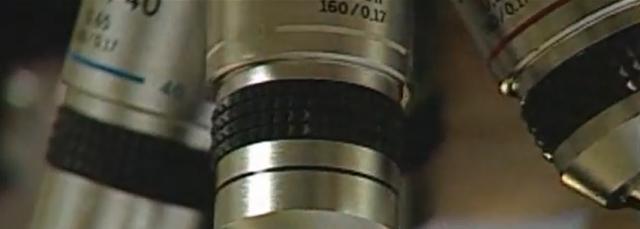
  • Utilização e conservação de centrífugas, geladeiras, microscópios, homogeneizadores de bolsas e outros equipamentos utilizados em Laboratórios e Unidades Hemoterápicas
  • Monitoramento e controle de equipamentos termo-controláveis
  • Pipetas, utilização e controle de pipetagens
Go to Class
MOOC List is learner-supported. When you buy through links on our site, we may earn an affiliate commission.
Related Courses

PrEParing: PrEP for Providers and Patients (Coursera) Coursera
Johns Hopkins University

PrEParing: PrEP for Providers and Patients (Coursera)

Pre-Exposure Prophylaxis (PrEP) using the antiretroviral medication emtricitibine/tenofovir approved in countries around the world is a highly effective means of reducing transmission of HIV through sexual encounters and needle sharing. This Johns Hopkins University course PrEPares you with essential information, concepts and practical advice regarding PrEP from leaders in the field. A first of its kind learning opportunity, both providers and patients learn from the same experts through content that meets the needs of both audiences, while facilitating the opportunity for a shared community space.

Jun 8th 2026
5-12 Weeks
Coleta de sangue - Diagnóstico e monitoramento das DST, AIDS e Hepatites Virais (TELELAB) TELELAB
Universidade Federal de Santa Catarina - UFSC

Coleta de sangue - Diagnóstico e monitoramento das DST, AIDS e Hepatites Virais (TELELAB)

A proposta do curso é atualizar a capacitação do aluno para os procedimentos de coleta de sangue, disponibilizando orientações e metodologias adequadas para realização do processo. O curso contempla procedimentos de acolhimento do paciente ao transporte de amostras enfatizando itens de segurança.

Self Paced
Self-Paced
Doença de Chagas - Triagem e diagnóstico sorológico em Unidades Hemoterápicas e Laboratórios de Saúde Pública (TELELAB) TELELAB
Universidade Federal de Santa Catarina - UFSC

Doença de Chagas - Triagem e diagnóstico sorológico em Unidades Hemoterápicas e Laboratórios de Saúde Pública (TELELAB)

O curso propõe tratar de questões referentes à preparação de realização do método de diagnóstico da Doença de Chagas - da infeção por Trypanossoma cruzi - em ambiente de laboratórios de Saúde Pública, considerando a identificação e utilização adequada dos equipamentos e procedimentos.

Self Paced
Self-Paced
HI-FIVE: Health Informatics For Innovation, Value & Enrichment (Administrative/IT Perspective) (Coursera) Coursera
Columbia University

HI-FIVE: Health Informatics For Innovation, Value & Enrichment (Administrative/IT Perspective) (Coursera)

HI-FIVE (Health Informatics For Innovation, Value & Enrichment) Training is an approximately 10-hour online course designed by Columbia University in 2016, with sponsorship from the Office of the National Coordinator for Health Information Technology (ONC). The training is role-based and uses case scenarios. No additional hardware or software are required for this course. Our nation’s healthcare system is changing at a rapid pace.

Jun 8th 2026
4 Weeks
Positive Psychology Specialization Project: Design Your Life for Well-hebeing (Coursera) Coursera
University of Pennsylvania

Positive Psychology Specialization Project: Design Your Life for Well-hebeing (Coursera)

You are encouraged to take the first four courses of the Foundations of Positive Psychology Specialization before starting this course and completing the Specialization Project. This course, taught by Dr. Martin E.P. Seligman brings all the key concepts from the first four courses to practice as you develop and test a new positive intervention for an audience of your choice.

Jun 8th 2026
4 Weeks
Understanding Cancer Metastasis (Coursera) Coursera
Johns Hopkins University

Understanding Cancer Metastasis (Coursera)

Over 500,000 people in the United States and over 8 million people worldwide are dying from cancer every year. As people live longer, the incidence of cancer is rising worldwide, and the disease is expected to strike over 20 million people annually by 2030. Everyone has been, or will be touched by cancer in some way during their lifetime. Thanks to years of dedication and commitment to research we’ve made enormous advances in the prevention and treatment of cancer, But there is still a lot of work to be done. In this course, physicians and scientists at the Johns Hopkins School of Medicine explain how cancer spreads or metastasizes.

Jun 8th 2026
3 Weeks
Overcoming Dyslexia (Coursera) Coursera
Yale University

Overcoming Dyslexia (Coursera)

Dyslexia is everywhere, touching so many children and adults, and while science has made extraordinary progress in understanding and clarifying the condition, this incredible powerful knowledge rarely reaches those who most need to know and would greatly benefit from it. Our goal is to change all this with the Coursera you are about to view, produced by Dr. Sally Shaywitz, the Audrey G. Ratner Professor in Learning Development, both the leading scientist studying dyslexia and the most devoted advocate for helping those who are dyslexic.

Jun 13th 2026
5-12 Weeks
Design and Interpretation of Clinical Trials (Coursera) Coursera
Johns Hopkins University

Design and Interpretation of Clinical Trials (Coursera)

Clinical trials are experiments designed to evaluate new interventions to prevent or treat disease in humans. The interventions evaluated can be drugs, devices (e.g., hearing aid), surgeries, behavioral interventions (e.g., smoking cessation program), community health programs (e.g. cancer screening programs) or health delivery systems (e.g., special care units for hospital admissions). We consider clinical trials experiments because the investigators rather the patients or their doctors select the treatment the patients receive.

Jun 8th 2026
5-12 Weeks
Leading Healthcare Quality and Safety (Coursera) Coursera
George Washington University

Leading Healthcare Quality and Safety (Coursera)

Ensuring patient safety and healthcare quality is critical and should be a key focus of everyone in healthcare practice. This course provides healthcare practitioners and others with an introduction to the knowledge and skills needed to lead patient safety and quality improvement initiatives at the micro and macro levels. Participants will explore the foundations of health care quality and the science underlying patient safety and quality improvement, design and select effective health care measures, analyze patient safety problems and processes using tools such as human factors analysis, apply systematic approaches including the Plan-Do-Study-Act (PDSA) model to address quality improvement challenges, and learn strategies to lead a culture of change

Jun 8th 2026
5-12 Weeks
Introduction to the Biology of Cancer (Coursera) Coursera
Johns Hopkins University

Introduction to the Biology of Cancer (Coursera)

Over 500,000 people in the United States and over 8 million people worldwide are dying every year from cancer. As people live longer, the incidence of cancer is rising worldwide and the disease is expected to strike over 20 million people annually by 2030. This open course is designed for people who would like to develop an understanding of cancer and how it is prevented, diagnosed, and treated.

Jun 8th 2026
5-12 Weeks
Service Transformed: Lessons in U.S. Veteran Centered Care (Coursera) Coursera
University of Michigan

Service Transformed: Lessons in U.S. Veteran Centered Care (Coursera)

Improving health care for veterans has become a matter of national attention and has gained increasing attention from the medical community. With the current surge of veterans reintegrating into civilian society it is critical to improve the training of the next cadre of providers who will provide care for our veterans. It is widely known that veterans receive care in all aspects of the health system, thus providers in veteran focused care facilities, military health serves and civilian locals must be aware of the unique needs of veterans. It is perhaps even more important to educate civilian providers who may be unfamiliar with the unique physical, mental and emotional needs related to military service.

Jun 8th 2026
5-12 Weeks
Biossegurança – Laboratórios de DST, AIDS e Hepatites Virais (TELELAB) TELELAB
Universidade Federal de Santa Catarina - UFSC

Biossegurança – Laboratórios de DST, AIDS e Hepatites Virais (TELELAB)

O curso de biossegurança propõe tratar de questões referentes à atenção e boas práticas de segurança no ambiente de laboratório, considerando identificação e utilização dos equipamentos e procedimentos de maneira que permita atender as reais necessidades na intervenção, prevenção e cuidado nas rotinas do trabalho em ambiente de laboratório.

Self Paced
Self-Paced