Engineering Genetic Circuits: Modeling and Analysis (Coursera)

Engineering Genetic Circuits: Modeling and Analysis (Coursera)

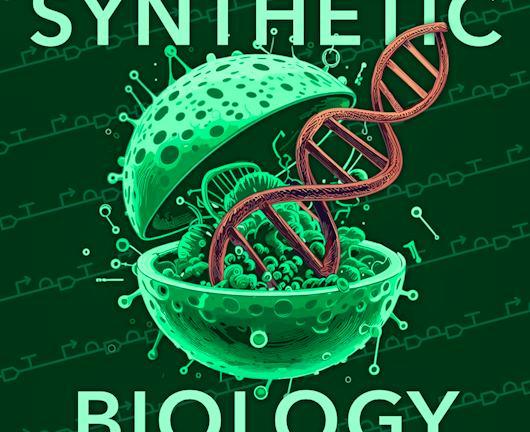
This course gives an introduction to how to create genetic circuit models. These models leverage chemical reactions represented using the Systems Biology Markup Language (SBML).

Class Deals by MOOC List - Click here and see Coursera's Active Discounts, Deals, and Promo Codes.

The second module introduces methods to simulate these models using ordinary differential equation (ODE) methods. The third module teach stochastic simulation methods. The fourth module introduces several variations of the stochastic simulation algorithm. Finally, the fifth module introduces genetic technology method that leverage computational analysis for selecting parts and verifying their performance.  

What you'll learn

  • Design and analyze models of genetic circuits.
  • Simulate genetic circuit models using ODE simulation methods.
  • Simulate genetic circuit models using stochastic simulation methods.
  • Utilize genetic technology mappers to select parts for genetic designs.

Syllabus

Genetic Circuit Models
This week will describe the basics of modeling biological systems using chemical reactions, how these models can be represented using the Systems Biology Markup Language (SBML) standard, and how these models can be constructed using software tools such as iBioSim.

Genetic Circuit Analysis (ODEs)
This module will introduce the theory and methods for the analysis of genetic circuit models using ordinary differential equations (ODEs). In particular, it will describe the classical chemical kinetic model, numerical methods for ODE simulation of these models, and techniques to analyze these ODE models qualitatively.

Stochastic Analysis
This module will introduce stochastic analysis methods for genetic circuits. In particular, it will introduce the stochastic chemical kinetics model, Gillespie's Stochastic Simulation Algorithm (SSA) to analyze these models, and various alternative stochastic analysis methods. Finally, the module will conclude with some additional topics: the Chemical Langevin Equation, stochastic Petri nets, the phage lambda model, and spatial Gillespie methods.

SSA Variations
This module presents several variations on the SSA algorithm to solve particular analysis problems. In particular, the hierarchical SSA (hSSA) methods enable the analysis of large models, the weighted SSA (wSSA) methods allow for the analysis of rare events, and the incremental SSA (iSSA) methods enable the determination of typical behaviors.

Genetic Circuit Technology Mapping
This module presents various ways that modeling can be utilized in genetic circuit design to select parts for optimal performance.
Go to Class
MOOC List is learner-supported. When you buy through links on our site, we may earn an affiliate commission.

Related Courses

Fundamentals of Fluid-Solid Interactions (Coursera) Coursera
École Polytechnique

Fundamentals of Fluid-Solid Interactions (Coursera)

What is fluid-solid interactions ? It is what happens when the motions of a fluid and of a solid are somehow coupled. This happens all the time, around you when leaves flutter in the wind, inside you when your heart beats, above you when wings of a plane vibrate, under the sea... The idea behind this MOOC is to give you the basic tools to be able to predict and eventually mitigate things called flutter, galloping, sloshing, vortex-induced vibrations, added mass, to cite a few. We are going to consider any possible domains of applications such as civil engineering, aerospace engineering, nuclear engineering , ocean engineering, biomechanics and even food processing !

Aug 10th 2026
5-12 Weeks
Análisis de Sistemas de Transporte (Coursera) Coursera
Pontificia Universidad Católica de Chile

Análisis de Sistemas de Transporte (Coursera)

Este curso es una introducción a las metodologías fundamentales para la gestión, planificación y evaluación de sistemas de transporte de pasajeros. Se aprenderán técnicas usadas en la práctica para estimar la demanda, modelar la operación y realizar análisis económicos de proyectos de transporte.

Aug 10th 2026
5-12 Weeks
Data, Models and Decisions in Business Analytics (edX) EdX
Columbia University,ColumbiaX

Data, Models and Decisions in Business Analytics (edX)

Learn fundamental tools and techniques for using data towards making business decisions in the face of uncertainty. In today’s world, managerial decisions are increasingly based on data-driven models and analysis using statistical and optimization methods that have dramatically changed the way businesses operate in most domains including service operations, marketing, transportation, and finance.

This course is archived
5-12 Weeks
Computers, Waves, Simulations: A Practical Introduction to Numerical Methods using Python (Coursera) Coursera
Ludwig-Maximilians-Universität München

Computers, Waves, Simulations: A Practical Introduction to Numerical Methods using Python (Coursera)

Interested in learning how to solve partial differential equations with numerical methods and how to turn them into python codes? This course provides you with a basic introduction how to apply methods like the finite-difference method, the pseudospectral method, the linear and spectral element method to the 1D (or 2D) scalar wave equation.

Aug 10th 2026
5-12 Weeks
Mécanique de Newton (Coursera) Coursera
École Polytechnique Fédérale de Lausanne

Mécanique de Newton (Coursera)

À l’École Polytechnique Fédérale de Lausanne, un cours de mécanique fait partie de la formation de tous les futurs ingénieurs et scientifiques. Il a pour but de leur apprendre à transcrire sous forme mathématique un phénomène physique, afin de pouvoir en formuler une analyse raisonnée. Cette partie couvrira notamment la cinématique du point matériel, la balistique dans le champ de la pesanteur et l’oscillateur harmonique.

Aug 10th 2026
5-12 Weeks
Mécanique Lagrangienne (Coursera) Coursera
École Polytechnique Fédérale de Lausanne

Mécanique Lagrangienne (Coursera)

Le formalisme de Lagrange permet une résolution efficace de problèmes complexes de mécanique. Il permet aussi d'apporter un éclairage plus fondamental sur les lois de conservation (théorème de Noether). A titre d'illustration de la méthode de Lagrange, on traitera le problème très important des oscillateurs harmoniques couplés, exprimé comme un problème de valeurs propres et de vecteurs propres. On termine avec un formalisme permettant d'analyser les résonances paramétriques, notion illustrée par l'expérience montrant la stabilité d'un pendule inversé forcé.

Aug 10th 2026
5-12 Weeks
Numerical Methods for Engineers (Coursera) Coursera
The Hong Kong University of Science and Technology - HKUST

Numerical Methods for Engineers (Coursera)

Numerical Methods for Engineers covers the most important numerical methods that an engineer should know. We derive basic algorithms in root finding, matrix algebra, integration and interpolation, ordinary and partial differential equations. We learn how to use MATLAB to solve numerical problems. Access to MATLAB online and the MATLAB grader is given to all students who enroll. We assume students are already familiar with the basics of matrix algebra, differential equations, and vector calculus. Students should have already studied a programming language, and be willing to learn MATLAB.

Jul 27th 2026
5-12 Weeks
Material Behavior (Coursera) Coursera
Georgia Institute of Technology

Material Behavior (Coursera)

Have you ever wondered why ceramics are hard and brittle while metals tend to be ductile? Why some materials conduct heat or electricity while others are insulators? Why adding just a small amount of carbon to iron results in an alloy that is so much stronger than the base metal? In this course, you will learn how a material’s properties are determined by the microstructure of the material, which is in turn determined by composition and the processing that the material has undergone.

Aug 10th 2026
5-12 Weeks
The Finite Element Method for Problems in Physics (Coursera) Coursera
University of Michigan

The Finite Element Method for Problems in Physics (Coursera)

This course is an introduction to the finite element method as applicable to a range of problems in physics and engineering sciences. The treatment is mathematical, but only for the purpose of clarifying the formulation. The emphasis is on coding up the formulations in a modern, open-source environment that can be expanded to other applications, subsequently.

Aug 10th 2026
13-24 Weeks
Introduction to Ordinary Differential Equations (Coursera) Coursera
Korea Advanced Institute of Science and Technology - KAIST

Introduction to Ordinary Differential Equations (Coursera)

In this introductory course on Ordinary Differential Equations, we first provide basic terminologies on the theory of differential equations and then proceed to methods of solving various types of ordinary differential equations. We handle first order differential equations and then second order linear differential equations. We also discuss some related concrete mathematical modeling problems, which can be handled by the methods introduced in this course.

Jun 29th 2026
5-12 Weeks