EdX

Drug Discovery & Medicinal Chemistry (edX)

Drug Discovery & Medicinal Chemistry (edX)

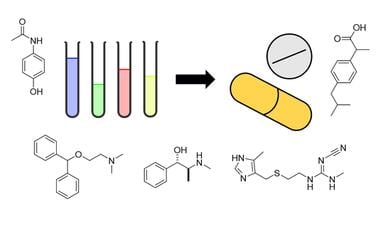
Learn how scientists in drug development modify and test molecules to improve potency and reduce toxicity. Discover the criteria that regulatory agencies use to approve molecules that are shown to be both safe and effective as pharmaceuticals for the treatment and prevention of diseases.

Class Deals by MOOC List - Click here and see EdX's Active Discounts, Deals, and Promo Codes.

Drug discovery is a challenging field, but the pathway most drugs navigate from concept to market is predictable and based upon repeated experimentation. The process requires scientists with expertise in chemistry, biology, and medicine. This course focuses on four aspects of drug development.

  • regulation - approval protocols for government regulatory agencies
  • pharmacodynamics - how a drug affects the body
  • pharmacokinetics - how a drug flows through the body
  • lead discovery/optimization - the steps for finding and improving molecules as potential drugs

The course closes with two case studies of molecules that have advanced through the development process and into clinical trials.

What you'll learn
After completing this course, students will be able to...

  • contrast the different steps of the drug discovery process,
  • summarize the relationship between patents and generic drugs,
  • interpret dose-response curves from the action of drugs on proteins,
  • calculate drug-target binding energies from potency measures,
  • describe factors that affect the flow of a drug through the body,
  • predict structural changes in a molecule to influence half-life,
  • priorize weakly active molecules as potential drug candidates,
  • implement modifications to improve the properties of drug-like molecules, and
  • assess literature reports of drug development programs.

Syllabus

Module 0 - Welcome
Module 1 - Drug Discovery Process
Module 2 - Drug Targets
Module 3 - Drug Metabolism & Pharmacokinetics
Module 4 - Lead Discovery & Optimization
Module 5 - Case Studies from the Literature
Module 6 - Farewell

Prerequisites
Students planning to complete the course should have the prerequisites listed below.

  • high school algebra - logarithmic and exponential functions
  • high school biology - general anatomy and basic cell structure
  • high school general chemistry - equilibrium and intermolecular forces
  • introductory organic chemistry - functional group recognition and line-angle structures

Students who do not have these prerequisites will understand much of the course content but may have difficulty earning a passing grade.

Go to Class
MOOC List is learner-supported. When you buy through links on our site, we may earn an affiliate commission.

Related Courses

Interdisciplinary Management of Cardiopulmonary Health and Disease - Pulmonary Focus (edX) EdX
The Hong Kong Polytechnic University,HKPolyUx

Interdisciplinary Management of Cardiopulmonary Health and Disease - Pulmonary Focus (edX)

Learn how different healthcare professionals work together to give holistic management for patients with pulmonary diseases. Want to explore more about common pulmonary diseases and their management? Don't miss this FREE online course conducted by a team of dedicated healthcare professionals!

Self Paced
Self-Paced
Entropy and Equilibria (edX) EdX
HarvardX,Harvard University

Entropy and Equilibria (edX)

Expand your learning of chemistry and thermodynamics by exploring entropy, free energy, and equilibrium. Nature is driven by spontaneity — processes that move forward without external intervention. In this course, Entropy and Equilibria , you will explore the Second Law of Thermodynamics and get an introduction to the concepts of entropy and equilibrium states.

Self Paced
Self-Paced
BioStatistics (edX) EdX
DoaneX,Doane University

BioStatistics (edX)

This college-level, credit-eligible Biostatistics course will teach you the skills required for success in future analytical studies in biology. In this undergraduate-level biostatistics course, the learners will be introduced to the use of statistics and study designs in biology. Upon successful completion of this course, learners will be able to design experimental, quasi-experimental and observational studies that will meet regulatory guidelines; collect, analyze, and interpret data using appropriate statistical tools.

Self Paced
Self-Paced
Reacciones químicas y cálculos estequiométricos (edX) EdX
Universitat Politècnica de València,UPValenciaX

Reacciones químicas y cálculos estequiométricos (edX)

Aprenderás los conceptos básicos de las reacciones químicas y profundizarás en su estudio cuantitativo (estequiometría). Con este curso aprenderás los conceptos básicos relacionados con las reacciones químicas y profundizarás en su estudio desde el punto de vista cuantitativo, es decir su estequiometría. Entenderás el comportamiento de los gases y las disoluciones y aplicarás las leyes que regulan su comportamiento en los procesos químicos en los que participan.

Self Paced
Self-Paced
Human Anatomy: Musculoskeletal Cases (edX) EdX
HarvardX,Harvard University

Human Anatomy: Musculoskeletal Cases (edX)

Learn the anatomy basic to understanding five musculoskeletal injuries commonly seen in primary care medicine and orthopedic clinical specialty practice. Follow hypothetical patients from injury to operating room. Human Anatomy: Musculoskeletal Cases invites students to join medical and basic science faculty at Harvard Medical School (HMS) to learn about musculoskeletal injuries commonly seen in clinical practice.

Self Paced
Self-Paced
One Planet, One Ocean (edX) EdX
SDGAcademyX,SDG Academy

One Planet, One Ocean (edX)

A holistic view of how the ocean functions, how human interactions with the ocean can be understood, and what solutions are available to support both sustainable use and stewardship of our blue planet. Is the ocean the real final frontier? Humans have a greater understanding of the surface of the moon than they do of the depths of these waters.

Self Paced
Self-Paced
Tropical Coastal Ecosystems (edX) EdX
University of Queensland,UQx

Tropical Coastal Ecosystems (edX)

Take the challenge and understand problems and solutions to managing tropical coastal ecosystems. Do you want to develop the skills and knowledge needed to help preserve tropical coastal ecosystems? These habitats provide goods and services for hundreds of millions of people but human activities have led to their global decline.

Self Paced
Self-Paced
Electrochemistry (edX) EdX
HarvardX,Harvard University

Electrochemistry (edX)

Learn the significance of electrochemistry, understanding how electrical, chemical, and mechanical energy are linked. What is the chemistry and mechanics behind an electric car versus a gas-powered car — and why do you feel a difference driving them? The discipline of electrochemistry is not new, but it has regained prominence due to the emergence of energy production, energy storage, and technological innovations driven by both science and public policy. Given the rise of global energy demand, research and inventions aim to meet these challenges.

Self Paced
Self-Paced
El enlace químico y las interacciones moleculares (edX) EdX
Universitat Politècnica de València,UPValenciaX

El enlace químico y las interacciones moleculares (edX)

Aprenderemos a identificar los tipos de enlace presentes en los compuestos químicos y a relacionar la estructura de éstos con sus propiedades. Los materiales que utilizamos diariamente y los objetos que nos rodean están formados por sustancias químicas cuyas propiedades, aplicaciones y transformaciones dependen del tipo de enlace que las caracteriza. El tipo de enlace condiciona la interacción entre las moléculas de un compuesto.

Self Paced
Self-Paced
Super-Earths And Life (edX) EdX
HarvardX,Harvard University

Super-Earths And Life (edX)

Learn about the Earth, life, and how we can search for life elsewhere in the universe. Are we alone in this universe? What new information and observations on exoplanets have we discovered? In the past decade, astronomers have made incredible advances in the discovery of planets outside our solar system. Thirty years ago, we knew only of the planets in our own solar system. Now we know of thousands circling nearby stars.

Self Paced
Self-Paced