Discovering Science: Chemical Products (FutureLearn)

Offered by University of Leeds,
Discovering Science: Chemical Products (FutureLearn)

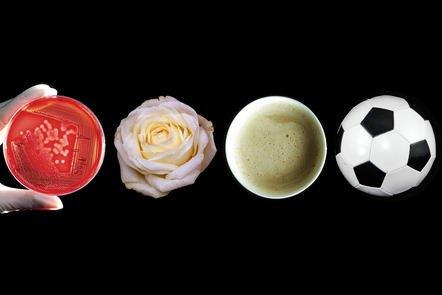
With chemistry providing us an endless amount of possibilities, what would you choose to develop? For centuries natural materials have been used by people to meet their daily needs. Discover how scientists are using their knowledge of the molecular structure of naturally occurring compounds to develop new and exciting materials. From clothing to tooth enamel, the possibilities are endless. You’ll also consider the chemistry behind the development of everyday consumer, and consider the ethics behind the products you use.

Class Deals by MOOC List - Click here and see FutureLearn's Active Discounts, Deals, and Promo Codes.

Syllabus

Week 1: From biomaterials to bio-inspired materials
Week 2: Consumer products

What will you achieve?
By the end of the course, you'll be able to...

  • Identify how an understanding of natural fibres has led to the development of synthetic fibres.
  • Explore how bio-inspired materials have the potential to make significant impacts on our everyday lives.
  • Investigate the chemistry behind everyday household products.
  • Explore the impacts of consumer products.
Go to Class
MOOC List is learner-supported. When you buy through links on our site, we may earn an affiliate commission.
Related Courses

General Chemistry: Concept Development and Application (Coursera) Coursera
Rice University

General Chemistry: Concept Development and Application (Coursera)

This course will cover the topics of a full year, two semester General Chemistry course. We will use a free on-line textbook, Concept Development Studies in Chemistry, available via Rice’s Connexions project. The fundamental concepts in the course will be introduced via the Concept Development Approach developed at Rice University. In this approach, we will develop the concepts you need to know from experimental observations and scientific reasoning rather than simply telling you the concepts and then asking you to simply memorize or apply them.

Jul 27th 2026
5-12 Weeks
El enlace químico y las interacciones moleculares (edX) EdX
Universitat Politècnica de València,UPValenciaX

El enlace químico y las interacciones moleculares (edX)

Aprenderemos a identificar los tipos de enlace presentes en los compuestos químicos y a relacionar la estructura de éstos con sus propiedades. Los materiales que utilizamos diariamente y los objetos que nos rodean están formados por sustancias químicas cuyas propiedades, aplicaciones y transformaciones dependen del tipo de enlace que las caracteriza. El tipo de enlace condiciona la interacción entre las moléculas de un compuesto.

Self Paced
Self-Paced
Beer Quality: Freshness (Coursera) Coursera
University of California, Davis

Beer Quality: Freshness (Coursera)

In this third course of the Beer Quality Series on beer freshness, led by distinguished professor Charles Bamforth, Ph.D, you will learn about beer flavor preconceptions, expectations, and causes of flavor instability. You'll also learn about the science of flavor change and the study and process impacts of flavor stability. In addition, you will review light instability and how it can lead to skunking.

Jul 27th 2026
4 Weeks
Foundations of Science for Undergraduate Degrees (FutureLearn) FutureLearn
The University of Nottingham

Foundations of Science for Undergraduate Degrees (FutureLearn)

Develop the right skills for study and assessment in higher education while refreshing your core science knowledge.Give yourself an advantage for starting a university degree. With interruptions to education occurring all the time, many school students intending to go to university in the coming years may not feel prepared.

Aug 23rd 2021
5-12 Weeks
Atmospheric Chemistry: Planets and Life Beyond Earth (FutureLearn) FutureLearn
University of Leeds

Atmospheric Chemistry: Planets and Life Beyond Earth (FutureLearn)

Learn about the atmospheric chemistry of planets and celestial bodies and explore the possibility of finding life beyond Earth. Discover the extraordinary world of atmospheric chemistry. On this course you will learn about planetary atmospheres across our solar system and beyond. You will discover what an atmosphere is, how it’s formed, and how data collected from space missions is used to determine a planet’s atmosphere.

Self Paced
2 Weeks
Formulación y nomenclatura de compuestos químicos (edX) EdX
Universitat Politècnica de València,UPValenciaX

Formulación y nomenclatura de compuestos químicos (edX)

Aprenderemos cómo establecer las fórmulas de los compuestos químicos inorgánicos y orgánicos más usuales y las reglas para nombrarlos. Toda la materia está formada por elementos o compuestos químicos que son resultado de la combinación de átomos. Cada compuesto presenta una determinada composición que se corresponde con una fórmula y se identifica con un nombre.

Self Paced
Self-Paced
Chemical Biology (Coursera) Coursera
University of Geneva

Chemical Biology (Coursera)

Chemical biology is a burgeoning field that has rapidly risen to prominence. This surge of interest has been fuelled by chemical biology’s applicability to understanding critical processes in live cells or model organisms in real time. This success has arisen because chemical biology straddles a nexus between chemistry, biology, and physics. Thus, chemical biology can harness rapid chemistry to observe or perturb biological processes, that are in turn reported using physical assays, all in an otherwise unperturbed living entity. Although its boundaries are endless, the multidisciplinary nature of chemical biology can make the field seem daunting; we beg to differ! Here, we deconstruct chemical biology into its core components, and repackage the material.

Aug 3rd 2026
5-12 Weeks
Más que química (Coursera) Coursera
Universidad Nacional de Colombia

Más que química (Coursera)

El objeto de la química, como disciplina científica, se enfoca en el estudio de la materia y de los cambios que ésta experimenta. En tanto disciplina científica, a la que se le atribuye la reputación de ser una ciencia complicada y aburrida. Esta reputación, bastante inmerecida, obedece al poco conocimiento que se tiene sobre ella y sobre sus enormes posibilidades de aplicación en el mundo científico, en diferentes campos de la industria y la producción, así como en la vida cotidiana.

Aug 10th 2026
5-12 Weeks
Chemical Engineering Thermodynamics 1 (Coursera) Coursera
Korea Advanced Institute of Science and Technology - KAIST

Chemical Engineering Thermodynamics 1 (Coursera)

An appreciation of thermodynamics is required to become a chemical and biomolecular engineer. Thermodynamics can assess the viability of a process and is one of the curriculum's most essential topics. The principles are utilized in following engineering courses (kinetics, mass transfer, design, materials) and are applicable to numerous engineering disciplines. The increased emphasis on energy usage and transformation as a result of rising demand, diminishing supply, and global warming necessitates that the engineers who will tackle these issues have a firm grasp of thermodynamics.

Aug 3rd 2026
5-12 Weeks
Beer Quality: Color & Clarity (Coursera) Coursera
University of California, Davis

Beer Quality: Color & Clarity (Coursera)

Welcome to Beer Quality: Color and Clarity led by distinguished professor Charles Bamforth, Ph.D. In this course, you will learn about beer color and how it impacts a consumer's perception of beer. Also discussed are the scientific factors affecting beer color and clarity. The methods of measuring and altering beer color are presented, as are ways to troubleshoot problems with beer color.

Jul 27th 2026
4 Weeks
Introduction to Physical Chemistry (Coursera) Coursera
University of Manchester

Introduction to Physical Chemistry (Coursera)

Chemical reactions underpin the production of pretty much everything in our modern world. But, what is the driving force behind reactions? Why do some reactions occur over geological time scales whilst others are so fast that we need femtosecond-pulsed lasers to study them? Ultimately, what is going on at the atomic level? Discover the answers to such fundamental questions and more on this course in introductory physical chemistry.

Jul 27th 2026
5-12 Weeks