Curanderismo: Traditional Healing of the Mind, Energy & Spirit (Coursera)

Curanderismo: Traditional Healing of the Mind, Energy & Spirit (Coursera)

As the third of four courses on Curanderismo, the art of Hispanic/Latino traditional medicine, this course focuses specifically on traditional healing of mind, energy and spirit. As an educational and cultural platform, this course will share a number of traditional body therapies. Trained traditional healers will share their knowledge of cleansings from different cultures such as spiritual, energetic and Tonalli Cleansing.

Class Deals by MOOC List - Click here and see Coursera's Active Discounts, Deals, and Promo Codes.

Learners will not become certified traditional healers at the completion of this course but will be able apply basic principles or traditional medicine for health and illnesses. They will become familiar specifically with the traditional therapy of the sweat lodge temazcal, laugh therapy risaterapia and they will learn about the creation of sacred spaces and healing grief through Día de los Muertos.
The Final Curanderismo course will be:
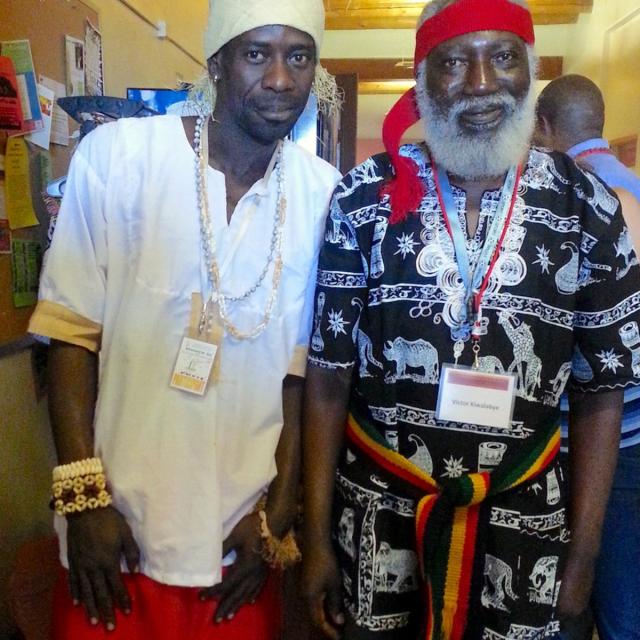
• Global and Cultural Influences of Traditional Healing: African traditional medicine from Uganda and Gabon; Afro-Latino from Cuba and Puerto Rico, Native American spiritual cleansings and Mayan acupuncture and other topics.

What You Will Learn

  • Provide information on the healing traditions, rituals, and remedies of Curanderismo.
  • Interpret the spiritual/energetic components by observing the importance of creating a sacred space and healing through traditional events.
  • Compare different types of spiritual/energetic cleansings including Tonalli and susto magical fright.
  • Describe the benefits of Laugh theraphy, sound and music and how they can transform your life.

Syllabus

WEEK 1
Spiritual healing (limpias) & healing fright and shock (susto)
Laurencio shows an energetic cleansing and the elements involved in it. Rita explains how to heal traumatic experiences.

WEEK 2
Spiritual cleansings (limpias) & Tonalli cleansing
In this module, students will recognize different types of limpias. Velia highlights the importance of people’s needs whether they are spiritual, mental or physical in this cleansing. In the Tonalli Cleansing, Patricia will explain how to open a power portal that travels through the energetic meridian in a patient.

WEEK 3
Burning incense for harmonising & laugh therapy (risaterapia)
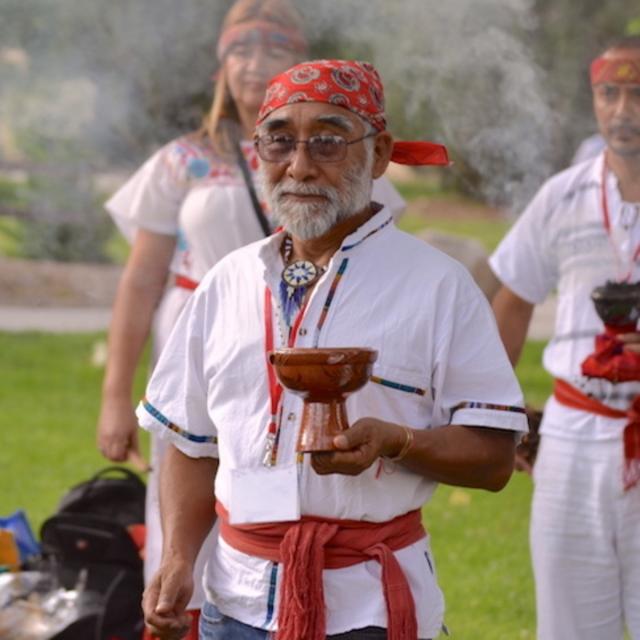
Rita explains the variety of incense burners used in traditional energetic cleansings and demonstrates her own type of cleansing with copal incense. She demonstrates how laughter reduces negativity and hostility and increases efficiency and morale.

WEEK 4
Sweatlodge (temazcal)
Rita and others demonstrate the health benefits of the plants, vibrations of the drum, and other items and elements that are part of the sweatlodge temazcal, ceremony.

WEEK 5
Healing through sound & healing with music
Juan Carlos performs a traditional healing technique by using the vibrations of the conch shell sound in combination with the obsidian stone. Elena discusses the impact of music, sound, and song on our health.

WEEK 6
Creating sacred spaces for healing & healing grief through day of the dead (día de los muertos)
Rita and Tonita, discuss the creation of a sacred space (an altar) that they create with natural elements. This sacred space is part of a temazcal sweat lodge ceremony, which honors the four directions. Dr. Anselmo Torres provides insight on the meaning and significance of one Mexico’s most important celebrations, the Day of the Dead.

Go to Class
MOOC List is learner-supported. When you buy through links on our site, we may earn an affiliate commission.

Related Courses

21st Century Energy Transition: how do we make it work? (Coursera) Coursera
University of Alberta

21st Century Energy Transition: how do we make it work? (Coursera)

Affordable, abundant and reliable energy is fundamental to human well-being and prosperity. For the past 150 years, more and more people have gained access to energy, primarily in the form of fossil fuels – coal, petroleum and natural gas. But now, even while half of humanity cannot access adequate energy supplies, we are beginning a profound transition to more diverse energy sources. Climate change, environmental sustainability, and energy poverty are all important – and sometimes conflicting – drivers as we strive to supply more energy to more people with fewer negative impacts on Earth’s environments.

Jun 8th 2026
5-12 Weeks
Ash-Related Operational Challenges in Energy Utilization of Sustainable Fuels (Coursera) Coursera
Technical University of Denmark - DTU

Ash-Related Operational Challenges in Energy Utilization of Sustainable Fuels (Coursera)

The basic idea behind this MOOC, is to present recent data on fuel characterization, slagging, fouling, corrosion, and trace element transformations, in a course that can be readily provided for students and industry people. This ensures understanding and application of the research, and provides the students and industry with a forum for discussion of the very latest research results, as well as feedback from industry to the research group at DTU, on important new research subjects in the field.

Jun 1st 2026
5-12 Weeks
Physics 101 - Energy and Momentum (Coursera) Coursera
Rice University

Physics 101 - Energy and Momentum (Coursera)

This course serves as an introduction to the physics of energy and momentum. Upon completion, learners will have an understanding of how mathematical laws and conservation principles describe the motions and interactions of objects all around us. They will gain experience in solving physics problems with tools such as graphical analysis, algebra, vector analysis, and calculus.

Jun 1st 2026
4 Weeks
Principles of fMRI 2 (Coursera) Coursera
Johns Hopkins University,University of Colorado Boulder

Principles of fMRI 2 (Coursera)

Functional Magnetic Resonance Imaging (fMRI) is the most widely used technique for investigating the living, functioning human brain as people perform tasks and experience mental states. It is a convergence point for multidisciplinary work from many disciplines. Psychologists, statisticians, physicists, computer scientists, neuroscientists, medical researchers, behavioral scientists, engineers, public health researchers, biologists, and others are coming together to advance our understanding of the human mind and brain. This course covers the analysis of Functional Magnetic Resonance Imaging (fMRI) data.

Jun 1st 2026
4 Weeks
Our Energy Future (Coursera) Coursera
University of California, San Diego

Our Energy Future (Coursera)

This course is designed to introduce students to the issues of energy in the 21st century – including food and fuels – which are inseparably linked – and will discuss energy production and utilization from the biology, engineering, economics, climate science, and social science perspectives. This course will cover the current production and utilization of energy, as well as the consequences of this use, examining finite fossil energy reserves, how food and energy are linked, impacts on the environment and climate, and the social and economic impacts of our present energy and food production and use.

Jun 1st 2026
5-12 Weeks
Know Thyself - The Value and Limits of Self-Knowledge: The Examined Life (Coursera) Coursera
University of Edinburgh

Know Thyself - The Value and Limits of Self-Knowledge: The Examined Life (Coursera)

According to legend, inscribed on walls of the temple on the sacred site of Delphi in Ancient Greece were two premier injunctions: NOTHING IN EXCESS, and KNOW THYSELF. This course will be an examination of the latter injunction in an effort to discover what self-knowledge is, why it might be valuable, and what, if any, limitations it might face.

Jun 1st 2026
4 Weeks
Meditation: A way to achieve your goals in your life (Coursera) Coursera
Korea Advanced Institute of Science and Technology - KAIST

Meditation: A way to achieve your goals in your life (Coursera)

Do we truly think that we have lived for ourselves? Perhaps we have lived for money, love, fame, family and pride etc.? Therefore, we don’t seem to be satisfied even though we are full of those things. It is because that we don’t know ourselves. Eric Fromm talked about human nature as two modes of being: “To Have” and “To Be”. If we are “Having” the nature of possessions, we are not satisfied, and feel empty and futile. Then, how can we be “Being” the nature of our inner-selves? Sometimes, we happened to be aware of this “Being” nature and try to change ourselves, but fail. But, because of our daily routines, it’s easily forgotten. And more it is hard to escape from our unwanted minds controlling us.

Jun 8th 2026
5-12 Weeks
Comprendre l'écologie, pour une économie innovante (Coursera) Coursera
ESCP Europe

Comprendre l'écologie, pour une économie innovante (Coursera)

Conçu conjointement par le think-tank Ecolo-Ethik et ESCP Europe, ce MOOC se propose de vous aider à dépasser les idées reçues sur l’écologie, dans le souci d’une démarche ouverte et multiple. A ce titre, de grands experts reconnus interviendront pour illustrer, approfondir et enrichir les différentes thématiques.

Jun 8th 2026
5-12 Weeks
Introduction to Thermodynamics: Transferring Energy from Here to There (Coursera) Coursera
University of Michigan

Introduction to Thermodynamics: Transferring Energy from Here to There (Coursera)

This course provides an introduction to the most powerful engineering principles you will ever learn - Thermodynamics: the science of transferring energy from one place or form to another place or form. We will introduce the tools you need to analyze energy systems from solar panels, to engines, to insulated coffee mugs. More specifically, we will cover the topics of mass and energy conservation principles; first law analysis of control mass and control volume systems; properties and behavior of pure substances; and applications to thermodynamic systems operating at steady state conditions.

Jun 1st 2026
5-12 Weeks
Introduction to Sustainability (Coursera) Coursera
University of Illinois at Urbana-Champaign

Introduction to Sustainability (Coursera)

This course introduces the academic approach of Sustainability and explores how today’s human societies can endure in the face of global change, ecosystem degradation and resource limitations. The course focuses on key knowledge areas of sustainability theory and practice, including population, ecosystems, global change, energy, agriculture, water, environmental economics and policy, ethics, and cultural history.

Jun 8th 2026
5-12 Weeks
The Little Stuff: Energy, Cells, and Genetics (Coursera) Coursera
University of Colorado Boulder

The Little Stuff: Energy, Cells, and Genetics (Coursera)

In this course, we will explore the smaller side of biology: molecular biology. We’ll cover basic topics including cell biology and how cells can go “rogue” and turn into cancer, how energy from the sun is transferred to fuel our bodies, basics of genetics and inheritance, and genetic technologies. At the end of this course, we will discuss ethical and moral implications of several exciting and new genetic technologies.

Jun 1st 2026
4 Weeks