Cultural Heritage and the City (FutureLearn)

Cultural Heritage and the City (FutureLearn)

Discover how cities develop their own unique cultures and explore key concepts related to cultural heritage. Cultural heritage is usually discussed in national or religious terms: we speak of Italian culture, Greek civilization, Islamic art, and so on. But today cities are creating their own heritage through museums, galleries, markets of artistic goods, and urban networks.

Class Deals by MOOC List - Click here and see FutureLearn's Active Discounts, Deals, and Promo Codes.

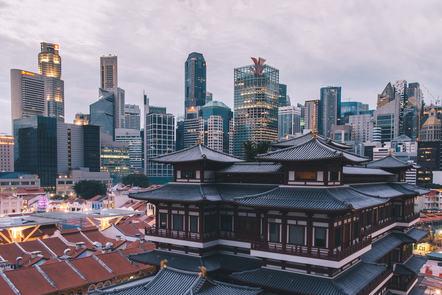
Cities project themselves as cultural hubs representing and connecting entire regions, for example Doha and the UAE, Singapore and Southeast Asia, Los Angeles and North America.
Using these and other examples, through this course you’ll explore exactly what is meant by urban cultural heritage and key concepts related to it.

Syllabus

Week 1: Cultural Heritage in an Urbanising World
Week 2: The Governance of Heritage
Week 3: Heritage and Urban Change

What will you achieve?
By the end of the course, you'll be able to...

  • Explain what cultural heritage is, its different types and how it has emerged as an area of public policy
  • Identify the key actors of cultural heritage governance
  • Evaluate the impacts of cultural heritage projects on cities
  • Explain the tensions between urban development and cultural heritage
  • Compare the governance of heritage in different cities or countries

Who is the course for?
This course is for anyone interested in cultural heritage and cities, but it might be of particular interest to students of archaeology, sociology, and related subjects; urban practitioners like planners and community activists; or cultural heritage professionals like those working in tourism.

Go to Class
MOOC List is learner-supported. When you buy through links on our site, we may earn an affiliate commission.

Related Courses

Introduction to Intercultural Studies: Language and Culture (FutureLearn) FutureLearn
University of Leeds

Introduction to Intercultural Studies: Language and Culture (FutureLearn)

Explore intercultural communication by understanding the relationship between language and cultural identity. Examine the relationship between language, nationality and cultural identity. On this course you will analyse why language is a social construction and examine how it relates to cultural identity.

Self Paced
2 Weeks
Introduction à la programmation orientée objet (en C++) (Coursera) Coursera
École Polytechnique Fédérale de Lausanne

Introduction à la programmation orientée objet (en C++) (Coursera)

Ce cours introduit la programmation orientée objet (encapsulation, abstration, héritage, polymorphisme) en l'illustrant en langage C++. Il présuppose connues les bases de la programmation (variables, types, boucles, fonctions, ...). Il est conçu comme la suite du cours « Initiation à la programmation (en C++) ».

Oct 12th 2026
5-12 Weeks
Business Management: National and Organisational Cultures (FutureLearn) FutureLearn
Coventry University

Business Management: National and Organisational Cultures (FutureLearn)

Explore the concepts of national and organisational culture and build your skills in cross-cultural management. Have the chance to develop your understanding of intercultural communication. On this course, you’ll be encouraged to delve into the concepts of national and organisational culture, and get the opportunity to build and improve upon your management skills.

No sessions available
2 Weeks
Effective Fundraising and Leadership in Arts and Culture (FutureLearn) FutureLearn
University of Leeds

Effective Fundraising and Leadership in Arts and Culture (FutureLearn)

Improve your chances of raising funds for arts and culture by developing your leadership and entrepreneurial skills. Learn how to help arts and cultural organisations thrive. As the global funding landscape is changing rapidly, arts and cultural organisations are becoming increasingly concerned about what actions to take. On this course you will learn about the importance of developing organisational resilience through effective leadership and management, and how to diversify income streams by becoming more entrepreneurial.

Jan 3rd 2022
2 Weeks
Cultural Diversity and the City (FutureLearn) FutureLearn
European University Institute - EUI

Cultural Diversity and the City (FutureLearn)

Discover how cities can develop a distinct heritage through embracing cultural diversity. Cities all over the world have embraced cultural and religious diversity, creating unique heritages. On this course you will investigate both ‘old’ and ‘new’ diversities in city heritage in four different continents.

Jan 9th 2023
3 Weeks
Why Religion Matters: Religious Literacy, Culture and Diversity (FutureLearn) FutureLearn
The Open University

Why Religion Matters: Religious Literacy, Culture and Diversity (FutureLearn)

Discover why religion is important for understanding and engaging with global challenges. Consider the ways religion affects personal and political decision-making. Religion not only influences personal behaviours and ethics, but it’s also relevant to international conflicts and domestic policy decisions. On this course, you will gain a broader understanding of why religion matters in society and in different cultures.

Self Paced
4 Weeks
Enlightening the Dark Ages: Early Medieval Archaeology in Italy (FutureLearn) FutureLearn
University of Padova

Enlightening the Dark Ages: Early Medieval Archaeology in Italy (FutureLearn)

Learn what innovative methods and tools applied to the material culture of the past can tell us about the Early Middle Ages. Discovering the cultural heritage of Medieval Europe through archaeology On this archaeology course, you will explore what we can learn about the past through material culture. It focuses on the history of Medieval Europe, from the end of the Roman Empire in the West.

Self Paced
4 Weeks
Fashion Values: Cultures (FutureLearn) FutureLearn
London College of Fashion

Fashion Values: Cultures (FutureLearn)

Use storytelling to contribute to equitable, inclusive and diverse cultures in and through fashion. Reimagine fashion as a powerful medium to explore and amplify cultures. On this four-week course from London College of Fashion, you’ll learn how to find and tell stories of the ingenuity and creativity of fashion in its many cultural forms.

Dec 5th 2022
4 Weeks
Arts and Heritage Management (Coursera) Coursera
Università Bocconi

Arts and Heritage Management (Coursera)

Today cultural institutions are facing important dilemmas in many aspects of their management. Over the past decades, a new figure has emerged that of the art manager. Imagine you went to work every day to connect artists with audiences, vision with reality, and money with a mission. That is what managers in the arts do, they play an essential role in transforming the minds, lives, and communities through creative expression. This course has been conceptualized to address the need of skills and techniques to help professionals and managers in running art and cultural institutions.

Oct 5th 2026
5-12 Weeks
Les Partenariats Public-Privé (PPP): Comment offrir de meilleures infrastructures pour les services publics (Coursera) Coursera
The World Bank

Les Partenariats Public-Privé (PPP): Comment offrir de meilleures infrastructures pour les services publics (Coursera)

Ce cours vous permettra de comprendre les principes clés des PPP et le rôle qu’ils peuvent jouer dans la mise en place de services d’infrastructures, en particulier dans les économies émergentes. Les participants bénéficieront de l’expertise de praticiens, de hauts fonctionnaires d’état, et d’universitaires ayant une véritable expérience de terrain, sur les opportunités et les défis que présentent la mise en place et la maintenance d’infrastructures affectées aux services publics par des PPP efficaces.

Oct 12th 2026
4 Weeks
The Modern and the Postmodern (Part 2) (Coursera) Coursera
Wesleyan University

The Modern and the Postmodern (Part 2) (Coursera)

This course examines how the idea of "the modern" develops at the end of the 18th century in European philosophy and literature, and how being modern (or progressive, or hip) became one of the crucial criteria for understanding and evaluating cultural change. Are we still in modernity, or have we moved beyond the modern to the postmodern?

Oct 5th 2026
5-12 Weeks